72 Hours in Trieste: Italy's Coastal City With €120 Sea-Facing Hotels (Summer 2026)
Italy's overlooked Adriatic city with Habsburg architecture, sea-facing hotels at €120/night, and day trips to Slovenia. A 3-day itinerary.

If you've been to Venice and Florence and the Cinque Terre and you're looking at the map of Italy thinking "there has to be a coastal city I haven't done yet," there is. Trieste sits in the far northeast corner, on a small bay where Italy meets Slovenia, and most American travelers couldn't point to it on a map.
It used to be the port of the Austro-Hungarian Empire. The buildings reflect that. The food reflects that. The coffee culture reflects that. It's the only Italian city with a strong central European spine, and it shows up in the architecture, the cafes, and the cost of a hotel room. A two-bedroom apartment in the center sits at €120 a night in summer. The hotel on the harbor that looks like a 19th-century opera house runs €140 to €180. The same money in Venice gets you a cramped room on a back canal with no view.
We spent three days in Trieste in late April and stayed a fourth because we didn't want to leave. Here's how to use the time.
Why Trieste, Why Now
Italian tourism is set to break records again in 2026. Venice is capping day-trippers. Cinque Terre is rationing access to the trails. Florence has banned new hotels in the city center. The famous coastal towns are full and they know it.
Trieste is the opposite. Visitor numbers are climbing slowly (around 3 to 5% year over year), the city has hotel capacity to spare, and the entry price to a high-quality summer trip in Italy is dramatically lower. Add in the cruise port closing earlier than other Adriatic cities, and the summer crowd disappears by 6pm.
The Adriatic Sea here is calm and protected. The Karst plateau rises behind the city and gives you hiking and wine country within 30 minutes. The Slovenian border is a 20-minute drive. The Croatian Istrian coast is 90 minutes south. It's a hub disguised as a quiet city.

Where to Stay
Three areas, three different feels.
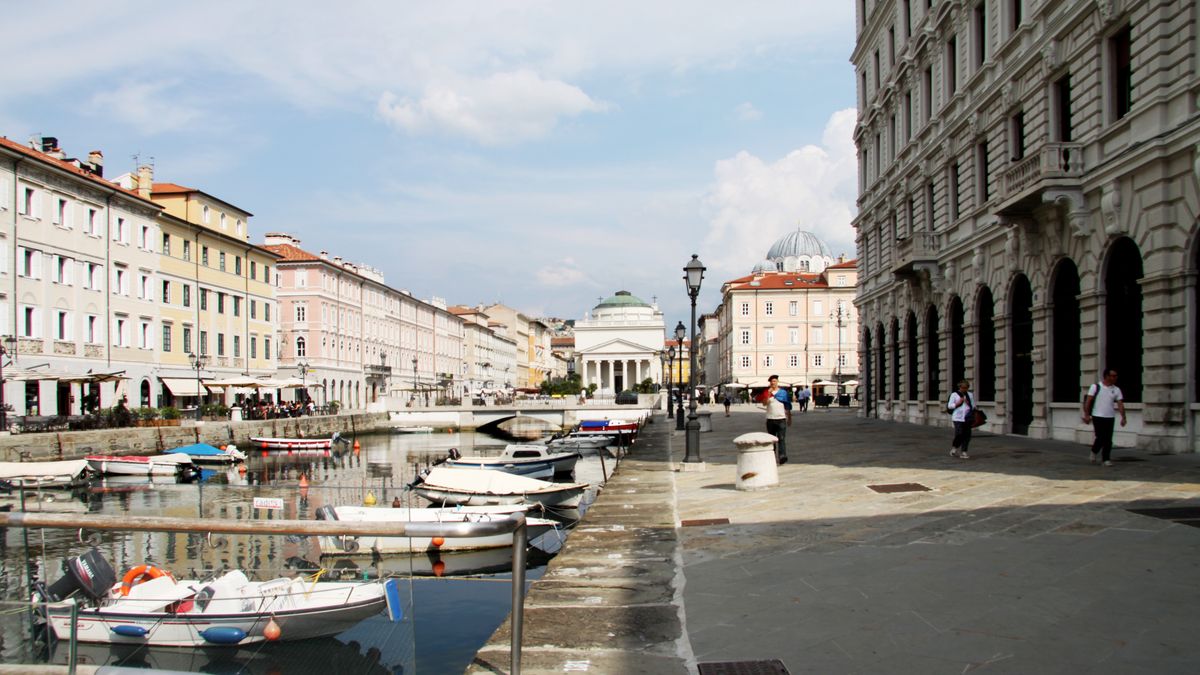
Borgo Teresiano. The 18th-century planned grid around the Canal Grande di Trieste. Most of the better mid-range hotels sit here. €90 to €140 in shoulder season, €120 to €180 in July and August. Walking distance to Piazza Unità, the harbor, the coffee shops. Stay here on a first trip.
Cavana and Old Town. The medieval quarter behind the Roman theater. Narrow streets, small restaurants, a few boutique apartment hotels at €110 to €160. Quieter at night. Better if you want to feel like you're in an older Italy.
Barcola. A residential strip along the coast 15 minutes from the center. Small family-run pensions and a few apartment buildings. €70 to €100 in summer. You get a swim before breakfast (Trieste residents walk down to Barcola for morning sea swims from May through October).
Booked through Best, a €120 room comes with €12 cashback. Over three nights, that's €36 back. Enough to cover a long lunch with wine at Suban (the city's classic).
Day 1. Piazza Unità, the Harbor, the Coffee Houses
Start at Piazza Unità d'Italia. It's the largest seafront square in Europe, open on one side to the Adriatic. The buildings on the three closed sides are Austro-Hungarian civic architecture at full volume. You'll have read about it. The photos undersell it. Walking out of the buildings into the open square with the sea ahead is one of the better arrival moments in Italian travel.
Coffee at Caffe degli Specchi or Caffe Tommaseo. Both are 19th-century coffee houses that still operate. Tommaseo is the older (1830s) and has the slightly better atmosphere. Order a "capo in B" (cappuccino in a small glass, Triestine for "small cappuccino"). €1.80 at the bar, €4.50 at the table outside. The outside table is worth the markup once.
Walk the Molo Audace pier. It runs 250 meters into the bay and gives you a view back at the city that explains why the Habsburgs picked this place. Twenty minutes round trip. Free.
Lunch at Buffet da Pepi (since 1903). Order the pork plate (boiled pork with mustard, horseradish, sauerkraut). Triestine food is German on a foundation of Italian. €18 for the dish, €25 with a glass of Refosco. Standing room only at peak times. Lunch ends at 3pm sharp.

Afternoon, the James Joyce trail. Joyce lived in Trieste for over a decade and wrote much of Dubliners and parts of Ulysses here. The free walking trail hits 12 sites with bronze plaques. The Joyce statue on Ponte Rosso is the photo. You can do the whole loop in 90 minutes.
Dinner at Antica Trattoria Suban. It's 5 kilometers up the hill in the Karst and runs €60 to €80 per person for a full Triestine meal with wines. Take a taxi (€18 each way). The view of the bay at sunset from their terrace is worth the trip.
Day 2. Miramare Castle and the Karst
Bus 6 or 36 from the center to Miramare Castle. 15 minutes, €1.50. The castle is a fairy-tale 19th-century pile built for Maximilian I of Mexico by his Austrian architect. The interior tour takes an hour (€12), and the gardens are free.
What people miss. The marine reserve in the water in front of the castle. It's a no-fishing zone and the snorkeling is the best within an hour of any major Italian city. Rent a mask and fins (€8/day) from the kiosk by the castle gate from June through September. Plan an hour in the water if the weather is good.
Back to town, lunch at Pepenero. Modern Triestine kitchen, sea-facing, around €30 per person at lunch. Their octopus is the dish to order.
Afternoon, head up to the Karst plateau. Take the Opicina tram (Tranvia di Opicina). The historic 1902 funicular-tram climbs from the center up the limestone cliff. €2.10 each way, 30 minutes. Get off at the top for the bridle path that follows the cliff edge back toward the city. Total walk back is 90 minutes. Half of it is along an Alpe Adria trail with sea views the entire time.
Dinner at Osteria Salvagente. Small spot, no menu, you eat what the chef cooked that morning. €35 to €45 per person. Booked a day ahead is safe.
Day 3. Slovenia, Wine, or a Boat
This is where Trieste's geography pays off. You can take a day trip in three different directions.
Option A. Piran (Slovenia). The Venetian-era coastal town is 45 minutes by bus (€8 each way). White stone old town on a peninsula, a working harbor, gelato that competes with Italian gelato. Lunch at Pirat for the seafood platter (€28). Back in Trieste by sunset.
Option B. The Carso wineries. The limestone plateau behind Trieste produces some of Italy's most distinctive whites (Vitovska, Malvazija) and reds (Terrano). Rent a car (€40/day from the Trieste airport) or book a small-group wine tour (€110/person, includes lunch and 4 cellars). The cellars are family operations. You'll meet the winemakers. The drive itself is gorgeous.
Option C. Grado and the Marano lagoon. An hour west, on a barrier island in a protected lagoon. Italy's quietest beach town and one of the best fish lunches you can have in Friuli. Bus from Trieste, €6 each way. Eat at Trattoria de Toni. You're back by 7.

Whatever you pick, last dinner back in Trieste at Hostaria Malcanton in the old town. Triestine standards done right, €40 per person with wine.
What a 72-Hour Trip Actually Costs
For two people in shoulder season (May, June, September, early October).
Hotel, 3 nights at €120/night = €360.
Food, 6 lunches + 3 dinners = €420.
Coffee, drinks, snacks = €90.
Miramare, Joyce trail, museum entries = €30.
Bus, tram, day trip transport = €40.
One day trip (Piran or wine tour) for two = €220.
Total around €1,160 for two people.
That's €580 per person for a coastal Italian trip with food, museum, and a day trip included. The same trip in Venice or Florence runs €850 to €1,100 per person and includes more queue time.
What to Skip
The Risiera di San Sabba (a former Nazi concentration camp site) is moving and important. It's also not a tourist activity. Visit if you're researching the history. Skip if you're on a vacation that includes children.
The cruise terminal area is being redeveloped and is half a construction site through 2026. Photos look better than the reality. Walk through once. Don't plan time there.
Souvenir shops on Via Roma sell the same Italian-flag aprons as every other Italian tourist city. Skip them. The independent bookstore on Via San Lazzaro (Libreria Tergeste) is the better stop for actual souvenirs.
FAQ
Is Trieste worth visiting in 2026? Yes. Lower prices, fewer crowds, a different feel from the rest of Italy. The combination is rare. It won't last forever (Lonely Planet flagged it as a top destination for 2025 and 2026), but for now it still feels like a discovery.
How do you get to Trieste? Direct trains from Venice (2 hours, €18 to €30), from Milan (4.5 hours, €40 to €80), and from Vienna (5.5 hours, €40 to €70). Trieste also has a small airport with seasonal flights from major European hubs.
Is English spoken in Trieste? Yes, at hotels and tourist-facing restaurants. Less so at neighborhood spots. Italian phrasebook helps for the smaller places. Slovenian is also commonly understood given the proximity to the border.
When is the best time to visit Trieste? Late April to mid-June and September to mid-October. July and August are warm but pleasant given the sea breeze. February is the worst (the Bora wind hits Trieste hard and cold).
Can I do Trieste as a day trip from Venice? Possible but rushed. The train is 2 hours each way, leaving 6 to 7 hours in the city. Better to stay one night. Two nights is the sweet spot for a first trip.
Booking through Best gets you 10% cashback on hotels in Trieste and across northern Italy. On a €360 three-night stay, that's €36 back. Enough for a long Suban dinner or two boat trips out to Miramare.
Images: Palazzo del Municipio via Pexels. Trieste canal via Pexels. Boats on canal via Pexels. River city by Daniel Sessler via Unsplash. Used under license.