Americans Are Cutting Travel Spending 23% in 2026. Here's What That Means for Hotel Prices.

Fifty-eight percent of Americans plan to spend less on travel in 2026 than they did in 2025, with an average planned cut of 23 percent per household. That's a Deloitte 2026 survey number, and it lands in a way that should worry hotel operators a lot more than the public messaging from the industry suggests.
We track booking patterns at Best across hotels in 60 destinations. Here's what we're seeing in the data, what the survey numbers actually mean for travelers, and where hotel pricing is most likely to break in the second half of 2026.
What the numbers say
Three data points from the last 30 days. The Deloitte 2026 leisure travel survey shows 58 percent of U.S. households planning to reduce travel spending, with the average cut at 23 percent. STR Q1 2026 hotel data shows U.S. occupancy at 66.5 percent in the first week of May, up only 1.2 percent year over year (well below the 4 to 5 percent gains hotels expected). And Skift's April 2026 demand index for U.S. mid-tier hotels is flat versus 2025, the first non-positive print in three years.
The pattern. Americans are still traveling, but they're trading down. Fewer trips. Shorter trips. Cheaper destinations. More driving and less flying. And on the hotel side, more 3-star bookings and fewer 4-star, with luxury bookings holding up only at the very top of the market.

Why the pullback now
Three factors. Real wages for the middle 60 percent of U.S. earners are still recovering from the 2022-2024 inflation cycle. The 75 percent of households telling Deloitte that "my travel budget no longer covers as much as before" aren't wrong. Hotel rates rose 18 percent in 2023, another 9 percent in 2024, and held flat in 2025. The compound effect is rooms that cost 28 percent more in 2026 than 2022 dollars.
Second, the post-pandemic revenge-travel cycle is over. The travelers who delayed trips in 2020 and 2021 have taken them. Discretionary spending has normalized back to pre-2020 patterns adjusted for inflation, which is to say lower than the temporary 2022-2024 spike.
Third, weather and infrastructure have made travel friction higher in 2026. Summer airport delays in Europe and the U.S. are up. Heat in southern Europe pushed demand toward northern destinations where supply is tighter. Trip planning takes more work for less reliable outcomes, and that drives marginal travelers out of the market.
What this means for hotel pricing
The conventional wisdom is that softening demand drives rates down. The actual pattern in 2026 is more interesting. Aggregate rates are flat. Premium properties (4-star and above) are pushing rates up 3 to 5 percent. Mid-tier (3-star) is flat to down 2 percent. Budget (2-star and below) is flat.
The squeeze is in the middle. Mid-tier hotels are caught between trading-down travelers who came from above and trading-up travelers who didn't materialize from below. We're seeing more aggressive last-minute discounting at mid-tier properties than at any point since 2021. The 3-day-out rebooking window we wrote about previously is hitting 30+ percent drops at some mid-tier urban hotels.

Where the deals will be in summer 2026
Three categories. Mid-tier urban hotels in markets that depend on convention and business travel (Chicago, Atlanta, Phoenix, Dallas) where corporate bookings are softer this year. Expect 15 to 25 percent off published rates if you book inside 21 days.
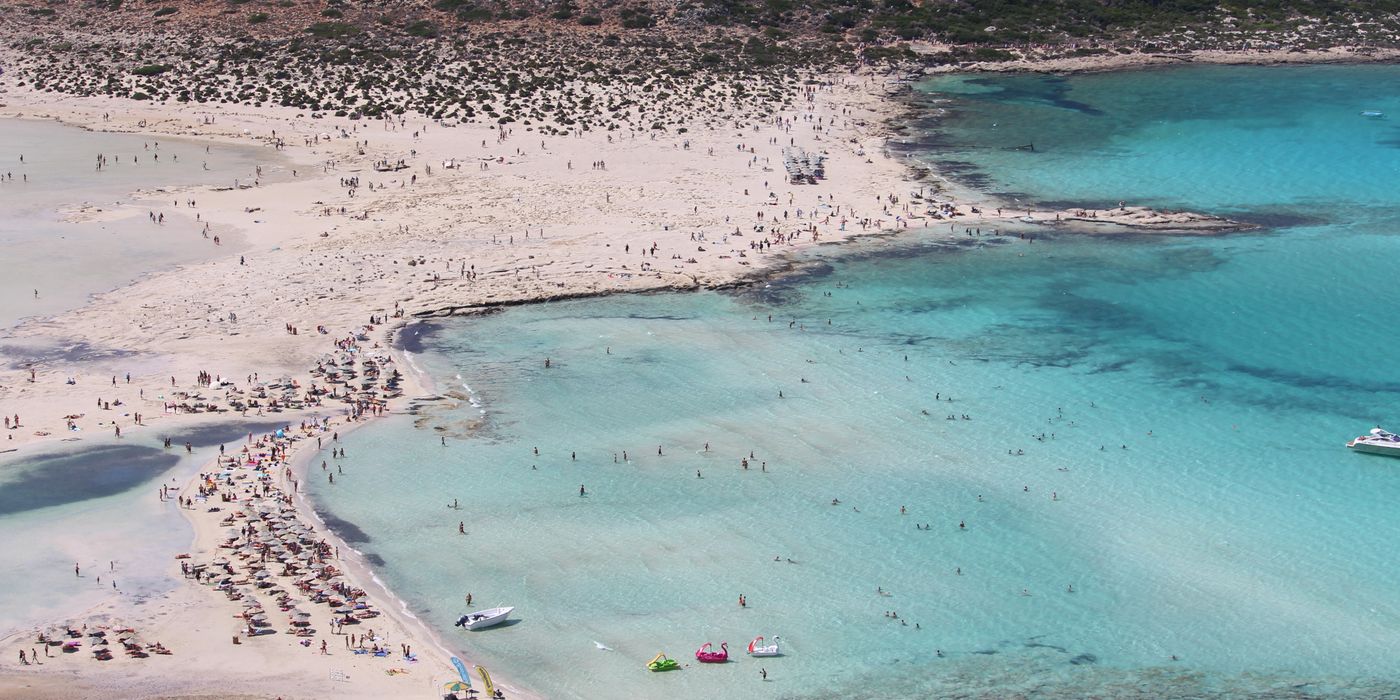
Shoulder-season destinations that are usually full in peak. Greek islands, the Croatian coast, parts of the Spanish Mediterranean. Operators expecting another 20-percent peak-versus-shoulder spread in 2025 only got 8 to 12 percent. Inventory in shoulder weeks (early June and early September) will be unusually loose.
Resort properties relying on long-haul U.S. visitors. Mexican Caribbean, Hawaii, and Caribbean island chains are seeing softer-than-expected bookings from U.S. travelers. Last-minute booking windows are wider than usual at properties that would normally be locked 90 days out.
Where rates will keep rising
The cooler-than-Europe markets. Iceland, Norway, Scotland, and the Canadian Rockies are all seeing year-over-year demand increases of 20 to 35 percent. Rates are up 6 to 12 percent and selling out earlier. The traveler trading down from Mediterranean Europe to northern Europe is real and is reshaping the supply situation.
Luxury and ultra-luxury bookings at branded resorts. The top of the market is decoupling from middle-class demand. Aman, Four Seasons, Rosewood, and similar are reporting record advance bookings for 2026 holiday weeks. The Hermès-equivalent customer is not pulling back.
What travelers should actually do
Two practical takeaways from the pricing data.
Book non-peak weeks. The flatness in 2026 demand makes shoulder weeks a much better deal than they were in 2024-2025. A trip the week of June 8 or September 14 versus July 20 will save 30 to 40 percent at most European destinations without sacrificing weather.
Use cashback to offset the rate increases that did happen. A 10 percent cashback on a 2026 hotel rate effectively rolls the price back to 2024 levels at most properties. Best returns 10 percent of every hotel booking. best.so
Bigger picture
The hotel industry's 2026 will be a tale of two markets. The top is steady or growing. The bottom is steady. The middle is where the operational stress lands and where travelers will find the most pricing flexibility. That's also where most American travelers actually stay, so the practical impact on 2026 trips is real and largely favorable for travelers willing to book strategically rather than book and forget.
FAQ
Why is American travel spending down in 2026?
The combination of three factors. Hotel rates rose 28 percent cumulatively from 2022 to 2026. Real wages for middle-income households haven't fully caught up. The post-pandemic revenge-travel cycle has ended, and discretionary spending has normalized lower. Fifty-eight percent of Americans say they'll spend less on travel in 2026 than 2025, with the average cut at 23 percent.
Are hotel prices going down in 2026?
Aggregate hotel rates are flat year over year in 2026. The market is splitting. Luxury and premium rates are up 3 to 5 percent. Mid-tier hotels are flat to down 2 percent. Budget hotels are flat. The biggest discounts are appearing at mid-tier urban hotels in convention-dependent markets, where last-minute drops of 15 to 30 percent are now common.
What's the best time to book hotels in 2026 to save money?
Shoulder weeks (early June, early September) offer the largest gaps versus peak weeks in 2026 because demand softening is concentrated there. Mid-tier urban hotels show the most willingness to discount inside 21 days. Locking in a refundable rate early and rechecking the price at 30, 7, and 2 days out remains the best general strategy.
Are luxury hotels affected by the spending pullback?
Less than mid-tier. Top-of-market luxury (Four Seasons, Aman, Rosewood, etc.) is reporting record advance bookings for 2026, suggesting their core customer base has decoupled from middle-class spending patterns. The 4-star tier that ladders down from luxury is more exposed.
Where should I travel in 2026 if I want to save money?
Cities with soft business-travel weeks (Chicago, Atlanta, Phoenix, Dallas) for U.S. stays. Shoulder-season weeks in popular European destinations. Resort properties dependent on U.S. long-haul travel (Mexico, Hawaii, Caribbean) that are seeing softer-than-expected demand. Avoid Iceland, Norway, Scotland, and other coolcation destinations where demand is up and rates are climbing.
Images: Hero by Christine Roy via Unsplash. Airport silhouettes via Pexels. Hotel lobby by Daniel Norris via Unsplash. Used under license.