Hotel Loyalty Points Are Worth Less in 2026 (And What That Means for Your Bookings)
Hotel chains owe members $11.6 billion in unredeemed points. The plan to clear that liability runs through devaluations. Here's the strategy that works in 2026.

The $11 billion problem hotel chains are quietly solving
Seven of the world's largest hotel groups owed loyalty members roughly $11.6 billion in unredeemed points at the end of 2025. Marriott alone had $4 billion outstanding. Hilton had close to $3 billion. Skift's analysis in April 2026 called it "the loyalty IOU." The accounting term is deferred revenue. Either way, that's a pile of points that someone, eventually, has to honor as free hotel nights.
Hotel chains have a few tools for working that liability down. Charge more points per night. Restrict what redemptions are available. Add blackout windows. Quietly devalue the underlying point. All four are happening in 2026.

World of Hyatt announced a category shift in May 2026, with category 8 hotels rising from 45,000 to 75,000 points per night. That's a 67 percent jump for the program's top properties. Hilton Honors moved several Caribbean and U.S. resort properties into higher award bands earlier this year. Marriott Bonvoy's award chart eliminated the published category structure in 2022 and now uses fully dynamic pricing, which means there's no published cap on what a redemption can cost. Members report seeing the same property at 50,000 points one week and 95,000 points the next.
None of this is unique to one program. The pattern is industry-wide. The question for travelers in 2026 isn't whether your points are worth less. They are. The question is how to make them worth something while you can.
What a hotel point is actually worth in 2026
The math depends on the program, but the rough picture across the major U.S.-facing programs in spring 2026 is this. Hilton Honors points redeem at roughly 0.4 to 0.5 cents each on average. Marriott Bonvoy at 0.6 to 0.8 cents. World of Hyatt, post-devaluation, at 1.4 to 1.7 cents, still the strongest of the big three. IHG One Rewards at 0.5 to 0.6 cents. Choice Privileges, surprisingly, has been the steadiest of the lot in 2026, with redemption value still tracking around 0.7 cents per point.
Two ways to read those numbers. First, the value gap between programs is wider than most members realize. Second, even the better programs have lost ground. World of Hyatt at 1.7 cents per point sounds strong until you compare it to Hyatt's 2.2 cents per point average from 2021. The pre-devaluation peaks across all the major programs were 30 to 50 percent higher than current redemption value.
The implication for a typical member with 100,000 points sitting in their account. In Hilton, that's $400 to $500 of value. In Marriott, $600 to $800. In Hyatt, $1,400 to $1,700. The relative gaps are why frequent travelers concentrate their stays in one or two programs rather than spreading thin.
Why devaluations always win
The structural reason loyalty programs devalue is that the points are unfunded liabilities on the hotel chain's books. Members earn points faster than members redeem them. The pile grows. Eventually the pile has to come down, and the only way to bring it down without massive cash outflow is to make each point redeem for less.
The COVID years made this worse. Award redemptions dropped sharply during lockdowns. Earnings, especially through credit card partnerships, kept growing. The point liabilities ballooned. The post-pandemic devaluation cycle is the chains catching up with the math.
Credit card partnerships are a separate accelerant. The big hotel cards, Hilton Honors Aspire, Marriott Bonvoy Brilliant, Hyatt Visa, all generate significant revenue for the hotel chains by selling points to American Express and Chase, who then issue them as signup bonuses and earning rates. Every point sold to a card issuer is a future redemption obligation. The volume of points entering circulation through cards has tripled in the past decade. The redemption value per point has roughly halved over the same window. That's not a coincidence.
What still makes loyalty programs worth using

The case for loyalty programs in 2026 isn't about points value. It's about status benefits and elite perks, which still scale better than the points themselves. A few that matter.
Late checkout. Mid and top tier elite at most major chains gets you 2 p.m. or 4 p.m. checkout. On weekend trips, that's a real benefit. On business trips ending in evening flights, it's the difference between sitting in a coffee shop for four hours and having a hotel room.
Room upgrades. Suite upgrades at top tier elite levels still happen at most chains. Marriott Titanium and Hilton Diamond both produce upgrades at meaningful rates, especially at properties that aren't full. A weekend in a suite the chain can't otherwise sell costs the chain almost nothing and is worth $200 to $400 to the traveler.
Free breakfast. Hilton Diamond and Hyatt Globalist both include breakfast at most properties. Two adults at hotel breakfast for four days is $200 to $400 of value. The cash equivalent of two nights of stay credit at the same property.
Confirmable suite redemptions. The exception to the points-aren't-worth-much rule is suite redemptions through Hyatt Globalist, where you can confirm a suite at booking for the same point cost as a standard room. That's still a clear value play if you have the points and want a suite stay.
How loyalty interacts with cashback
The standard advice has been "always book direct for points." That advice was right when points held value and direct booking earned them. It's less right in 2026 for a few reasons.
First, loyalty earning rates haven't kept up with inflation. A Hilton Honors member earns 10 base points per dollar at most properties. At 0.4 to 0.5 cents per point redemption value, that's a 4 to 5 percent return on spend. Cashback platforms returning 10 percent of room rate are simply paying more than the loyalty earnings, even before any points devaluation.
Second, status benefits at most chains are tied to nights or stays per year, not to whether you booked direct. Many programs now credit elite-qualifying nights regardless of booking channel. The hotel chains pushed for direct booking for years to reduce OTA commission costs. The reality in 2026 is that the chains have softened on this. Best, Booking.com, and Expedia bookings at most major chains still credit toward elite status.
Third, the math depends heavily on your status tier. A Hilton Diamond getting suite upgrades and breakfast values direct booking more than someone just hitting Silver tier. For travelers who aren't pushing for top-tier elite, the cashback play is straightforwardly better than the points play.
The strategy that works in 2026
For most travelers, the right move is to consolidate rather than spread. Pick one chain, push hard for a meaningful elite status, and book that chain direct when it makes sense. Use cashback for everything else, including the bookings outside your primary chain.

If you're picking a primary chain in 2026, World of Hyatt still has the best points value despite the May devaluation. The status benefits at Hyatt Globalist remain among the strongest in the industry. Hyatt's footprint is smaller than Hilton's or Marriott's, which is a real downside if you travel to a lot of cities.
Hilton has the deepest U.S. footprint and the richest credit card. Hilton Diamond status is achievable through credit card spend without enormous travel volume. The redemption value per point is the weakest of the major programs, but the status benefits make up some of the gap.
Marriott has the most properties globally and the most tier flexibility. The dynamic pricing on award redemptions means you'll never know exactly what a redemption will cost, which is a real friction point. The brand portfolio breadth is the biggest competitive advantage.
For everything outside your primary chain, default to whichever booking channel produces the best total value. In most cases for U.S. travelers in 2026, that's a cashback platform. Best returns 10 percent of the room rate, which is roughly 2x what the average loyalty earning produces in actual redemption value. The math is straightforward.
Frequently asked questions
Should I burn my hotel points before another devaluation? If you have points sitting unused, redeeming them sooner is generally better than later. The Hyatt category shift in May 2026 is the most recent example, and the pattern across all programs is that announced devaluations tend to be smaller than the next round of unannounced changes. Use the points or pivot to status benefits. Don't hoard.
Are hotel credit cards still worth it in 2026? Mostly yes for travelers who can use the annual free night and elite status benefits. The points earnings on the cards are weaker than they were five years ago, but the embedded status and free night certificates often justify the annual fee on their own. Hilton Aspire and Hyatt Visa are the strongest values in the category.
Can I use cashback and earn loyalty points on the same booking? Yes, in most cases. Major hotel chains credit elite-qualifying nights regardless of booking channel for OTA bookings, including cashback platforms. Base points earning is usually limited to direct bookings, but the elite night credit is what most travelers actually need to maintain status.
Which hotel loyalty program offers the best value in 2026? Per-point redemption value is highest at World of Hyatt, even after the May 2026 devaluation. Best status benefits are at Hyatt Globalist and Hilton Diamond. Most U.S.-flexible footprint is Hilton or Marriott. The right answer depends on where and how you travel.
The takeaway
Loyalty programs in 2026 are still useful for elite status and the perks that come with it. The points themselves are worth less than they were and will be worth less still next year. For travelers who aren't chasing top-tier status, the math on cashback platforms now beats the math on loyalty earnings. Best returns 10 percent of room rate, applies to most major chains, and still credits toward elite night counts. That combination is the cleanest path through a loyalty market that's quietly working its liability problem at members' expense.
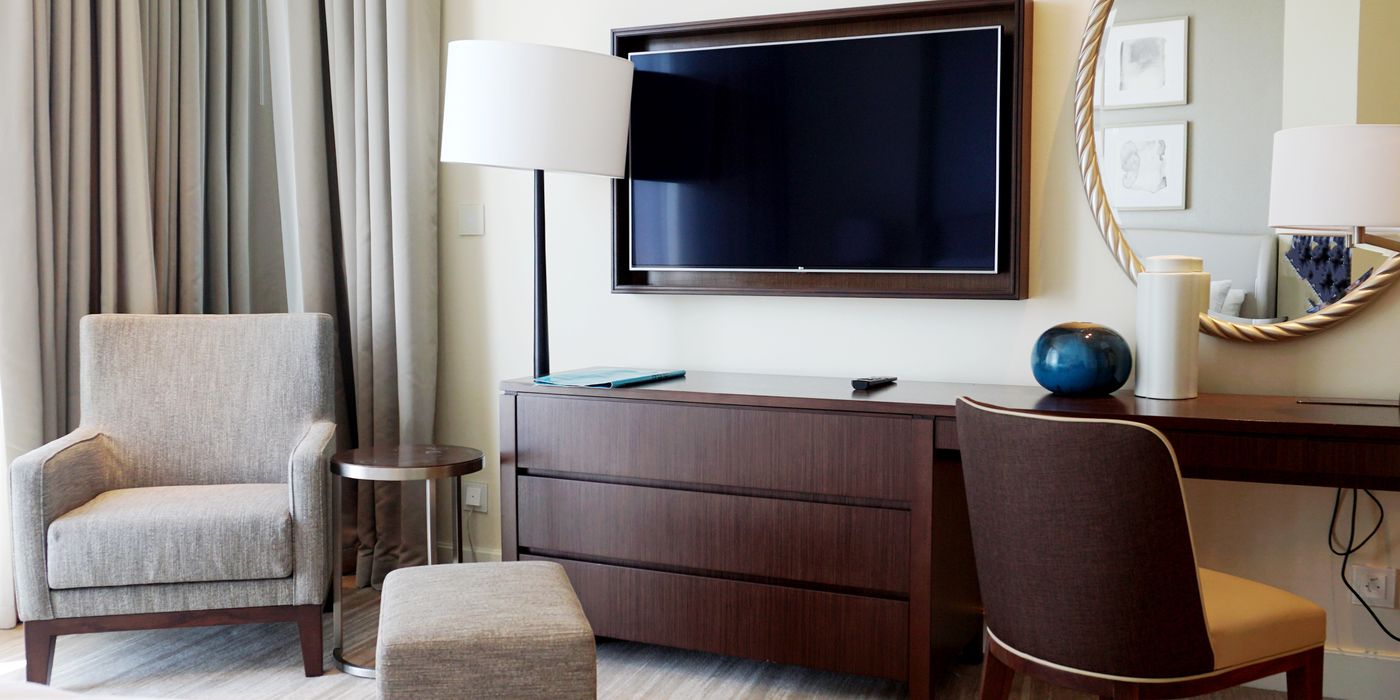
Images: Hero modern hotel room and minimalist hotel interiors. Sourced from Unsplash, used under license.