72 hours in Marrakech, a fall 2026 itinerary
Three days in Marrakech done properly. Where to stay, what to skip, and what it costs in 2026.
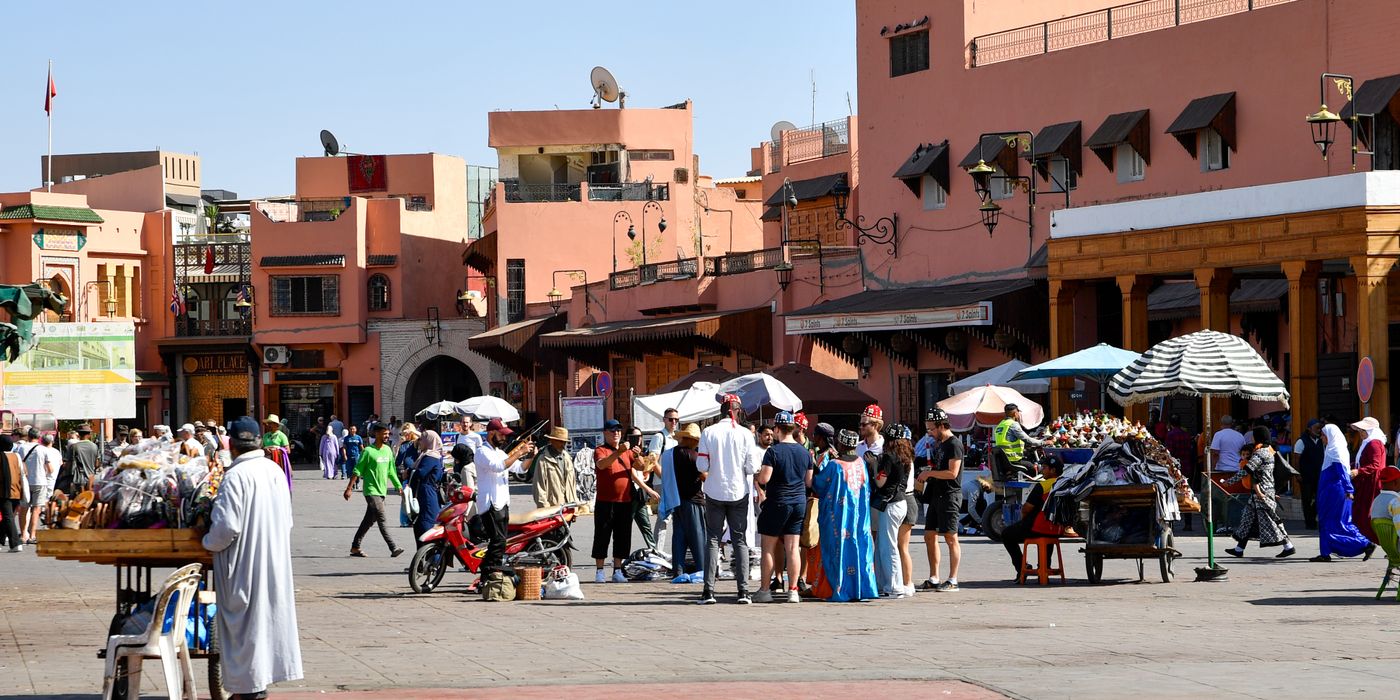
Marrakech is a city that rewards a short trip. Three days is enough to see the things worth seeing, eat well, and leave before the medina starts to feel like a test. Stay a week and you will spend half of it in a taxi to the Atlas Mountains, which is a different trip.
October and November are the two best months. Daytime sits around 24C to 27C, nights cool into the low teens, and the July heat that makes the medina unwalkable has gone. Riad rates in that window run roughly 20% below the December and Easter peaks.
Where to base yourself
Stay in the medina, in a riad. This is not a romantic preference, it is a logistics argument. Almost everything on a three-day itinerary sits inside the old walls, and taxis cannot enter most of it. A riad in the medina means you walk to dinner. A hotel in Gueliz, the modern district, means you negotiate a taxi twice a day and arrive at the same places 25 minutes later.
Prices span an enormous range. Beds at places like Central House Marrakech Medina start around $20. Solid mid-range riads including Riad Musee sit under $130 a night. Riad Yasmine, Riad Kheirredine and Riad Kniza are the consistently well-reviewed tier around $150 to $280. At the top, El Fenn runs roughly 400 to 700 euros and La Sultana 300 to 600, both of which are genuinely exceptional rather than just expensive.
Two things to check before booking. Ask how far the riad is from the nearest vehicle drop point, because "five minutes from Jemaa el-Fna" can mean a 12-minute walk through unlit alleys with a suitcase. And ask whether there is a rooftop, because in Marrakech the rooftop is where you will actually spend your mornings.

Day one, the medina at its own pace
Morning. Start at Ben Youssef Madrasa, and start early, ideally at opening. It is a 14th-century Quranic school with a courtyard of carved cedar, stucco and zellij tilework that is the single most impressive interior in the city. By 11am it is full. At 9am you get it close to empty, which is the entire difference between a good visit and a photograph queue.
Walk from there to Le Jardin Secret, about six minutes on foot. Two restored Islamic gardens behind a plain door on Rue Mouassine, with a tower you can climb for a rooftop view over the medina. It costs a fraction of what Majorelle does and gets a fraction of the crowd.
Afternoon. The souks. Enter north of Jemaa el-Fna and let yourself get lost, which will happen regardless of intent. The organizing logic is by trade, so you will pass through leather, then metalwork, then dyed wool, then spices. Prices start at roughly three to four times what a local pays. Counter at about a third of the opening number and settle somewhere near half. If the negotiation stops being enjoyable, walk. It is genuinely fine to walk.
Evening. Jemaa el-Fna transforms after sunset. Food stalls assemble in the square, the smoke from the grills catches the lights, and it becomes something between a night market and a street theatre. Eat at a stall with a visible turnover of local customers rather than the ones with laminated English menus and a man waving you in. Then go up to a rooftop cafe on the south side for mint tea and watch the whole thing from above.

Day two, palaces, gardens and a hammam
Morning. Bahia Palace first. Late 19th-century, built for a grand vizier, and the ceilings are the reason to go. Painted cedar in geometric patterns across room after room. Give it 90 minutes.
Then walk 10 minutes to El Badi Palace, which is the opposite experience. It was stripped for materials in the 17th century and what remains is a vast ruined courtyard with sunken orange groves and storks nesting on the walls. It is quiet, and the contrast with Bahia makes both better.
The Saadian Tombs are nearby and take 30 minutes. The Chamber of the Twelve Pillars is worth the queue. Everything else there is not.
Afternoon. Taxi to Jardin Majorelle in Gueliz. Yves Saint Laurent bought and restored it, and the cobalt blue villa surrounded by cactus and bamboo is one of the most recognizable spaces in Morocco. Book the timed entry online in advance, because the walk-up queue can run over an hour in high season. The YSL Museum next door is a separate ticket and worth it if you have any interest in fashion or the history of the house.

Evening. Book a hammam. A traditional one in the medina costs 15 to 30 euros for scrub and steam. A spa hammam at a riad or hotel runs 60 to 120 and adds a massage and a quieter room. Both are good. The traditional version is more interesting and less comfortable, which is roughly the correct trade for a first visit.
Dinner in the medina afterward. Nomad, Le Jardin and Dar Yacout sit at three different price points and all three are reliable. Book ahead for any of them.
Day three, get out of the city
The mistake most three-day itineraries make is spending all three days inside the walls. The landscape 40 minutes outside Marrakech is the reason a lot of people come back.
Option one, the Agafay desert. Rocky, lunar, and about 40 minutes southwest. It is not the Sahara and anyone telling you otherwise is selling something, but it is genuinely striking, and a sunset dinner at a desert camp runs 40 to 90 euros including transport. This is the easy option and the one that fits a three-day trip cleanly.
Option two, the Ourika Valley. An hour into the High Atlas, following a river through Berber villages, with waterfalls at Setti Fatma at the end of the road. Cooler, greener, and a full day. Around 25 to 60 euros for a shared or private transfer.
Option three, the Ouzoud waterfalls. Spectacular, and three hours each way. Only do this if you are staying four days or more. On a three-day trip it eats the entire day and the drive back is long.

What Marrakech costs in 2026
Direct numbers for planning a three-day trip. Budget travelers can run 35 to 55 euros a day including a hostel bed, street food and entry tickets. Mid-range sits at 110 to 170 a day for two people with a good riad, two restaurant meals and a driver for one excursion. The high end starts around 400 a day and has no upper limit.
Individual costs. Monument entry runs 70 to 100 dirhams, roughly 7 to 10 euros. A tagine at a mid-range restaurant is 80 to 140 dirhams. A petit taxi across town should be 20 to 40 dirhams, and you should agree the price before getting in or ask for the meter. Mint tea on a rooftop is 20 to 35.
A few honest opinions
The snake charmers and monkey handlers in Jemaa el-Fna are not worth engaging with. Taking a photo obligates a payment, the animals are not well treated, and there is nothing to see that a photograph has not already shown you.
Skip the camel ride on the palmeraie road. It is 20 minutes of walking in a circle on the outskirts of a city. If you want camels, do it properly in Merzouga on a different trip.
Do buy something in the souks. Not because you need it, but because the transaction is the experience. Leather, ceramics from Safi, and hand-loomed blankets are the categories where quality is genuinely high relative to price.
Do learn about six words of Moroccan Arabic. "Shukran" and "la, shukran" for thank you and no thank you will change the tenor of every interaction you have.
Questions about visiting Marrakech
Is three days enough for Marrakech?
Yes. Three days covers the medina, the main palaces and gardens, and one day trip outside the city. A fourth day is useful only if you want the Atlas Mountains or Ouzoud waterfalls, both of which need a full day.
What is the best month to visit Marrakech?
October, November, March and April. Daytime temperatures sit around 22C to 27C. July and August regularly exceed 38C, which makes walking the medina genuinely unpleasant. December and January are pleasant by day and cold at night, and riads are often poorly heated.
Should I stay in a riad or a hotel in Marrakech?
A riad in the medina, for almost every three-day trip. The medina is closed to most vehicles, so staying inside it means you walk to nearly everything. Gueliz hotels are more comfortable and better for longer stays or business travel.
How much does a riad in Marrakech cost?
Budget riads and guesthouses start around 40 to 70 euros a night. Good mid-range riads run 120 to 250. The well-known luxury properties sit between 300 and 700 euros depending on room and season.
Is Marrakech safe for tourists?
Generally yes, with the usual caveats for a busy tourist city. The most common issues are aggressive commission-seeking guides, misdirection when you ask for directions, and overcharging. Firm politeness works. Petty theft is uncommon but the medina crowds at night warrant normal awareness.
Booking a riad for a fall trip, Best gives you 10% cashback on the stay. On three nights at 180 euros that is 54 euros back, which covers the Agafay sunset dinner.
Images. Hero, medina street, Jemaa el-Fna at dusk and Jardin Majorelle via Pexels. Souk at Jemaa el-Fnaa by Jorge Lascar, used under CC BY 2.0 via Wikimedia Commons.