The Amalfi Coast in 2026: What to Know Before You Book
The Amalfi Coast is as beautiful as advertised and more expensive, crowded, and logistically complex than most travel content admits. Here's how to plan it properly — right base, right timing, right approach to getting around.

The Amalfi Coast is one of those places that looks exactly like its photographs. The colored houses stacked on cliffs, the narrow road clinging to the rock above the Tyrrhenian Sea, the small beach towns that you can walk across in ten minutes. It's genuinely as beautiful as advertised. It's also more expensive, more crowded, and more logistically complicated than most travel content lets on.
This guide is for travelers who want to go and want to do it without the common mistakes — wrong base town, wrong timing, wrong approach to getting around, wrong expectations about what the experience will actually feel like.
Understanding the Coast
The Amalfi Drive (SS163) runs roughly 40 kilometers along the coast between Positano in the west and Vietri sul Mare in the east. It's one road, two narrow lanes, and it carries the entire load of tourist traffic, local buses, delivery vehicles, and the occasional delivery scooter trying to squeeze through a space that does not physically exist.
The major towns from west to east: Positano (the most photographed, the most expensive, the most congested), Praiano (smaller, quieter, better value), Amalfi (the historic center, good transport links, livelier), Ravello (up in the hills, clifftop gardens, away from the main road chaos), and Cetara (a fishing village at the eastern end that most tourists never reach).
Sorrento sits at the western end of the Sorrentine Peninsula, before you turn the corner into the Amalfi Drive proper. It's flatter, easier to navigate, has a train connection to Naples, and serves as the most practical base for exploring the coast — particularly for visitors who get carsick on mountain roads or who are traveling with children or heavy luggage.
Where to Base Yourself
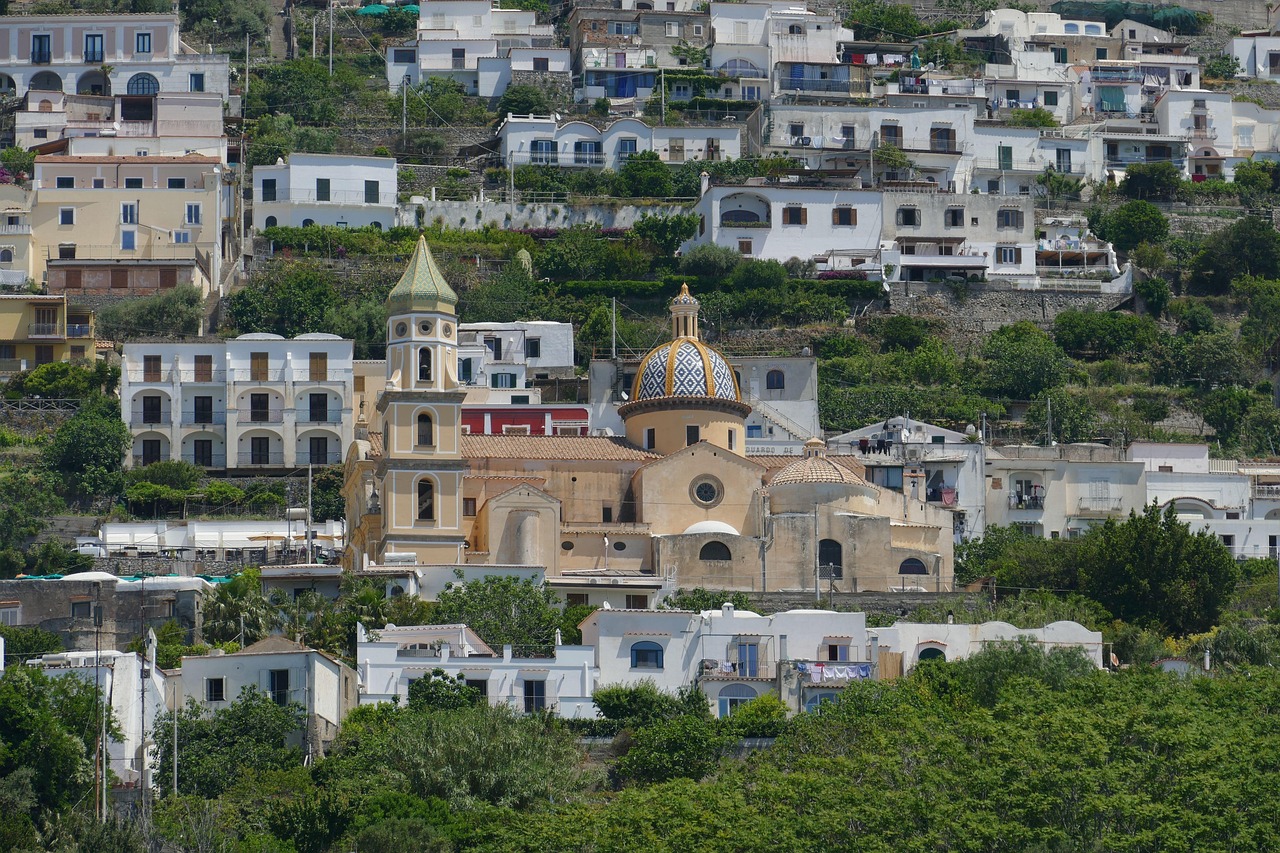
Positano is where everyone wants to stay. The photographs are taken from Positano. The prices reflect that. A decent mid-range hotel in Positano in July or August runs 300-500 per night. Getting there involves either a taxi from Naples (100+ and 1.5-2 hours), a ferry connection, or a bus that deposits you on the main road with your luggage and a steep walk to most properties. Getting around within Positano largely means stairs — hundreds of them.
Amalfi town is the practical alternative. It has a ferry terminal connecting to Positano, Salerno, and Capri, better bus connections along the coast, a cathedral worth seeing, and hotel options starting around 150-200 for solid mid-range choices. It's less photogenic than Positano but more functional as an actual base.
Praiano, between Positano and Amalfi, is where you stay if you've been to the coast before and want something quieter. Fewer tourists, locally-owned restaurants, and rates about 30-40% below equivalent Positano properties. The views are as good as anywhere on the coast.
Ravello sits 350 meters above the coast on the hillside. It's quiet, aristocratic, and genuinely peaceful in a way that Positano and Amalfi are not. The Villa Rufolo gardens are extraordinary. Ravello is best for travelers who want beauty without the beach-and-aperol-spritz circuit, and who don't mind the switchback road to get there.
When to Go
The answer most experienced Amalfi Coast travelers give is: not July or August. Peak summer means the road is gridlocked on weekends, the beaches are packed, the boats run long queues, and hotels charge rates that don't necessarily match the experience you'll have at those crowd levels.
May and June are the best combination of warmth and accessibility. The sea is warm enough for swimming from late May, the wildflowers are at their peak in April-May, and the tourist infrastructure is fully operational without the full summer congestion. June before mid-month is particularly good — Italian school holidays haven't started yet.
September and October are the second window. Sea temperatures stay warm through October (22-23°C). Crowds thin noticeably after mid-September. Hotel rates drop 20-30% from peak and availability opens up. The quality of light in September on the Amalfi Coast is something photographers track specifically.

Getting There and Around
Naples is the main entry point. Naples Capodichino Airport connects to most major European cities and has some transatlantic service. From Naples, you have three realistic options to reach the coast: train to Sorrento (Circumvesuviana line, about 70 minutes, inexpensive), private taxi or transfer (expensive but direct), or the ferry from Naples Mergellina harbor to Positano or Amalfi (seasonal, operates April-October, takes about 1.5-2 hours but avoids the road entirely).
Once on the coast, driving is genuinely difficult. The road is narrow, parking is nearly nonexistent in the main towns, and rental car logistics are stressful. The ferry is the best way to move between towns in summer — it bypasses the road chaos entirely and the sea views are the point of the trip anyway. SITA buses run the coast road and are the cheapest option, accepting of heat and delays.
What Things Actually Cost
The Amalfi Coast is expensive. That's not a deterrent — it's information. A mid-range hotel in Positano in peak season: 300-500 per night. In Amalfi or Praiano: 150-250. A boat tour around the coast or to Capri: 30-80 per person depending on group size and operator. A meal at a sit-down restaurant: 20-35 for a main course. A ferry between Positano and Amalfi: around 15 per person.
Budget strategies: stay in Sorrento or Salerno and day-trip in (transport cost versus accommodation savings usually make this worthwhile for stays of 5+ nights). Eat lunch rather than dinner at the more expensive restaurants — the food is the same, the prices often lower. Take the ferry rather than taxis. Avoid boat tours sold at hotel desks; the same tours booked through local ferry operators at the harbor cost significantly less.
Booking hotels well in advance matters here more than almost anywhere else in Italy. Peak season rooms in Positano that were available in April were not available by June for July-August travel in 2025. For 2026, that pattern is expected to tighten further. If you have a specific property in mind, book it before you finalize your flights. Booking through Best gets you 10% cashback on whatever rate you lock in — on a 400/night property over five nights, that's 200 back.
Capri Is Worth the Day Trip
Capri sits about 45 minutes by ferry from Positano and Amalfi. It's extravagantly expensive and worth going anyway. The Blue Grotto (Grotta Azzurra) is the famous attraction — a sea cave where light refracts through an underwater opening to turn the water a luminous blue. The queue for the rowing boat entry can be long; arrive before 10am or accept that you may wait 45-60 minutes.
The town of Anacapri on the upper part of the island is quieter and more affordable than Capri town at the harbor. The chairlift up to Monte Solaro gives you the best view of the island and the Faraglioni rocks for around 13 round trip. Lunch in Anacapri costs about half what it does at the harbor restaurants.
Frequently Asked Questions
Is the Amalfi Coast worth the cost? If the combination of dramatic Mediterranean scenery, good food, and the particular feeling of a place that's been considered beautiful for centuries matters to you — yes. If you're primarily a beach person and value large uncrowded beaches, the Salento coast in Puglia or the Costa Verde in Sardinia deliver more beach for less money.
Can you visit the Amalfi Coast without a car? Yes, and for most visitors it's the better choice. Ferries, buses, and the occasional taxi cover the main movement. Driving adds stress and parking problems without a meaningful improvement in access.
How many nights do you need? Two nights minimum to see the coast properly — one for Positano, one for Amalfi/Ravello. Four to five nights lets you do Capri, a boat tour, and actually sit still on a beach for an afternoon without feeling like you're rushing.
Images: Amalfi cliffside by Julius Silver via Pexels. Coastal panorama by lapping via Pixabay. Positano village by lapping via Pixabay. All used under free license.