Canary Islands Winter Sun 2026, Which Island and What It Costs
January in Tenerife is 21 degrees. Madrid is 10. Here is how the seven Canary Islands actually differ, where to stay on each, real hotel rates by town, and the best value weeks of the winter.
In January, Tenerife sits at around 21 degrees during the day and rarely drops below 15 at night. Madrid is at 10. London is at 7. The flight from most of Western Europe is four to five hours, which is shorter than the flight to anywhere else that is reliably warm in winter.
That combination is why the Canary Islands fill up from November to March while the rest of Europe sits under cloud. It is also why the islands get written about badly. Most coverage treats them as one place with seven names.
They are not. The islands are 28 degrees north, off the coast of Morocco, and they differ from each other more than the guidebooks admit. Picking the wrong one is the single most common way people have a mediocre winter trip here.
Why the winter works
The Canary Islands stay between 20 and 24 degrees through the winter because of a steady trade wind and the cool Canary Current running past them. Neither the heat nor the cold gets extreme. February is only about three degrees cooler than October.
Rainfall is the other half of the answer. The south of Tenerife, Gran Canaria and Fuerteventura get very little winter rain. The north of the western islands gets considerably more, which is why the north is green and the south is brown, and why the resorts ended up in the south.
The practical consequence is that a January week in the south of Tenerife or Gran Canaria will almost certainly give you sun. The same week in the north might give you three grey days. Both are 21 degrees.
Which island, and who it suits
Tenerife
The biggest island and the one with the widest price range, from hostel beds under 30 euros to five star resorts north of 400 a night. Hotel rates in Tenerife start around 46 dollars a night at the budget end. A couple staying in the southern resort belt should budget 110 to 160 euros a day all in.
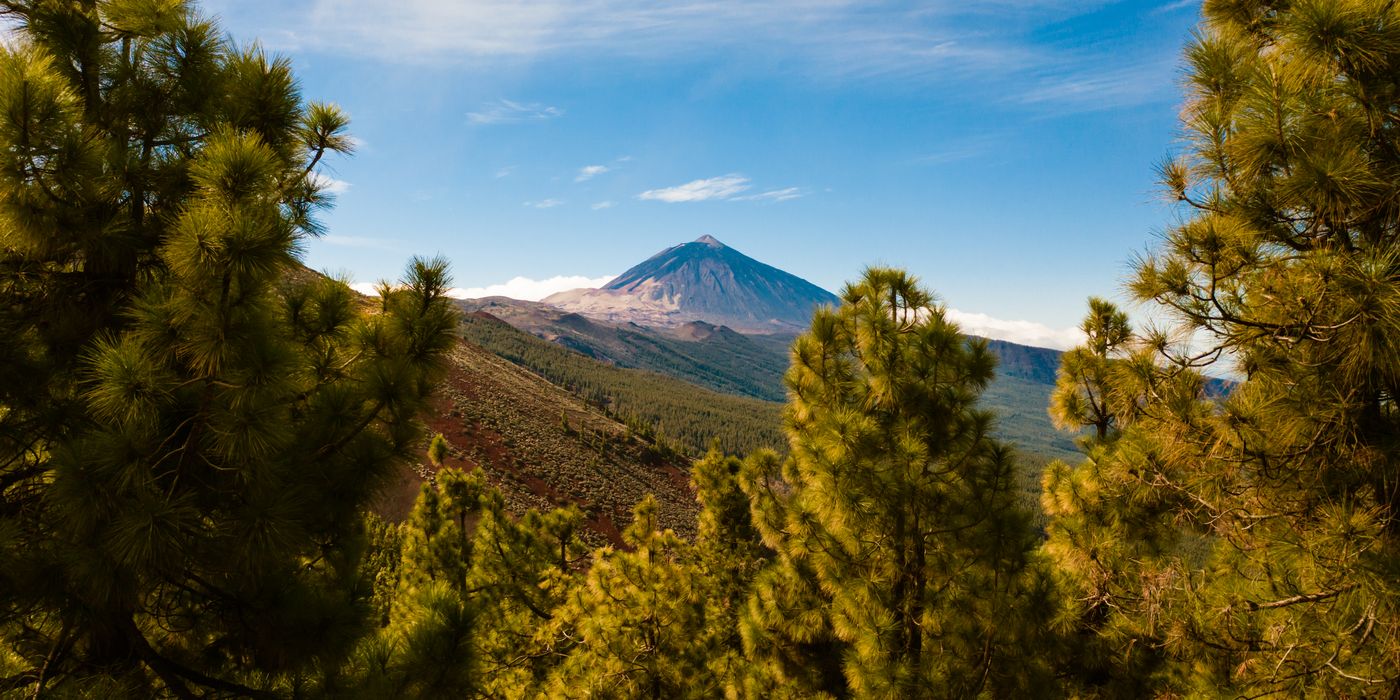
Tenerife is two islands stitched together. The south, around Costa Adeje and Los Cristianos, is resort country. Reliable sun, purpose built, easy with children, short on character. The north, around Puerto de la Cruz and La Orotava, is older, greener, more Spanish, better value and cloudier. Mount Teide sits between them at 3,715 metres, and the drive up through the crater is the best half day on any of the islands.
Pick Tenerife if you want options. It is the only island where you can do a resort week, a hiking week, and a city week without moving hotels.
Gran Canaria
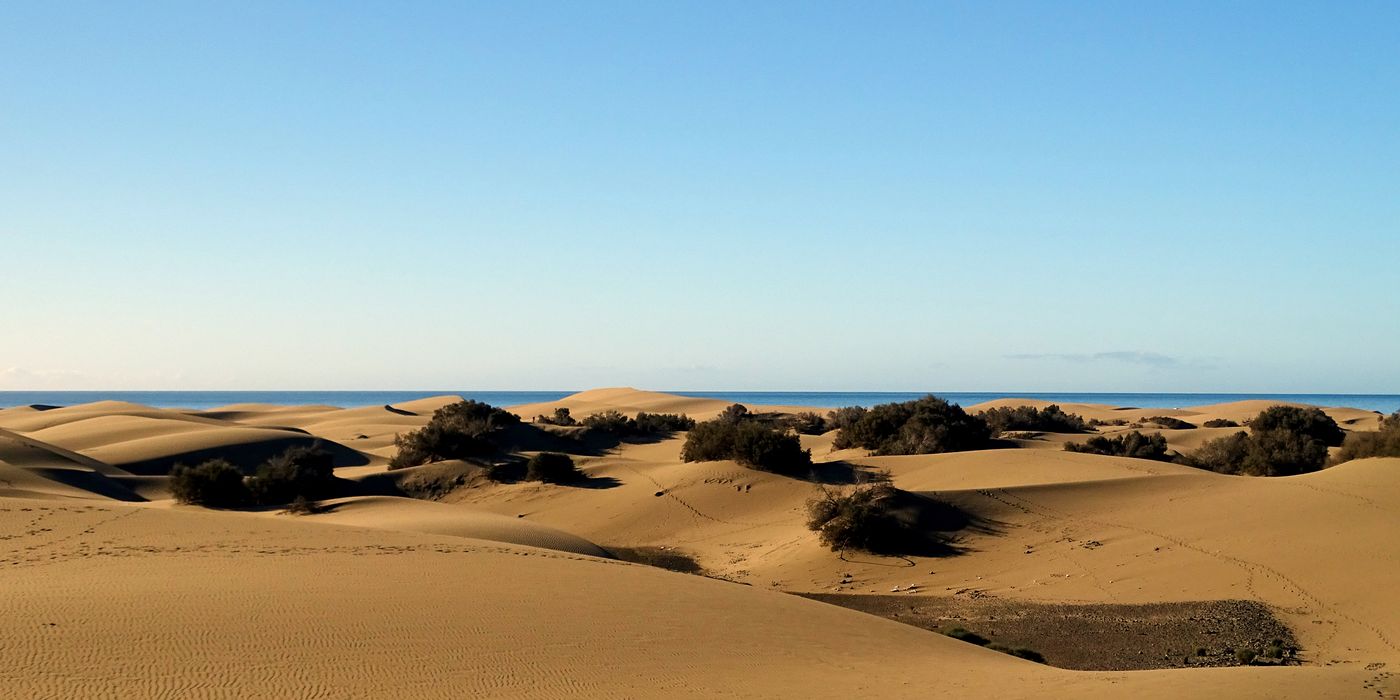
The most varied terrain in the shortest distance. Maspalomas has genuine sand dunes running down to the beach, Las Palmas is a real city with a real beach in the middle of it, and the interior around Tejeda is mountain country at 1,500 metres.
Gran Canaria works well if you want a city and a beach in the same trip. Las Palmas has the best food scene in the archipelago and Las Canteras is one of the better urban beaches in Europe. Rates in Las Palmas run noticeably below Maspalomas for the same standard of room.
Lanzarote
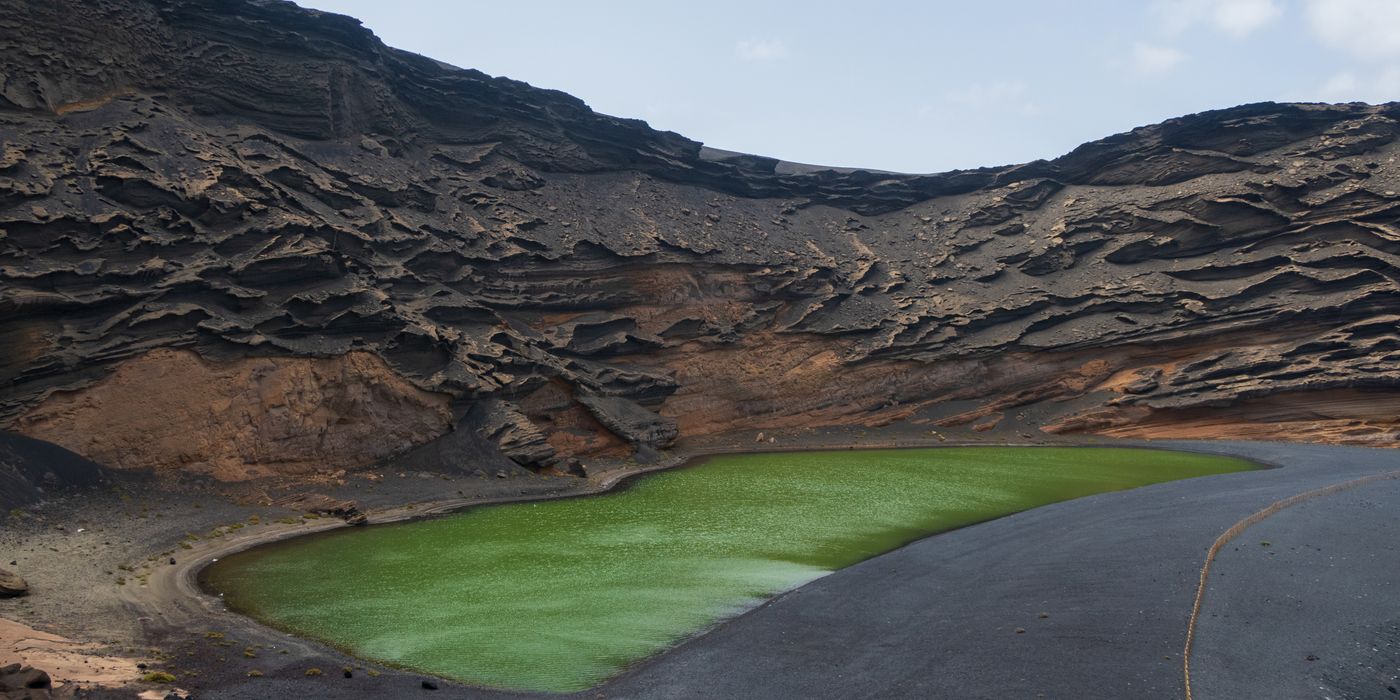
The strangest of the seven and the most rewarding if you like odd places. Almost the entire island is volcanic rock. There are no high rise resorts, because the artist Cesar Manrique spent decades getting building height restricted, and the result is an island that looks unlike anywhere else in Europe.
Lanzarote is the driest of the main islands, which makes it the safest bet for guaranteed winter sun. It is also the windiest, which is why Famara is a serious surf beach and Costa Teguise is a serious windsurfing one.
Fuerteventura
Beaches. That is the pitch and it is a good one. Fuerteventura has more sand than the other six combined, most of it empty in winter. Corralejo in the north and the Jandia peninsula in the south are the two bases.
Go here if lying on a beach is the actual plan. There is not much else, which for a lot of people in February is the point.
La Palma, La Gomera and El Hierro
The quiet three. La Palma is the best hiking on the islands and has the darkest night sky in Europe, with the Roque de los Muchachos observatory on top. La Gomera has laurel forest that predates the last ice age. El Hierro has almost no tourism at all.
None of them are winter sun islands in the sunbathing sense. All three are excellent if you would rather walk.

Where to stay, town by town
Costa Adeje, Tenerife. The upper end of the southern resorts. Good beaches, good restaurants, expensive. Expect 140 to 220 euros a night for a solid four star in January.
Puerto de la Cruz, Tenerife. The old resort town in the north. Grander architecture, black sand, half the price of Costa Adeje. Expect 65 to 110 euros a night. Accept some cloud.
Las Palmas, Gran Canaria. A working city of 380,000 with Las Canteras beach along one side. Best choice for anyone who gets bored on a lounger. Expect 70 to 120 euros.
Maspalomas and Playa del Ingles, Gran Canaria. The dunes and the big resort strip. Expect 90 to 170 euros. Playa del Ingles is cheaper and noisier than Maspalomas.
Puerto del Carmen and Playa Blanca, Lanzarote. Puerto del Carmen is the older and livelier of the two. Playa Blanca is newer, quieter and closer to the Fuerteventura ferry. Both run 80 to 150 euros.
Corralejo, Fuerteventura. Small town, huge dune beach next to it, ferry to Lanzarote. Expect 70 to 130 euros.
What it costs in winter 2026
A solo traveller on a budget can do the Canary Islands for around 75 euros a day including accommodation, food and local transport. A couple staying in the southern resort areas should plan on 110 to 160 euros a day between them. Luxury runs well past 500.
Two cost quirks are worth knowing.
The Canaries charge IGIC rather than mainland Spanish VAT. IGIC runs between 0 and 7 percent against a 21 percent standard rate on the mainland. It shows up most clearly on alcohol, tobacco, electronics and perfume, and barely at all on hotel rooms, which are taxed at a reduced rate in both places.
There is no archipelago wide accommodation tax in 2026. A small number of municipalities have introduced or are considering local charges, so check your specific booking terms, but you will not find the kind of city tourist tax that Barcelona, Lisbon or Amsterdam apply. We cover the wider picture in our guide to European tourist taxes in 2026.
When to go and when to book
The best value winter weeks in the Canary Islands are mid January to early February, after the New Year peak and before the February half term. Rates in that window run 25 to 35 percent below Christmas and New Year.
The worst value weeks are 20 December to 6 January, February half term, and Easter. Rates in the southern resorts can double over Christmas and availability in the better properties goes by October.
Booking timing follows a simple rule here. Winter sun is a planned purchase, not an impulse one, and the market knows it. Northern European tour operators block book large chunks of the southern resorts from summer onwards. If you want a specific hotel in Costa Adeje or Playa Blanca in January, book it in September or October. If you are flexible on property, waiting until November is fine and occasionally cheaper.
On cost, the winter sun market is one where the same room shows up at meaningfully different prices across platforms, because tour operator allocations and direct inventory get released at different times. Compare before you commit. Booking through Best puts 10 percent of the stay back in your pocket, which on a 900 euro fortnight in Lanzarote is 90 euros, roughly a full day of the trip paid for.
Questions we get asked
Which Canary Island has the best winter weather? Lanzarote and Fuerteventura are the driest and sunniest in winter. The south of Tenerife and Gran Canaria are close behind and offer more to do. Northern Tenerife and La Palma get noticeably more winter cloud and rain.
How warm is the Canary Islands in January? Daytime highs sit between 20 and 22 degrees Celsius across the main islands, with nights around 15. Sea temperature is about 19 degrees, which is swimmable but brisk.
Is there a tourist tax in the Canary Islands? There is no archipelago wide accommodation tax in 2026. A few municipalities have introduced local charges, so check your booking conditions, but there is no general Canaries tourist tax.
Which Canary Island is cheapest? Fuerteventura and northern Tenerife are consistently the cheapest for accommodation. Lanzarote and the southern Tenerife resorts are the most expensive.
Do you need a car in the Canary Islands? On Tenerife, Gran Canaria and La Palma, yes if you plan to leave the resort. Lanzarote and Fuerteventura are small enough that a car for two or three days covers it. Rental runs 25 to 40 euros a day in winter.
Images: Hero by Bert Christiaens via Pexels. Lanzarote crater by Javier Balseiro via Pexels. Puerto de la Cruz by Cayambe via Wikimedia Commons, CC BY-SA 4.0. Maspalomas dunes by Zepps Project via Pexels.