Ghent Quietly Out-Bruges Bruges Every Summer. Here's the Five-Day Plan.
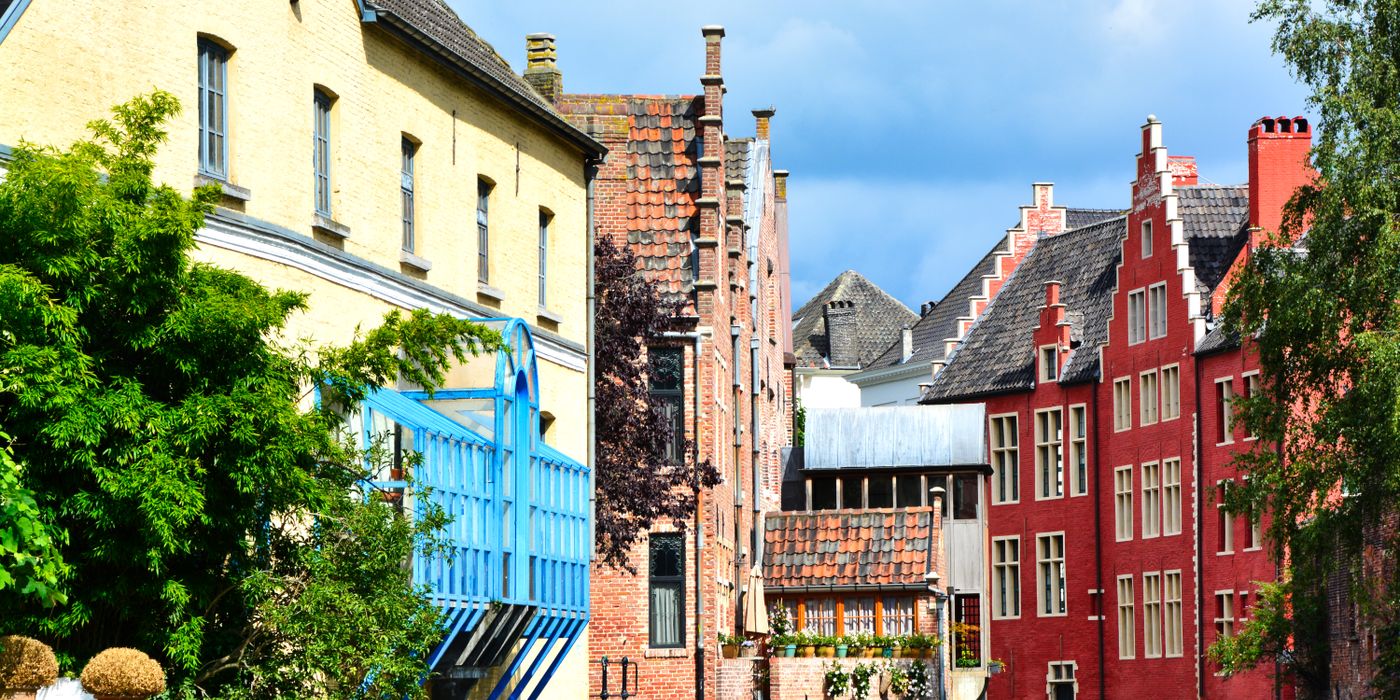
Bruges had its moment. The canals, the chocolate shops, the lace, the cobbled bridges you've seen on a hundred Instagram feeds. The problem is that everyone else also had the same moment. In peak summer, Bruges runs at roughly 6 million tourists a year against a population of 120,000. The math is brutal. You're not visiting a medieval Flemish city. You're queueing through one.
Ghent is 25 minutes east by train. It has the canals. It has the gothic. It has the chocolate. It also has a university, which means it has 70,000 students, which means it has restaurants that aren't all designed for one-time tourist visits and bars where locals actually drink. Hotel rates run 25 to 35% below Bruges in July and August. Cathedrals don't have lines.
We spent five days there last summer to work out whether the trade-off is real. It is. Here's the plan.
Why Now
July 5 through July 12 is Gent Jazz at Bijloke. The 2026 lineup includes Celeste, Patti Smith, and Alabama Shakes performing across the converted abbey grounds. Tickets are still available for several nights as of early June. It's the right week to be in Ghent if you can swing it.
Mid-June is also peak Dok Noord season. The former industrial district just north of the city center has become the buzziest neighborhood in Flanders, anchored by Dok Brewing Company and the De Hal food hall. Weekend markets run through September.
If neither window works, the rest of summer is fine. Ghent's tourist density is so much lower than Bruges that "off-season" doesn't really apply the same way.
Where To Stay
Stay in the city center if you have one trip in Ghent. Stay in Patershol or near Korenmarkt if you want walking access to everything. Stay in Dok Noord if you want a quieter base with food and bars at your doorstep.
For mid-range, 1898 The Post sits in the old central post office building on Graslei. Rooms run 180 to 220 euros in July, which is roughly what a comparable Bruges hotel would charge for a room 20% smaller. The lobby is in the original sorting hall.
For something cheaper, NH Gent Belfort is steps from the belfry tower. Rooms in July run 130 to 165 euros. It's a chain hotel but the location is exactly where you want to be.
For something with more character, B&B Het Hoekhuis on Onderbergen has six rooms in a 17th century townhouse. It runs 140 to 170 euros and includes a breakfast that is genuinely worth waking up for.
Ghent hotel inventory is small enough that booking 4 to 8 weeks ahead matters in summer. Same-day availability is rough.
Day One: Arrival, Korenmarkt, Patershol
Get in via Brussels Airport (45 minutes by direct train) or Eurostar to Brussels-Midi and then 30 minutes to Ghent-Sint-Pieters station. From the station, the tram into the center takes 15 minutes.
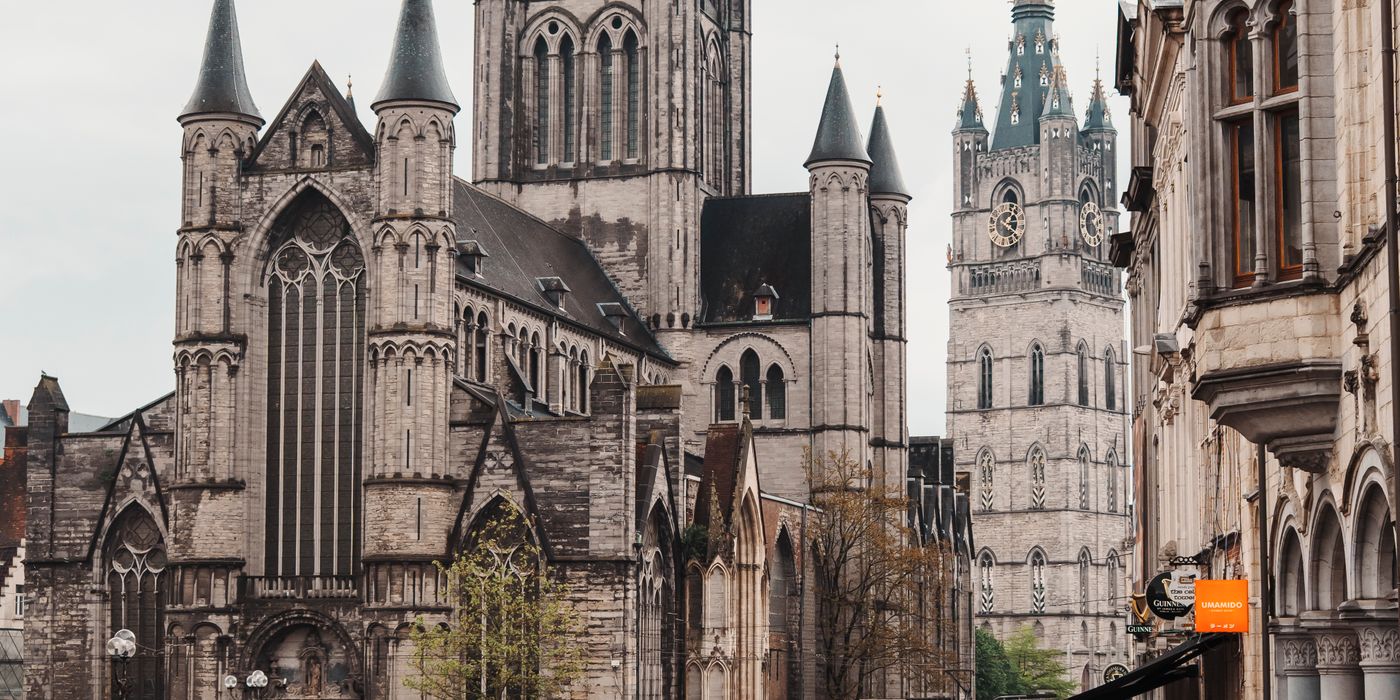
Drop your bags. Walk to Korenmarkt. This is the main square and you can see Saint Bavo's Cathedral, the belfry, and Saint Nicholas Church from a single spot. The Ghent Altarpiece by the Van Eyck brothers is inside Saint Bavo's. After a five-year restoration that ended in 2022, the panels look closer to the 15th century original than at any point in living memory. Entry is 16 euros. Skip the audio guide unless you're going deep.
Walk across to Patershol for dinner. This is the medieval quarter that locals walk through when tourists are in the photo zones. It's six square blocks of cobbled streets, low brick houses, and restaurants. Try Karel de Stoute on Vrouwebroersstraat. It's a small bistro, mostly Belgian classics done well, 35 to 45 euros for a three-course menu.
End the night at Het Waterhuis aan de Bierkant on the Graslei. Belgian beer bar with a list of 150-plus. Sit by the water. The view of the gothic facades lit up across the Leie is the postcard.
Day Two: The Three Towers, Castle Of The Counts, Dok Noord
Saint Bavo's, the belfry, and Saint Nicholas Church form the medieval skyline. You can do all three in a morning. The belfry climb is 7 euros and the view from the top is the best in Ghent.
Walk to Gravensteen. The Castle of the Counts of Flanders is one of the few moated castles in Europe that hasn't been romanticized into a hotel or a museum. The audio tour is genuinely funny. It's narrated by Belgian comedian Wouter Deprez and treats the castle's torture chamber with the gallows humor it deserves. Entry is 14 euros.
Lunch at Volta in Dok Noord. The neighborhood has been a redevelopment story for a decade. Volta is in an old power station and serves a 32 euro three-course lunch that competes with anything you'll find in Brussels for half the price.
Spend the afternoon at the food hall (De Hal van Dok Noord) and Dok Brewing Company. The brewery taproom has 24 lines of their own beers plus a rotating guest list. Try the Quadra. It's an 11% quadrupel that drinks like 7%, which is dangerous.
Dinner that night at Publiek in the same district. The chef Olly Ceulenaere runs a 6-course tasting menu for 90 euros. Reservations open six weeks out and fill up.

Day Three: The Canals, Saint Peter's Abbey, Live Music
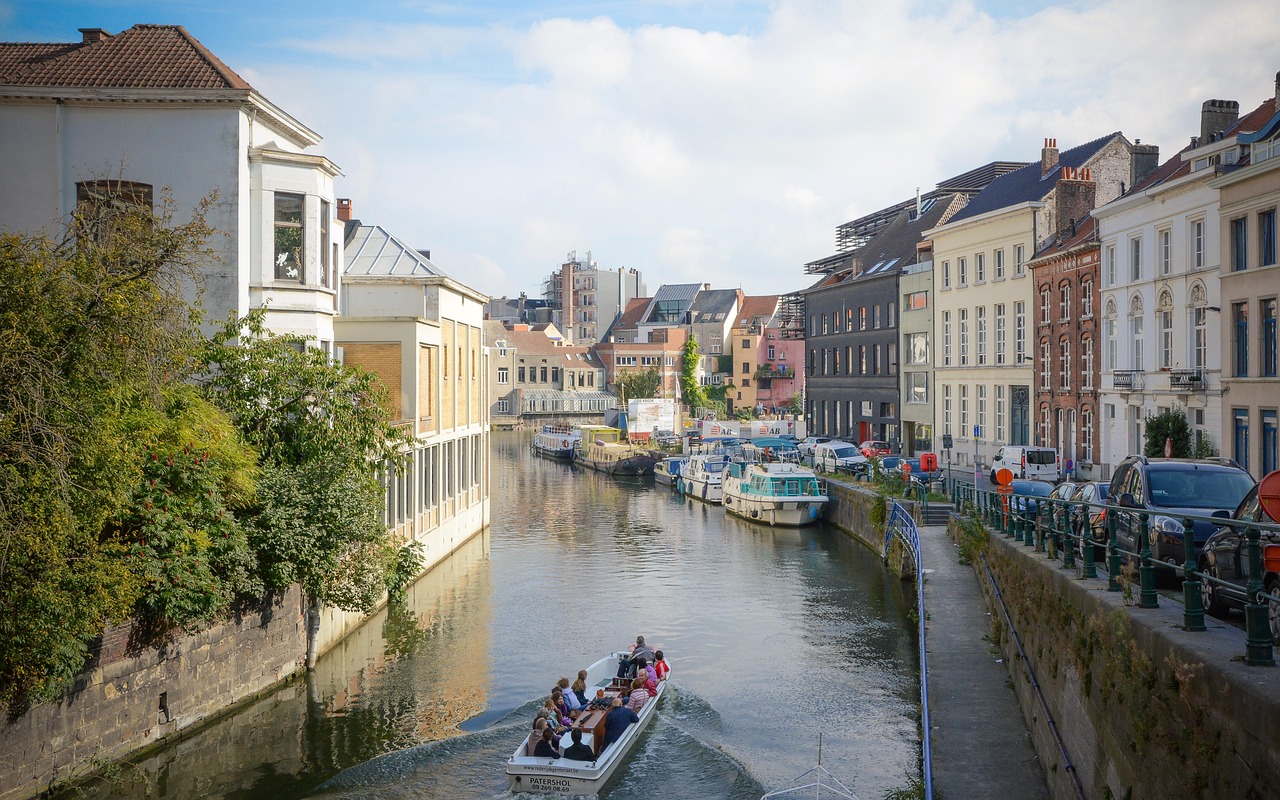
Boat tour through the canals in the morning. Yes, it's touristy. No, you should not skip it. The 40 minute tour leaves from Graslei and Korenlei every 20 minutes in summer. It's 9 euros. The angle from the water is the only way to actually see the medieval facades the way they were built to be seen.
Walk along the Lieve canal up to Saint Peter's Abbey (Sint-Pietersabdij). The abbey is half museum, half concert venue, with a 17th century garden out the back that almost nobody visits. Entry to the garden is free. The interior multimedia tour is 12 euros.
Spend the afternoon walking along Coupure or Bijloke towards the university quarter. Stop at Sioux for coffee. It's the local roastery and the espresso is the only one in town we'd defend against a Roman.
Evening: Gent Jazz if you're there during the festival, or any of the live music venues in the city. Vooruit is the largest. Charlatan and Hotsy Totsy are the small bars where you'll catch jazz or experimental music until 2 AM.
Day Four: Day Trip Or Slow Day
Ghent is perfectly walkable. Four days in, you might want a slower morning. The Citadel Park and the Museum of Fine Arts (MSK) cover an afternoon and have one of the best Flemish primitives collections outside the Antwerp museum.
Alternative: Bruges day trip. We know. We just said skip it. But a day trip from Ghent works because you're seeing Bruges at the early-morning or late-afternoon hours when day-trippers from Brussels haven't arrived or have already left. Train ride is 25 minutes each way and 16 euros round trip. Do the walk through the Beguinage, see the Minnewater, walk to the Markt for the photo, eat at Lekkerbek, and be back in Ghent by dinner.
Alternative two: Antwerp day trip. 50 minutes by train, 22 euros round trip. Different city, port culture, the Cathedral of Our Lady with its Rubens panels, and the fashion district. Worth a day if you've already done Bruges.
Day Five: Markets, Last Meal, Train Out
Saturday morning market at Kouter is the locals' market. Flowers, cheese, fresh fish, brass band playing while everyone shops. It runs until 1 PM.
Walk through the Friday Market square (Vrijdagmarkt). The cafes around the square are where people actually go for a long lunch. Try Bistro Loutchine for moules-frites. They do a kilo of mussels with three different broths for 28 euros.
Train out of Ghent-Sint-Pieters. Brussels airport in 50 minutes. Eurostar in 30 to Brussels-Midi.
What This Trip Costs
Five days in Ghent in July at mid-range hotels, eating well at lunch and dinner, with one museum a day and a couple of beers in the evenings, runs 850 to 1,100 euros per person. Same trip in Bruges with comparable hotels and food runs 1,150 to 1,500 euros. The Ghent discount is 25 to 35% across the board.
The biggest single line item is the hotel. A 180 euro Ghent room is a 240 euro Bruges room in July. Across five nights, that's a 300 euro difference for two people.
The Frequently Asked Questions
Is Ghent or Bruges better for first-time visitors to Belgium?
Ghent is the better first stop. It's bigger, has more food and bars, the architecture is more varied, and you'll see fewer day-trippers. Bruges is more concentrated, which is great for a single afternoon and tiring across multiple days.
Can I do Ghent and Bruges in the same trip?
Yes. Stay in Ghent and day-trip to Bruges. The reverse works but Ghent has more to do in the evening so it's the better base.
Do people speak English in Ghent?
Almost universally in restaurants and hotels. Ghent has 70,000 university students and a large international academic community.
Is Ghent walkable?
The city center is 1.5 kilometers across. You don't need transit for most stays. Trams run when you want to skip a walk.
What about hotel cashback?
Best (best.so) gives 10% cashback on hotel bookings in Ghent, Bruges, and across Belgium. Worth checking the rate before you confirm.
Images: Hero (Graslei waterfront), St Nicholas Church belfry, and Leie canal via Pexels. Ghent canal historic view via Pixabay. Used under free licenses.



