Five Days in Ljubljana and Lake Bled, the Alps Slovenia Keeps to Itself
Slovenia has the Alps, an island church on an emerald lake, and a walkable capital, at a fraction of Austrian prices. A five-day Ljubljana and Lake Bled plan.

Everyone funnels into the Austrian Alps or the Italian lakes and pays Austrian and Italian prices for the privilege. One country over, Slovenia has the same peaks, an emerald lake with an island church in the middle of it, and a capital you can cross on foot in twenty minutes. It costs a fraction of the neighbors and stays cool while southern Europe bakes.
We spent five days splitting time between Ljubljana and Lake Bled. Here is how to do the same, with real costs and the stops worth your time.
Why Slovenia, and why now
Two reasons. The first is heat. As mainland Europe ran through another brutal summer in 2026, the Julian Alps stayed mild, with Bled sitting at a comfortable altitude while cities to the south pushed past 100 degrees. We dug into that northward shift in our piece on how the heatwave is moving travelers and hotel prices north.
The second is money. A mid-range hotel in Ljubljana runs about 90 to 140 euros a night in summer. A lakeside room in Bled lands around 120 to 180. The same view across the border in Austria or Italy costs half again as much. Slovenia is one of the last spots in the Alps where the math still works in your favor.
Days one and two, Ljubljana
Slovenia's capital is small in the best way. The old town is pedestrian-only, wrapped around the green Ljubljanica river, with a castle on the hill above it. You will not need a car or even much of a transit map.
Start at the river. The banks are lined with cafes, and the architecture you keep noticing, the balustrades, the bridges, the covered market, mostly came from one man, the architect Jože Plečnik, who rebuilt the city in his own style in the early twentieth century. Cross the Triple Bridge, find the Dragon Bridge with its four copper dragons, and just wander. The center is compact enough that getting lost takes effort.

Walk or ride the funicular up to Ljubljana Castle for the view over the red roofs to the Alps beyond. Entry to the castle grounds is free, and a ticket for the tower and exhibitions runs around 16 euros. Spend an afternoon in Tivoli Park, the green lung on the edge of the center, and an hour at the Central Market for cheese, bread, and whatever is in season.
For food, skip the tourist-strip menus right on the river and walk one block back. A proper sit-down dinner with a glass of Slovenian wine runs 25 to 35 euros a head. The wine is genuinely good and almost nobody outside the region has heard of it, which keeps it cheap.
Day three, get to Bled and walk the lake
Getting from Ljubljana to Lake Bled is easy. Buses leave the main station roughly every hour, take about an hour and fifteen minutes, and cost 6 to 7 euros one way. If you rent a car the drive is closer to 45 minutes, but you will not need the car once you arrive.
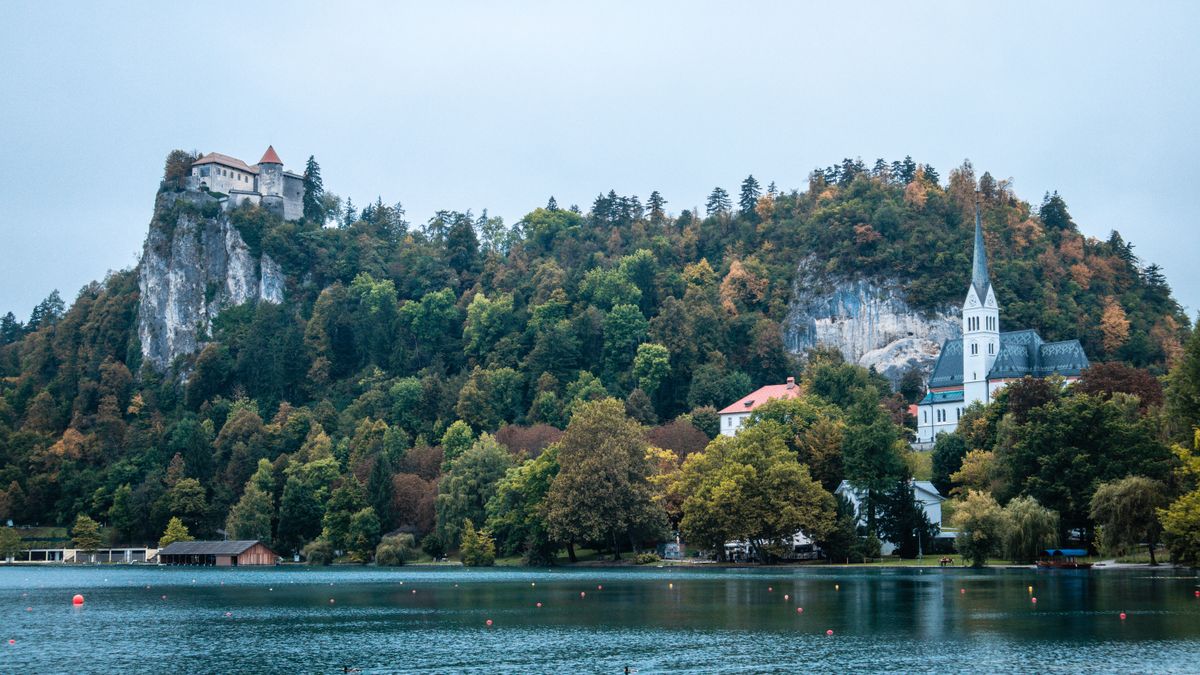
Drop your bags and walk the lake. The full loop is about six kilometers on a flat path that alternates between open lakefront and shaded forest, and it takes a relaxed two hours with photo stops. Do it once on arrival to get your bearings. You will want to do it again at sunrise.
Then climb to Bled Castle, perched on a cliff above the water. It is one of the oldest castles in Slovenia and the view from the ramparts is the postcard you came for. Entry is around 15 to 18 euros. Time your visit for late afternoon when the tour buses thin out and the light goes gold over the lake.

End the day with a slice of kremšnita, the Bled cream cake, a square of vanilla custard and cream between two layers of pastry. The recipe was made famous at the Park Hotel's cafe, and the original is still the one to get. It is a few euros and a local institution.
Day four, the island and the gorge
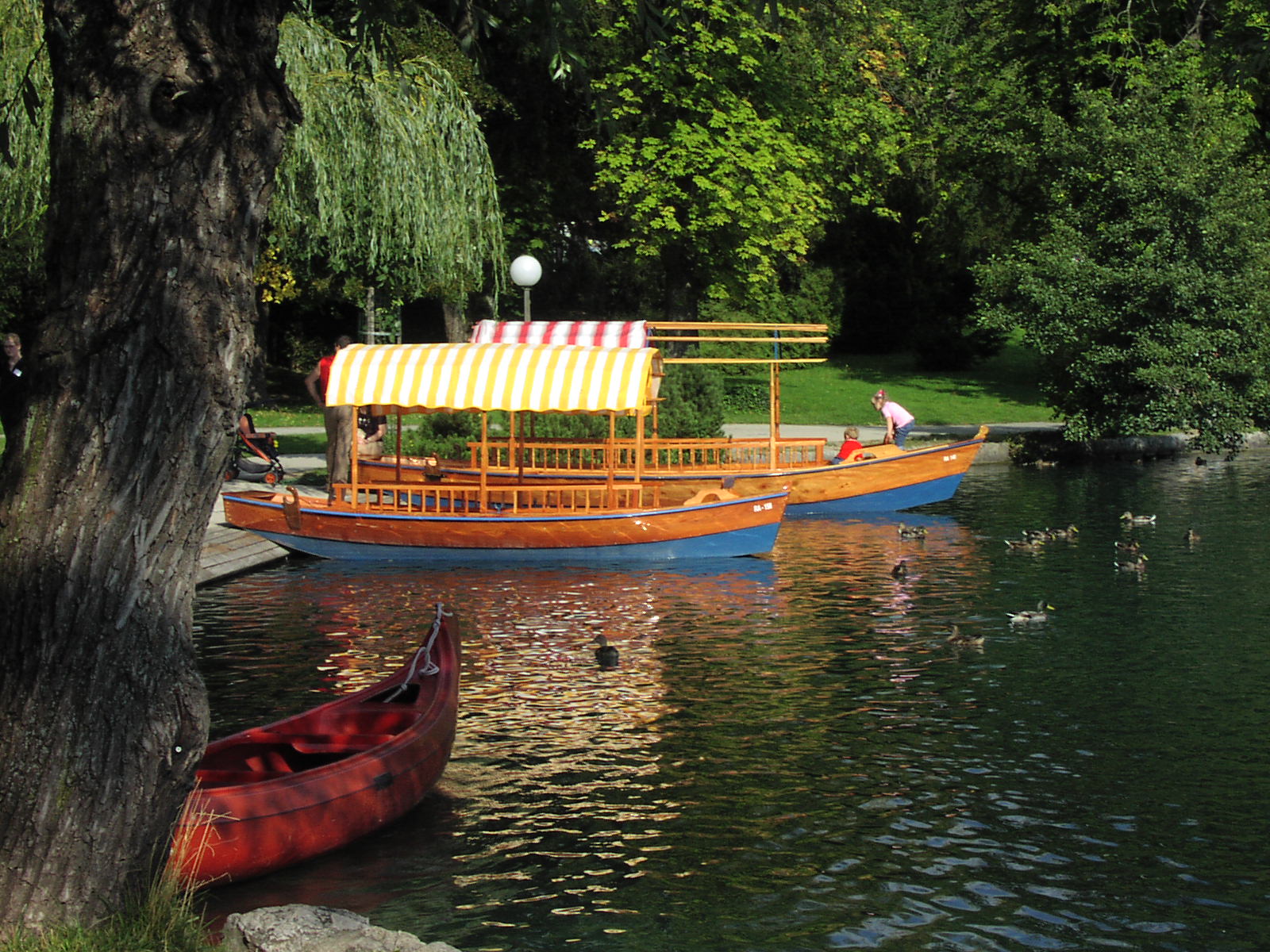
You cannot visit Bled and skip the island. The only traditional way out to it is the pletna, a flat wooden boat rowed by hand, a trade passed down through a handful of local families for generations. The round trip with time on the island costs around 18 to 20 euros per person.
On the island, climb the 99 stone steps to the Pilgrimage Church of the Assumption and ring the bell inside, which local tradition says grants a wish. The whole thing is touristy and completely worth it.
In the afternoon, head to Vintgar Gorge, about a fifteen-minute drive or a local bus ride from Bled. A wooden walkway clings to the rock face above the Radovna river as it cuts through a narrow canyon, ending at a waterfall. Entry is around 12 euros and you should book a timed slot in summer, because they cap the numbers to keep the walkway from jamming up.
Day five, go deeper or head back slow
You have two good options for the last day. If you want more mountains, take the short trip to Lake Bohinj, Bled's larger and wilder sibling inside Triglav National Park. It has none of the crowds, a swimmable lake, and a cable car up Mount Vogel for an Alpine panorama.
If you are routing back toward Ljubljana and the airport, stop at Postojna Cave and the cliffside Predjama Castle on the way. The cave runs an electric train into a vast underground world of stalactites, and the castle is built right into the mouth of a cave in the rock. The two pair into an easy half-day.
What five days costs
Rough numbers for two people, mid-range, in summer 2026. Hotels for four nights, around 500 to 650 euros total. Food, 60 to 90 euros a day. Buses, the pletna, two castles, and the gorge, under 150 euros for both of you combined. Add a flight and you have an Alpine week for well under what a comparable trip to Austria or the Italian lakes would run.
When you book the hotels, Best gives you 10 percent cashback on the rate. On a 600 euro stay that is 60 euros back, roughly two dinners by the lake. If you liked this format, our guides to five days in Madeira and five days on Gran Canaria follow the same playbook for milder corners of Europe.
Common questions
How many days do you need for Ljubljana and Lake Bled?
Five days is the sweet spot. Two for Ljubljana, two for Bled and the lake, and one for a day trip to Bohinj, Vintgar Gorge, or Postojna. You can do a rushed version in three, but you will be watching the clock.
How do you get from Ljubljana to Lake Bled?
Buses leave Ljubljana's main station about every hour, take roughly an hour and fifteen minutes, and cost 6 to 7 euros one way. Driving takes around 45 minutes, but you do not need a car once you are at the lake.
Is Slovenia expensive to visit?
No, by Alpine standards it is a bargain. Mid-range hotels run 90 to 180 euros a night, dinner with wine is 25 to 35 euros a head, and attractions are cheap. It costs noticeably less than neighboring Austria or Italy for similar scenery.
When is the best time to visit Lake Bled?
Late spring and early autumn are quietest, but the altitude keeps summer comfortable even when the rest of Europe overheats. For fewer crowds in peak season, walk the lake at sunrise and visit the castle and island in the late afternoon.
Images: Hero by Mihael Grmek. Ljubljana old town by Petar Milošević. Bled Castle by Lordlazar98. Pletna boat by Sébastien Bertrand. All via Wikimedia Commons, used under Creative Commons. Additional lake image via Pexels.