Madeira Is Having a Moment. Here's What to Know Before You Go.

Flight searches to Madeira jumped 38% year over year for 2026 according to Skyscanner trend data. Hotel rates in Funchal are up 12%. The island locals nicknamed the "Island of Eternal Spring" has been sitting there for centuries, but the rest of Europe seems to have noticed it all at the same time.
We've been tracking why. Some of it is the climate (more on that below). Some of it is the cost (still cheaper than the Algarve in peak season). Some of it is slow-creep fatigue with overcrowded Mediterranean hotspots. Whatever the cause, Madeira in 2026 is the closest thing Europe has to a year-round destination that doesn't feel like a theme park.
Here's what to actually book, and what most travel guides get wrong about it.
Where Madeira Actually Is
Madeira is a Portuguese archipelago about 540 miles southwest of Lisbon, off the coast of Morocco. It's closer to Africa than to mainland Europe. But the flight from Lisbon is 1 hour 45 minutes, and direct flights from London, Paris, Frankfurt, and Manchester run all year. From the US, you connect through Lisbon or London.
The main island is small. About 35 miles long and 14 miles wide. You can drive from the airport on the southeast coast to the cliffs on the northwest in under 90 minutes. That makes it different from every other European destination. You're not picking a region. You're picking the whole island, and you can see most of it from one base.

The Climate Thing Is Real
Madeira sits in the subtropical zone with the Gulf Stream warming the surrounding ocean. Average daytime temperatures stay between 17°C and 25°C every month of the year. December feels like late September. August feels like mid-June. Hurricanes don't really hit. It rains, but it rains in patches. The north coast is wetter than the south.
This is the biggest reason 2026 looks different from 2025 for Madeira. Heatwaves across southern Europe last summer pushed travelers to look for places where 35°C wasn't the new normal. Madeira sits comfortably in the upper teens to mid-twenties even in July and August, and that fact has spread.
Where to Stay, and Where to Skip
Funchal is the capital and the place you should base yourself. About 110,000 people live there. The old town (Zona Velha) has the painted doors most Instagram photos show. The hotel zone (Lido) sits a 20-minute walk west and has the bigger resort properties with sea views.
We recommend staying somewhere in or near the old town for a 3 to 4 day trip. You can walk to dinner. You can walk to the cable car. You can walk to the harbor. A standard 4-star room in Zona Velha runs €110 to €150 per night in shoulder season (March to May, October to November). Peak summer (July to August) jumps to €180 to €220.
Skip the resort properties unless you specifically want a pool day. The Lido area is fine, but it's 25 minutes from anything interesting unless you Uber, and Madeira's hotels weren't really built for full-day pool lounging the way the Algarve's were.
For longer stays (7 or more nights), some travelers split between Funchal and a smaller town like Ponta do Sol on the south coast or Porto Moniz on the north. We'd say it's not worth the hassle for trips under a week.
The Thing Nobody Tells You About Levadas
Levadas are old irrigation channels that crisscross the island. Started in the 16th century. Still functional. The walking paths next to them have become Madeira's version of hiking trails, except they're flat (water doesn't flow uphill), they pass through some of the most dramatic terrain in Europe, and almost no other destination has anything like them.
The most popular is Levada do Caldeirão Verde. It's a 13km out-and-back through laurel forest with a waterfall at the end. Takes about 4 hours. Doable for anyone reasonably fit.
The one we'd actually recommend is Levada do Risco. Shorter, less crowded, ends at a waterfall plunging down a cliff. About 2 hours total. Park at Rabaçal and follow signs.
Bring a headlamp. Some sections go through tunnels that are pitch black for 200 meters or more. This catches first-time visitors off guard. Phone flashlights work but headlamps are easier.
Pico do Areeiro at Sunrise
The third-highest peak on the island. 1,818 meters. There's a road that goes almost all the way to the top, which means you can drive up at 5am, watch the sun come up over a sea of clouds, and be back in Funchal for breakfast.
This is the single best thing to do on Madeira. Not because it's secret (it's not), but because the topography is so unusual that the photo most people show their friends ends up being this one. The clouds usually settle below the peak, so you watch sunrise from above the cloud layer. It looks like a different planet.
Plan for cold. Even in July, sunrise temperatures at the peak can drop to 8 to 10°C. Bring a jacket.
The Food Situation
The signature drink is poncha. Rum, honey, and lemon juice, made fresh at the bar with a wooden tool called a caralhinho. Every bar has its own version. Try it at Taberna Ruel in Funchal old town for a reference point.
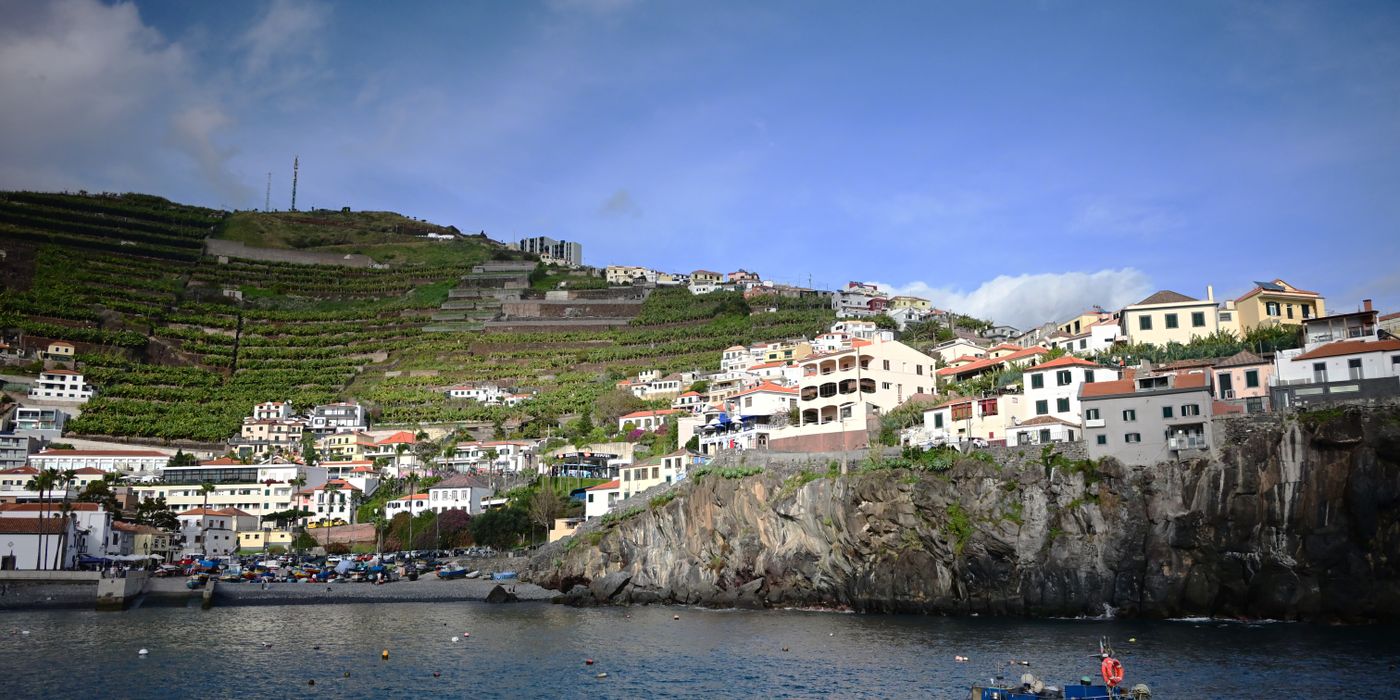
The signature dish is espetada. Beef cubes skewered on a bay laurel branch, grilled over wood, served hanging from a hook above your plate so the juices drip onto a piece of bread underneath. Order it at Cantinho da Aldeia in Câmara de Lobos, about 20 minutes from Funchal.
The fish to try is espada (black scabbard fish). Deep-water fish that lives at 800 to 1,000 meters. Looks alarming. Tastes mild and buttery. Locals eat it grilled with banana and passion fruit sauce. Sounds wrong. Works.
Skip the pastel de nata craze. Madeira does pastéis fine, but Lisbon's are better, and the local specialty bolo de mel (honey cake) is genuinely interesting and gets ignored by most tourists.
What a 4-Night Trip Actually Costs
For two travelers in shoulder season:
- Flights from London: £180 to £280 per person round-trip
- Hotel in Funchal old town: €130/night × 4 = €520
- Rental car for 3 days: €90 total
- Food and drinks: €60 to €80/day combined = €240 to €320
- Activities (cable car, tip for guide, Pico do Areeiro parking): €60 to €80
Total for two people, 4 nights, roughly €1,200 to €1,500 plus flights. That's significantly cheaper than 4 nights in Mallorca or Crete in the same season.
When to Go
Anytime. We mean it. The strongest months are March to May and September to November because the crowds thin and the weather stays gorgeous. But December is fine. June through August is busier but still 4 to 5 degrees cooler than mainland Mediterranean, which is now a real selling point.
The one thing to check is whether a cruise ship is in port the day you're walking around Funchal. The cruise dock is right next to the old town, and a single ship can dump 3,000 people into 4 streets in 30 minutes. The Funchal port schedule is published online. We check it before booking.
A Note on Booking
If you book through Best, you get 10% cashback on the hotel portion. On a €520 stay, that's €52 back. Worth running the price comparison before you commit elsewhere. The platform shows the Best price and the equivalent direct rate side by side, so you can see what the cashback works out to in real money.
That's the whole pitch. The rest of this post is about the island.
Frequently Asked Questions
Do I need a rental car in Madeira?
For day trips out of Funchal, yes. Public buses exist but run sparsely outside the main city. A 3-day rental costs about €90. If you only plan to stay in Funchal, you can skip the car and take taxis or organized day tours.
How does Madeira compare to the Canary Islands?
Madeira is greener, smaller, and more dramatic. The Canaries are flatter, more developed, and have bigger beach resorts. If you want hikes, cliffs, and laurel forest, pick Madeira. If you want sand-on-the-beach resort weeks, pick Tenerife or Lanzarote.
Is Madeira safe?
Yes. Crime rates are very low. The bigger risks are weather-related on hiking trails. Check forecasts before levadas and don't attempt the more exposed routes in heavy rain.
Can I see Madeira in 3 days?
Yes for the highlights (Funchal, Pico do Areeiro, one levada walk, one fishing village). For deeper exploration, 5 days is better. A week is the sweet spot if you want to add Porto Santo (the smaller sister island) for a beach day.
Images: Hero by Matej Simko. Inline photos via Pexels, used under the Pexels license.