Mediterranean Islands Are Quietly Winning Shoulder Season
Six of the ten fastest-growing shoulder season destinations this year are Mediterranean islands or coastal towns. The reason has more to do with hotel supply economics than with travel fashion.
Six of the ten fastest-growing shoulder season destinations this year are Mediterranean islands or coastal towns. Paphos, Luqa, Chania, Arrecife, Palermo and Rhodes. That is according to KAYAK search data, and it is a strange list, because none of those places were struggling for attention in July.
Something has shifted. The Mediterranean is no longer a summer destination that happens to have a quiet autumn. Autumn is becoming the point.
The numbers behind the shift
European autumn bookings among high-end travellers are up about 25 percent year over year. Airfare research published in August 2026 found travellers moving to the shoulder window save more than a quarter on flights compared with peak dates. And the shoulder window itself has stretched. It used to mean the last two weeks of September. It now runs from mid-September through the end of October, and in the southern Mediterranean it holds into early November.
Meanwhile the search behaviour has changed in ways that are hard to misread. The 2026 Hotel Price Index found use of the budget filter up roughly 1,800 percent and rewards filters up around 820 percent. People are screening for price earlier in the process than they used to. They are not deciding where to go and then finding out what it costs. They are deciding what it costs and then finding out where to go.
Shift the dates six weeks and the Mediterranean becomes affordable again. That is the whole story.

Why islands specifically
Mainland European cities have a shoulder season too, and Porto and Seville and Amsterdam all get cheaper in October. But the island effect is sharper, for two reasons that have nothing to do with travel fashion.
The first is water temperature. Sea temperature lags air temperature by about six weeks. Around Malta and Crete and Cyprus, the water in mid-October sits at 23 to 24 degrees Celsius, which is warmer than it was in June. You get August swimming with October crowds and October prices. Mainland city breaks cannot offer that trade.
The second is supply behaviour. Island hotel inventory is fixed and highly seasonal. A 60-room property in Chania that runs at 95 percent occupancy in August has to decide in October whether to sell a room at a discount or leave it empty until spring. Empty rooms earn nothing. So rates fall faster on islands than in cities, where business travel keeps a floor under midweek pricing all year.
That second point is the one most travellers never think about. City hotels have a corporate customer who does not care about the weather. Island hotels do not.
What the six destinations actually look like in October
Paphos, Cyprus. Sea at 25 degrees into late October, one of the warmest in the Mediterranean that late. Hotel rates fall 30 to 45 percent from August. The archaeological park is genuinely worth the afternoon it takes.
Luqa, Malta. Luqa is where the airport is, so this entry is really Malta as a whole. Mid-range rooms in Sliema run 90 to 180 euros in shoulder season against summer rates 40 to 70 percent higher. Sea holds at 23 to 24 degrees through October.
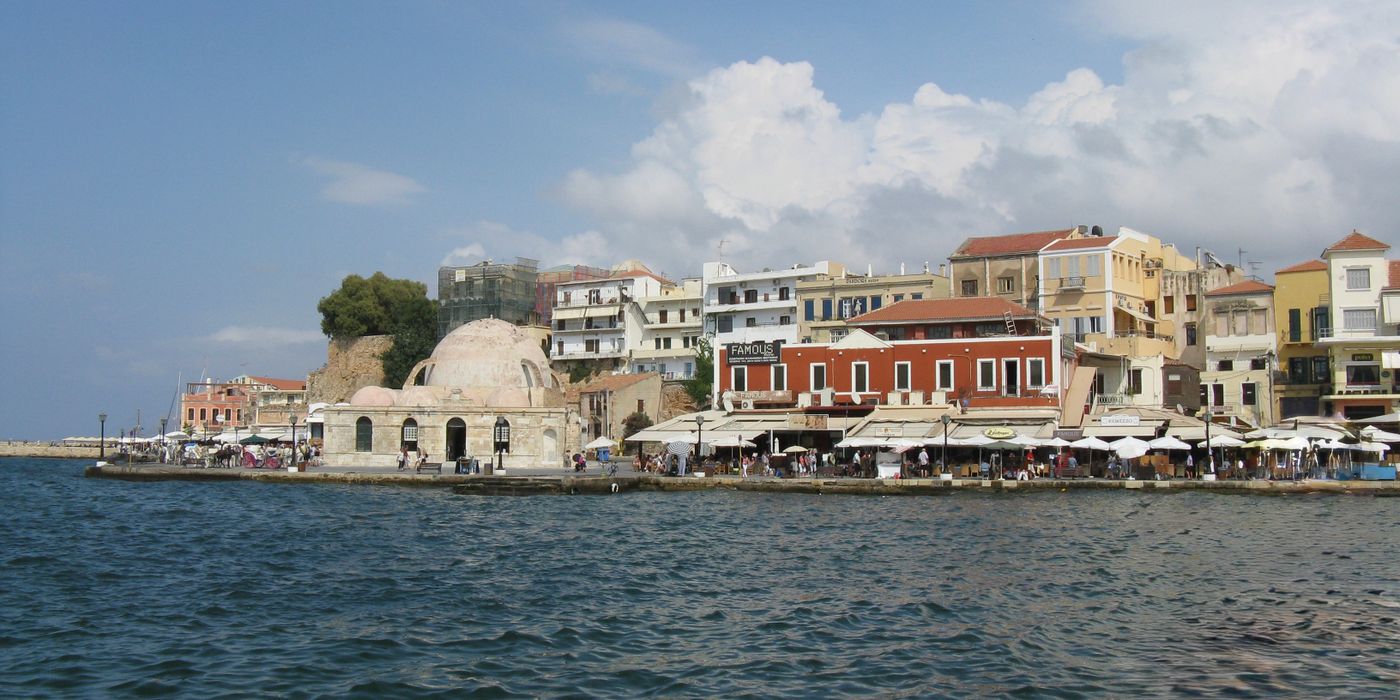
Chania, Crete. The Venetian harbour is the postcard, and in August it is close to unwalkable. In mid-October the same quay has empty tables at eight in the evening. Rooms in the old town drop toward 70 to 130 euros.
Arrecife, Lanzarote. The Canaries barely have a shoulder season in weather terms because the climate is flat all year, so the pricing dip in October and November is almost pure calendar arbitrage.
Palermo, Sicily. July in Palermo is 35 degrees and the markets are brutal. October is 24 degrees and the same markets are a pleasure. Sicily is also still riding attention from Agrigento's run as Italian Capital of Culture.
Rhodes, Greece. The medieval old town is a UNESCO site that gets swamped by cruise arrivals in summer. Cruise frequency drops sharply after mid-October and the Street of the Knights becomes a street again.

The catch nobody puts in the trend pieces
Shoulder season is not free of trade-offs, and the honest version matters more than the enthusiasm.
Flight frequency drops. Routes that run daily in August might run three times a week in late October, which makes a cancellation much more expensive in time. Seasonal restaurants and beach clubs start closing from mid-October, and on smaller islands the closure rate is steep. Ferry schedules thin out, which matters if your plan involves island hopping.
And the weather is more variable. October in the Mediterranean averages beautifully and delivers unevenly. A week in Crete in late October has a real chance of two grey days. Nobody puts that in the booking flow.
The fix is mostly structural. Book flights with reasonable change terms rather than the cheapest possible fare, check whether the specific things you want to do are open before you book the room, and build one flexible day into a week.

What this means for booking
Two pricing patterns from this year's data are worth carrying into a shoulder season booking.
Booking 8 to 14 days ahead of the stay has been saving up to 23 percent this year, which reverses the old advice about booking far in advance. That window works because it catches hotels adjusting to actual demand rather than forecast demand. It works better in shoulder season than in peak, because in peak the room may simply be gone.
Sunday night arrivals remain the best value night of the week almost everywhere. Business travel leaves Sunday empty and leisure travel has usually gone home. A Sunday to Thursday stay in Chania in October will price meaningfully below a Thursday to Sunday stay in the same week.
One more thing worth watching. Prices in Asia and the Middle East are up about 9 percent for the first half of 2026, while US hotel rates are up around 2.6 percent. The Mediterranean shoulder discount is real, but it is a discount against a rising base. Autumn 2027 will not be cheaper than autumn 2026.
The Best angle
We watch this data because cashback is a percentage, which means the arithmetic gets more interesting exactly when rates are high. A 160 euro room in Rhodes booked through Best returns 16 euros. Across six nights that is roughly a full day's food budget, and it stacks on top of whatever the shoulder season discount already saved you.
Common questions about shoulder season in the Mediterranean
When exactly is shoulder season in the Mediterranean?
Mid-September through the end of October for most of the region, extending into early November in Cyprus, Malta and the Canaries. Spring shoulder runs late April through early June.
Is the sea still warm enough to swim in October?
In the southern and eastern Mediterranean, yes. Cyprus, Malta, Crete and Rhodes all hold 23 to 25 degrees Celsius through most of October. The northern Adriatic and the Gulf of Lion cool off much faster.
How much cheaper are hotels in shoulder season?
Typically 30 to 50 percent below August peak on Mediterranean islands. The discount is smaller in mainland cities, usually 15 to 25 percent, because business travel keeps midweek rates up.
What is the risk of booking shoulder season?
Reduced flight frequency, seasonal restaurant and ferry closures, and more variable weather. None of these are severe, but they reward checking opening dates before booking rather than after.
Images: Hero of Chania waterfront via Pexels. Quattro Canti, Palermo by Julian Lupyan. Street of the Knights, Rhodes via Pexels. Paphos harbour by Anatoliy Smaga. Wikimedia Commons images used under Creative Commons licence.