5 Days on Naxos: The Greek Island the Santorini Crowds Sail Right Past
Naxos has Santorini-grade water, three times the land, and hotels at half the price. A five-day plan with real hotels, real prices, and the marble villages most visitors never reach.
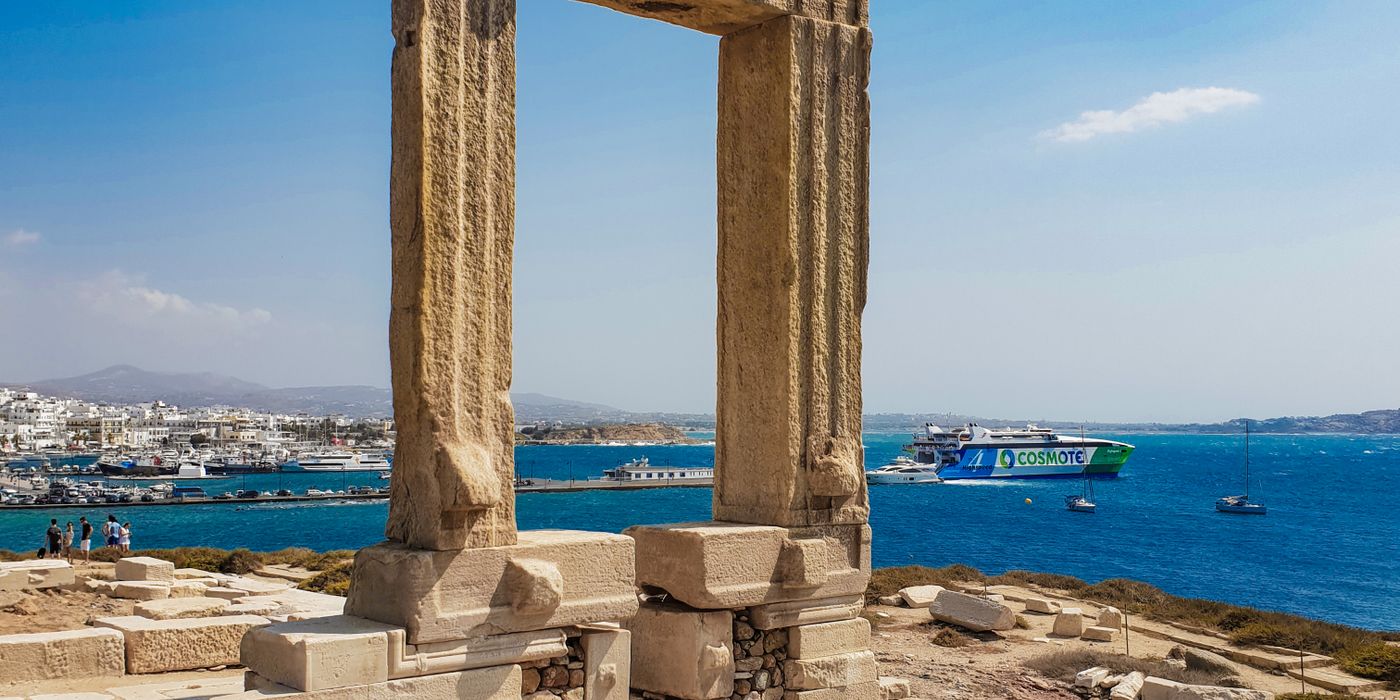
The Blue Star ferry from Piraeus pauses at Naxos for about ten minutes before it carries on to Santorini. Most of the boat stays seated. They are sailing past the largest island in the Cyclades, an island with better beaches than the one they are headed to, hotel rates at roughly half the price, and a main town that still works as a real Greek port rather than a photo set.
We think the ten-minute stop is the better destination. Here is the five-day case for getting off the boat.
Why Naxos Over Santorini in 2026
A caldera-view hotel in Santorini runs 350 to 500 euros a night in July 2026. A well-reviewed boutique hotel a short walk from the water on Naxos runs 90 to 160 euros the same week. The gap has widened over the past three summers, not narrowed.
Naxos is also simply more island. It has a mountainous interior, marble villages, a 2,500-year-old temple gate standing over the harbor, and beaches that run uninterrupted for kilometers. Santorini is a volcanic rim with a view. Naxos is a place you can spend a week without repeating yourself.
The crowds tell the same story. Santorini absorbed around 3.4 million visitors last year on an island of 15,000 residents. Naxos, three times the size, sees a fraction of that. In July you can still find an empty stretch of sand on the southwest coast. We can name no Santorini beach where that sentence is true.
Where to Stay
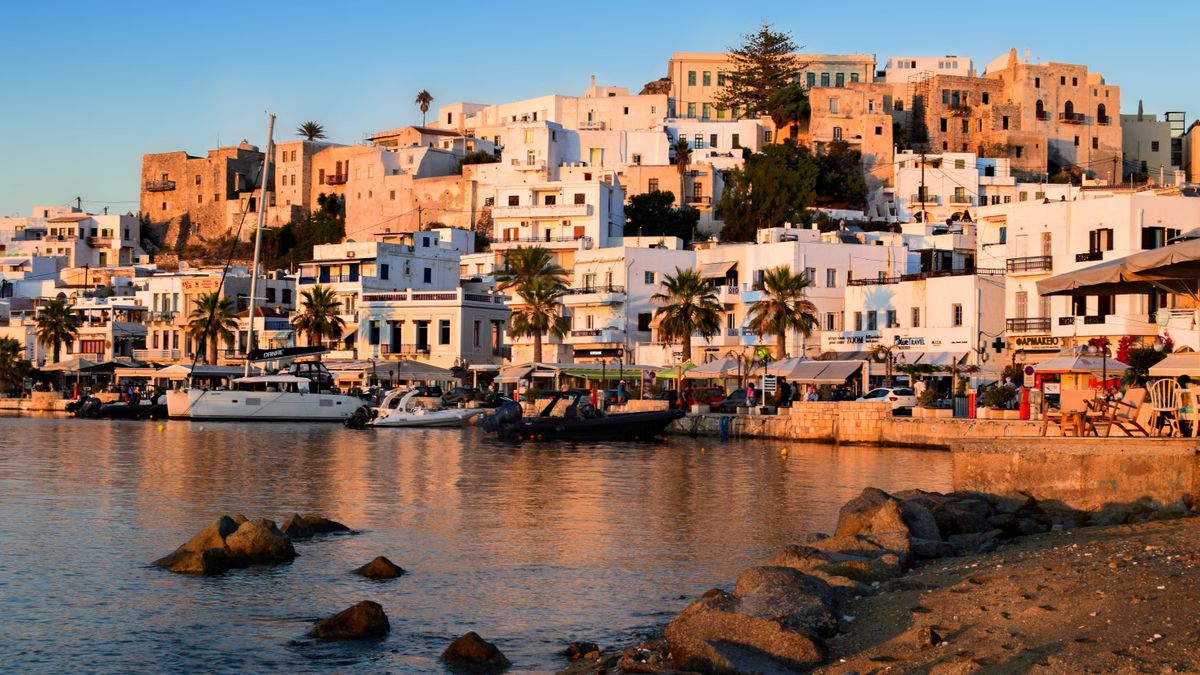
Base yourself in one of two places. Chora, the main town, puts the old town, the port, and the restaurant scene at your door. Agios Prokopios and Agia Anna, ten minutes south, put you on two of the best beaches in Greece.
- Hotel Grotta (Chora). Family-run, breakfast included, sea views toward the Portara. Around 140 euros a night in July 2026.
- Iria Beach Art Hotel (Agia Anna). Right on the sand. Around 180 euros in peak weeks.
- Pension Sofi (Chora). The budget pick at around 70 euros, with a garden courtyard and a family that has run it for decades.
One booking note. Greek island hotels are the exception to the last-minute pricing rule we wrote about. Inventory is small and July fills early. Book four to six weeks out, and pick a free-cancellation rate so you can rebook if the price drops.
Day 1. Chora and the Portara
Spend the first day in the main town. The Kastro, the Venetian hilltop quarter, is a maze of whitewashed lanes, archways, and 700-year-old mansions, and it stays surprisingly quiet because cruise traffic here is light. The Archaeological Museum inside the old French School is worth the 6 euro ticket.
At sunset, walk the causeway to the Portara. It is the marble doorway of an unfinished temple to Apollo, started around 530 BC and abandoned mid-build. The whole town gathers on the rocks below it at dusk. Bring something from a bakery and join them.
Dinner in town. Axiotissa, a couple of kilometers south, is the locals' answer when you ask where to eat. Order whatever cheese plate they suggest. Naxos makes graviera that wins national awards.

Day 2. The Beach Day
Agios Prokopios and Plaka are the headline beaches, and they earn it. Fine white sand, water in three shades of blue, and a gradual entry that makes them easy for kids. Plaka runs about 4 kilometers, so even in August the far end thins out to nothing.
Sunbeds at the organized sections cost 15 to 25 euros for a pair with an umbrella in 2026. Or walk five minutes past the last bar and pay nothing. Tavernas back most of the beach, so lunch is grilled fish and a beer with sand still on your feet.
Day 3. The Marble Villages
Rent a car for two days. Compact cars run 35 to 50 euros a day in summer if you book a week ahead, and the island's interior is the part most visitors never see.
Drive the Tragea valley. Halki, the old capital, is all neoclassical facades and citrus courtyards. The Vallindras distillery there has made kitron, the island's citron liqueur, since 1896, and the free tour ends with a tasting. Twenty minutes uphill, Apeiranthos is built almost entirely of marble. Its lanes were polished by feet over centuries and shine like wet stone.
Stop at the Temple of Demeter on the way back. It is small, 2,500 years old, built of local marble, and you will likely share it with nobody.
Day 4. The Wild Southwest
Point the car south to Mikri Vigla, where a rocky headland splits two beaches. The north side catches the meltemi wind and has been a kitesurfing hub for years. The south side is calm enough to swim laps. Further down, the Alyko cedar forest grows right out of the dunes, and the half-ruined buildings there carry some of the best street art in the Cyclades.
Pack water and lunch. This corner of the island has few facilities, which is exactly why it still looks the way it does.

Day 5. Mount Zas or One More Swim
If your legs want it, hike Mount Zas. At 1,003 meters it is the highest point in the Cyclades, the mythological childhood home of Zeus, and a 3-hour round trip from the chapel at Agia Marina. The summit view takes in five islands.
If they do not, go back to Plaka. Nobody has ever regretted that decision.
Getting There and What It Costs
Ferries from Piraeus take 3 hours 45 minutes on the fast boats and around 5 and a half hours on conventional ones, at 45 to 90 euros each way in summer 2026. Naxos also has a small airport with 35-minute hops from Athens, which often price under 100 euros if booked early.
A realistic mid-range budget for two people is 220 to 280 euros a day in July. That covers a good hotel, a rental car on two days, sunbeds, and two restaurant meals. The same trip on Santorini runs roughly double, and the difference is almost entirely the room rate.
If island-hopping is the plan, Naxos pairs naturally with Paros (35 minutes by ferry) and sits on the main line to Santorini, so you can still give the caldera a day trip without paying its hotel bill. We made the same value argument for the Albanian Riviera versus Croatia and Ghent versus Bruges. The pattern holds. The famous neighbor charges for the name.
When to Go
June and September are the sweet spots. Water warm enough to swim, hotels 20 to 30 percent below peak, and the meltemi wind gentler than in late July. August works on Naxos in a way it does not on Santorini, but book the room early.
FAQ
Is Naxos cheaper than Santorini? Yes, by roughly half. Mid-range hotels on Naxos average 90 to 160 euros a night in July 2026 versus 350 to 500 euros for comparable Santorini properties with caldera views.
How many days do you need on Naxos? Four to five days covers the town, the beaches, and the mountain villages without rushing. A week lets you add Paros or a Santorini day trip.
Does Naxos have an airport? Yes. Naxos airport (JNX) handles short domestic flights from Athens that take about 35 minutes. There are no direct international flights, so most travelers connect through Athens or take the ferry.
Which is the best beach on Naxos? Agios Prokopios and Plaka are the standouts for sand and swimming. Mikri Vigla is the pick for kitesurfing, and Alyko for solitude.
If you do book Naxos this summer, Best gives you 10 percent cashback on the hotel. On a five-night stay at 140 euros a night, that is 70 euros back, which on this island buys two very good dinners.
Images: Hero by Daciana Cristina Visan. Chora at sunset by Jocelyn Erskine-Kellie. Beach by Claudia Schmalz. All via Pexels. Portara sunset by Manfred Werner via Wikimedia Commons (CC BY-SA 4.0).