48 Hours in Sarajevo: The Balkan Capital Where €70 Hotels Still Have Character (Summer 2026)
A 48-hour Sarajevo guide for summer 2026 with specific hotels, restaurants, and walking routes. Why this Balkan capital is Europe’s best value city right now.

You can still book a 4-star hotel in Sarajevo's old town for €70 a night in July 2026. A €4 espresso doesn't exist here. A full meal at a respected restaurant runs €12 to €18 with a glass of wine. The city is two hours from Dubrovnik by direct flight and roughly nobody outside the Balkans has it on their summer list.
That's the short version. The longer version is that Sarajevo punches harder than its Instagram presence suggests, and 48 hours is enough to understand why people who visit once come back twice.
We picked Sarajevo for this guide because the price-to-quality ratio is the best in Europe right now. Hotels start at $30 per night, with mid-range options at €70 to €90 even in peak summer. And the city is unusually walkable, so you don't burn money on transit.
The 30-Second Take on Sarajevo
Sarajevo is a small capital. About 280,000 people in the city itself. It sits in a valley with steep hills on three sides, which is why the views from the cable car and the Yellow Fortress are so good. The old town (Baščaršija) is Ottoman. The newer center is Austro-Hungarian. Walk between the two and the buildings change architectural style in the span of one block, in a way you don't see anywhere else in Europe.
This is the only European capital where you'll find a mosque, a synagogue, a Catholic cathedral, and an Orthodox church within a five-minute walk. It earned the "Jerusalem of Europe" nickname for that reason. The history is layered, sometimes painful, and openly discussed.
Day One. Old Town, Coffee, and the View
Morning. Start in Baščaršija, the Ottoman-era bazaar that dates to the 1460s. The square with the wooden fountain (Sebilj) is the heart of it. Grab a Bosnian coffee at Caffe Slatko. It's served on a copper tray with a small piece of Turkish delight and a glass of water. €1.50. Sit. Watch pigeons. Do not pour the grounds.
Walk east through the bazaar's craftsman streets. Kazandžiluk is the street of coppersmiths. You'll hear them before you see them. The hand-hammered coffee sets here are real and worth buying. €35 to €60 for a good one, versus €80-plus in Dubrovnik for inferior versions.
Late morning. Walk to Gazi Husrev-beg Mosque. It's the largest historical mosque in Bosnia and Herzegovina, built in 1531. You can enter outside prayer times. The courtyard fountain alone is worth the visit.
Five minutes north of the mosque is the Old Synagogue, now a Jewish museum. Down the hill is the Catholic cathedral. Across from the cathedral is the Orthodox cathedral. All four within walking distance, and the architectural shift between them is the city's signature.
Lunch. Find Buregdžinica Bosna or Sač near the bazaar. Burek (savory layered pastry, usually meat or cheese filling) is the local breakfast or lunch staple. €3 for a hefty piece, paired with a yogurt drink for another €1. This is real food. Not a snack.

Afternoon. Take the cable car (Sarajevska Žičara) up to Trebević. €10 for a round trip. The ride is 8 minutes and gives you the city's best aerial perspective. At the top, walk the abandoned 1984 Olympic bobsled track. It's been reclaimed by graffiti artists and the surrounding pine forest. Strange, beautiful, and unlike anything else on a European city trip.
Evening. Dinner at Inat Kuća, "The Spite House." It's the famous restaurant that was disassembled and rebuilt across the river one stone at a time in the 1890s because the owner refused to sell to the city. The Bosnian platter (€16) gets you cevapi, sausages, stuffed peppers, and salad. Order the local plum brandy (rakija) to wash it down. €3 a glass.
Walk along the Miljacka river afterward. The Latin Bridge, where Archduke Franz Ferdinand was assassinated in 1914, is here. The museum on the corner is small and free.
Day Two. Tunnel, Markets, and the New Sarajevo
Morning. Take a taxi (€8, fixed price) or the bus (€1.20) to the Tunnel of Hope museum at the south end of the city. This is the tunnel that was built under the airport runway during the 1992-1995 siege and kept Sarajevo alive. €5 entry. Plan 90 minutes. The guides are often siege survivors. The combination of personal storytelling and physical artifact is unmatched.
Late morning. Visit the Sarajevo City Hall (Vijećnica), the moorish-style building that was set on fire in 1992 and rebuilt over 22 years. The interior frescos are worth the €3 ticket. From the steps of the building, you get a good walking line back into the old town.

Lunch. Cevabdzinica Zeljo for the city's best cevapi. Five minced beef sausages, pita-style bread, raw onions, kajmak (a thick clotted cream). €5. It's a no-frills counter-style place. The line moves fast.
Afternoon. Walk Ferhadija street, the long pedestrian boulevard that connects the Ottoman bazaar to the Austro-Hungarian center. The cafes that line it from the National Theatre to the Eternal Flame memorial are the city's main social spaces. Order a Sarajevsko pivo (the local pilsner) and people-watch.
Stop at Markale, the open-air market. Cheese, honey, dried fruit, and dried meats. The Travnik cheese (a local variety) and ajvar (red pepper relish) are worth taking home if you're checking bags.
Late afternoon. The Yellow Fortress (Žuta Tabija) is the view spot every local will eventually take you to. It's a 15-minute uphill walk from the old town. Free. Show up an hour before sunset. There's a small cannon that fires daily during Ramadan and on Bayram, and even outside those times the sunset view across the valley is the best in the city.

Evening. Dinner at 4Sobe or Pod Lipom. Both serve elevated Bosnian cuisine in the €20-€30 range per person with wine. Pod Lipom is older and more traditional. 4Sobe is the modern interpretation. Either works.
Where to Stay
The old town (Baščaršija) is the obvious choice for a first visit. You're walking distance to almost everything and the hotels here are in restored Ottoman buildings.
Hotel President Sarajevo in the old town runs €85 to €110 in July. 4-star, classical service, three-minute walk to the bazaar.
Hotel Sana at €55 to €75 is the value pick. Boutique, modern, less than ten minutes on foot from the old town.
Swissotel Sarajevo at €130 to €180 is the splurge. Hill location, full views, pool.
Booked through Best, you'd net back $9 to $20 a night in cashback on these properties. Sarajevo is one of the European destinations where the cashback actually meaningfully changes the cost math because the base rates are so much lower than comparable Western European cities.
The Honest Trade-offs
Sarajevo's airport is small. Direct flights from major European hubs are limited. You'll likely transit through Vienna, Istanbul, or Zagreb. From the US, count on two stops.
The country is not in the Schengen zone, so you'll go through passport control even arriving from Croatia by bus. The currency (convertible mark, BAM) is pegged to the euro at 1.95583 to 1. Most places accept euros for larger purchases, but small vendors prefer marks.
English is widely spoken in tourist areas. Less so in residential neighborhoods. The locals are direct and warm, especially once you make any effort with Bosnian greetings ("dobar dan" for good day, "hvala" for thank you).
The siege history is everywhere if you look. Bullet holes in concrete walls. Red-painted "Sarajevo Roses" in the pavement where mortar shells killed civilians. Don't avoid it. Don't gawk. Locals will discuss it if you ask respectfully.
Best Time to Visit
Late May through early October is the standard summer window. July and August can hit 32°C (90°F) but the dry heat is manageable. The shoulder months (May, September) bring perfect 20-25°C weather and noticeably lower hotel rates.
December's Sarajevo Film Festival (which actually runs in August) and the New Year holiday period push rates up 30 to 50%. Avoid those if you're optimizing for cost.
Frequently Asked Questions
How expensive is Sarajevo for a 48-hour trip?
A comfortable mid-range trip runs €180 to €240 per person for two nights, including a 4-star hotel, three restaurant meals a day, museum entries, and the cable car. A budget version drops to €110 to €140. A luxury version with the Swissotel and fine dining tops out around €380.
Is Sarajevo safe for tourists in 2026?
Yes. Sarajevo has one of the lower crime rates among European capitals. Pickpocketing in the old town is uncommon but possible. Standard urban precautions apply.
What's the best way to get to Sarajevo from other European cities?
Direct flights from Vienna (1h 15m), Istanbul (2h 5m), Zagreb (1h), Munich (1h 35m), and Frankfurt (1h 50m) are the most reliable routes. From the US, plan on connecting through one of these hubs. The bus from Dubrovnik takes 5 to 6 hours and the train network within Bosnia is limited.
Do I need euros or local currency in Sarajevo?
Bring euros and exchange a small amount to convertible marks (BAM) at the airport or city center for cabs and small vendors. Most hotels and larger restaurants accept euros directly. Card payments work at most mid-range and upscale venues.
How does Sarajevo compare to Dubrovnik or Split for a Balkan trip?
Sarajevo is 40 to 60% cheaper than Dubrovnik for hotels and food. It's inland rather than coastal, so you trade beach access for mountain access. The cultural depth is greater. Visit both if you can, with Sarajevo first if you're working a budget angle.
The Takeaway
Sarajevo is one of the few European cities in 2026 where you can take a real trip, eat well, sleep well, and come home with money left over. The reason it stays affordable is that it isn't on the saturation lists yet. That window is closing, but it hasn't closed.
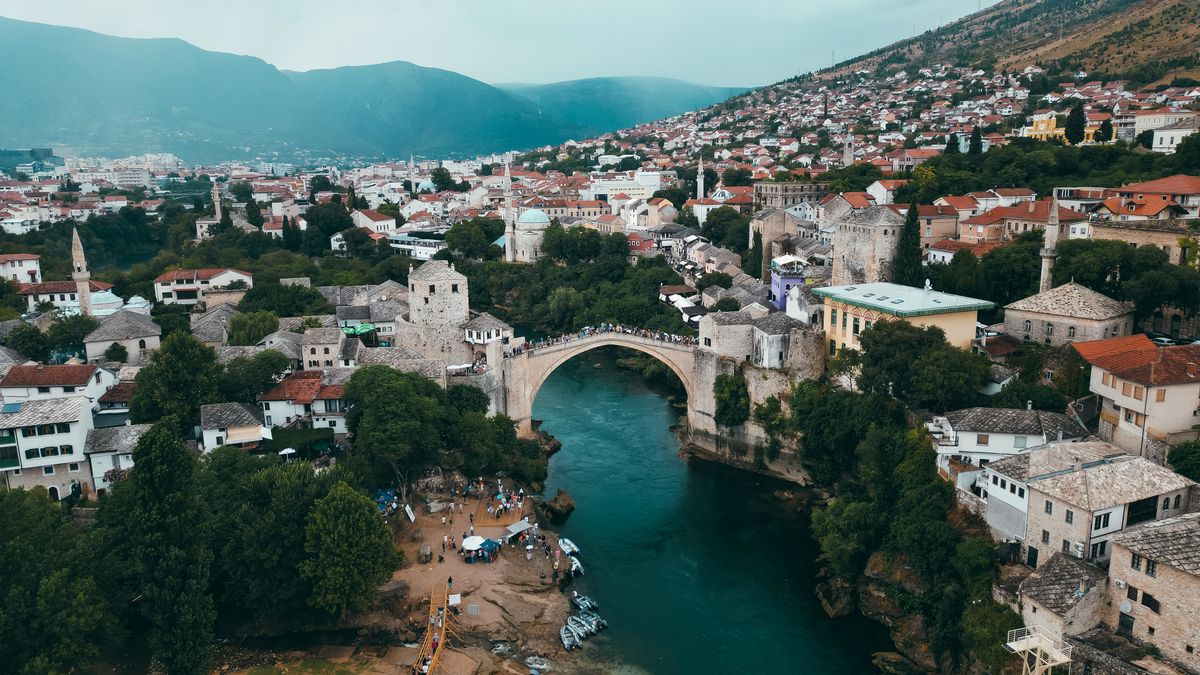
Images: Hero aerial by Adél Grőber (Unsplash). Sarajevo cityscape by Pexels. Baščaršija street by ADEV (Unsplash). Old market by Pexels. Miljacka bridge view by Miguel Alcântara (Unsplash).



