Shoulder Season Is the New Peak. Where Fall 2026 Travelers Are Going
Across Europe's most visited cities, the shoulder months now outrun the summer peak. Where fall 2026 travelers are going, and how to plan around it.

The busiest week to visit Rome used to be easy to name. Some time in mid-July, when the whole of Europe seemed to be standing in the same three piazzas at once. That week is quietly losing its crown. Across Europe's most visited cities, the shoulder months on either side of summer are now pulling ahead of the peak, and fall 2026 looks like the season the shift becomes obvious to everyone.
We have been watching hotel demand patterns move for a couple of years. What used to be the quiet discount window has turned into the smart traveler's main event. Here is what the numbers show, where people are actually going, and how to play it.
The peak is not the peak anymore
Look at occupancy across Barcelona, Istanbul, London, Paris, and Rome and a clear pattern shows up. May and June, then September and October, now run at higher occupancy than the traditional July and August high season in several of these cities. The old shoulder has become the new peak.
The demand data backs it up. In recent surveys, roughly 76 percent of travelers said they are actively planning around shoulder season, choosing the months that bracket summer over summer itself. This is not a fringe move by seasoned travelers. It has gone mainstream.

Why fall won
Three forces pushed the calendar. The first is heat. Summers across southern Europe have gotten hot enough that midday sightseeing in July can be genuinely unpleasant. A recent report on the offseason travel boom pointed to record heat as a direct driver of people booking cooler months instead. September in Seville beats August in Seville by a wide margin, and travelers noticed.
The second is crowds. Overtourism reached a point where famous places started rationing access. Walking a city wall or a coastal path at noon in July can feel like joining a slow human conveyor belt. Shift a few weeks later and the same walk empties out.
The third is money. Late September through October gives you the weather people actually travel for without the summer multiplier on flights, hotels, and everything in between. Airlines have responded by adding capacity in the shoulder months and even into the off-peak winter, which keeps fares softer than they used to be in fall.
Where fall 2026 travelers are actually going
The destinations winning this shift share a profile. Great weather in October, enough infrastructure to be easy, and a summer reputation that scares off the crowds once September ends.
Porto over Lisbon
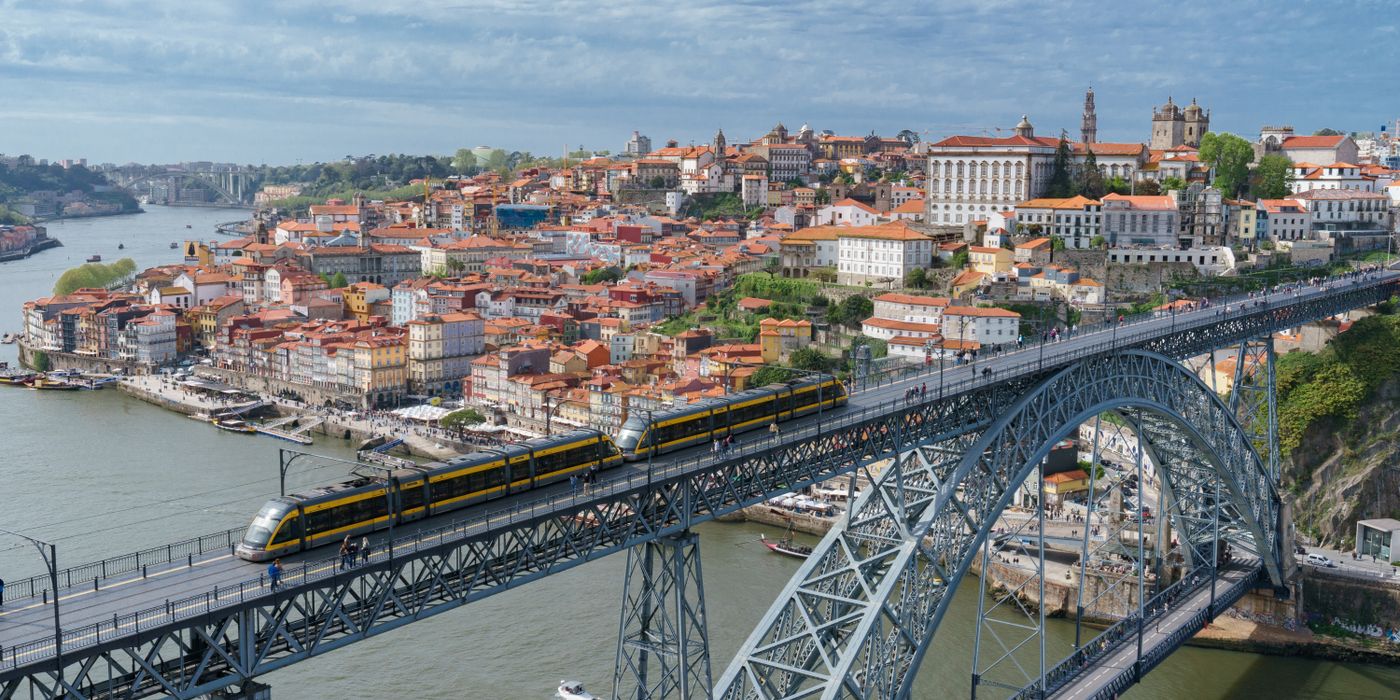
Portugal in fall is close to ideal, and Porto is having its moment. The Douro riverfront stays warm into November, the port lodges across the river are best visited when the harvest crowds thin, and room rates drop once the summer rush ends. It delivers the light and the food of a Portuguese summer without the August wall of people.
The Dolomites and the Alps in larch season
Late September and October turn the Dolomites gold as the larches change color. The hiking is at its best, the mountain huts are still open, and the summer trekking crowds have gone home. For people who want cool air and big scenery instead of a beach, the Italian and Austrian Alps are the standout fall pick.
Andalusia and the smaller Greek islands
Southern Spain in October is warm, walkable, and far cheaper than in July. Seville, Granada, and Cadiz reward the traveler who waits for the heat to break. The same logic sends people to the smaller Greek islands, Milos, Naxos, Paros, where the sea holds its warmth through October and the cruise caps that clog the big islands become irrelevant once the season winds down.
The quiet alternatives, Slovenia and Dalmatia
The travelers trying hardest to avoid crowds are going one step further out. Slovenia, with Lake Bled and Ljubljana, and the Dalmatian coast of Croatia deliver the weather and the scenery of the marquee spots at a fraction of the crush. Romania and Bulgaria show up on the same lists for the same reason. These are the places that still feel like a discovery in a fall when everyone else has finally caught on to shoulder season.

How to play a shoulder-season trip
The window has gotten popular enough that it pays to book with intent. A few things we would do for a fall 2026 trip.
Aim for late September through the third week of October for the best mix of warmth and quiet. Early September still carries summer prices in a lot of places, and November gets unpredictable in the north.
Book flights earlier than you think. Airlines added shoulder capacity, but so did demand. The fare advantage is real, and it disappears fast on popular routes as more people make the same swap.
Be flexible on the destination, not the dates. If your October is fixed, let the weather pick the place. The same week can be perfect in Andalusia and washed out in the Alps. Chasing the climate rather than the checklist is how shoulder season pays off.
Frequently asked questions
Is fall really cheaper than summer in Europe? Yes, in most destinations. Late September through October typically sees lower flight and hotel prices than July and August, along with better weather for sightseeing and far smaller crowds.
Which European cities have shifted away from a summer peak? Occupancy data shows Barcelona, Istanbul, London, Paris, and Rome now running higher in the shoulder months of May-June and September-October than in the traditional July-August peak.
What are the best shoulder-season destinations for fall 2026? Porto, the Dolomites, Andalusia, the smaller Greek islands, Slovenia, and the Dalmatian coast all offer warm-enough weather, lighter crowds, and lower prices in October.
When should I book a fall trip? Book flights early, since airlines added shoulder capacity but demand rose too. Aim your travel for late September through the third week of October for the best balance of weather and quiet.
The season nobody wanted has become the season everybody wants. Fall 2026 is the year that becomes hard to ignore. Pick the weather over the calendar, book the flight sooner than feels necessary, and you get the Europe of the postcards with room to breathe. Our guide to where to stay in Valencia covers one more city built for the shoulder months.
Images via Pexels and Unsplash, used under license.



