5 Days in Slovenia: The Bled-to-Soča-Valley Loop That Costs Half of Austria
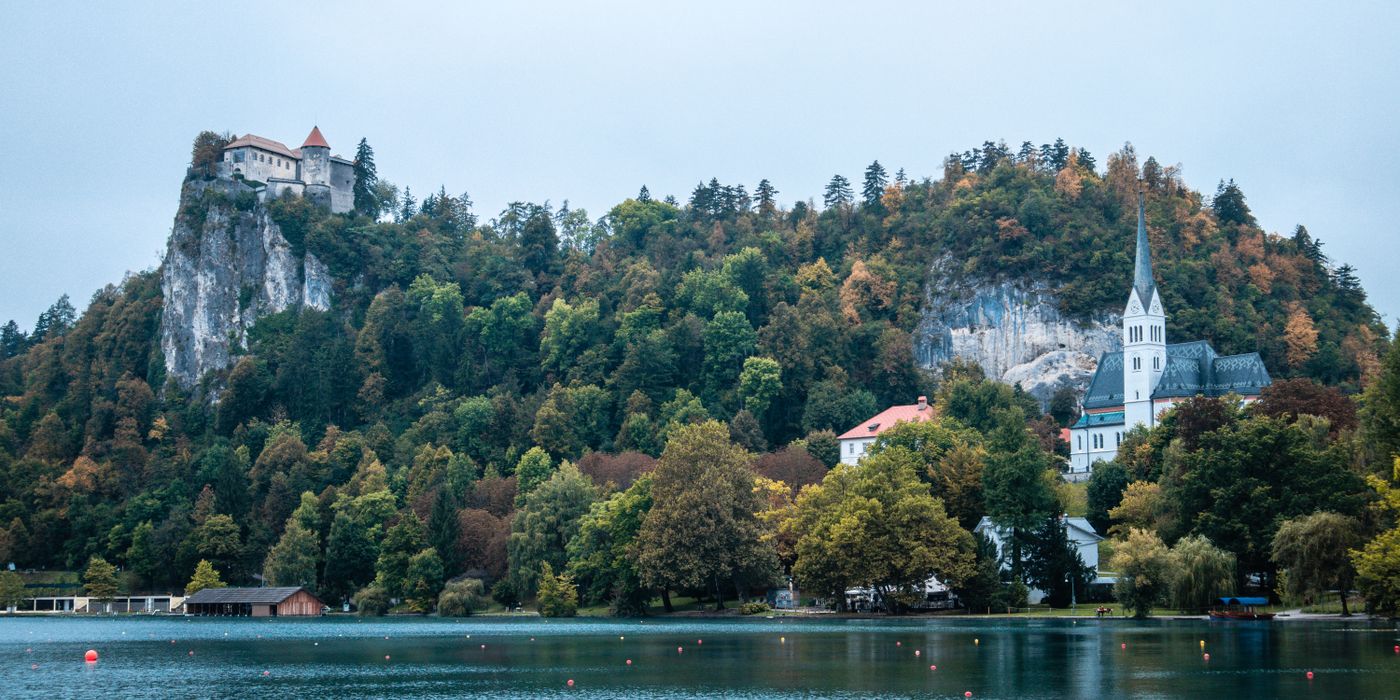
Slovenia is the country that Austria's tourism board pretends doesn't exist. Same Alps. Same lakes. Same baroque towns. Half the price. Better food in most cases. Almost nobody outside of Europe has it on their summer list.
This is going to change. Slovenia has been quietly climbing every European travel writer's underrated list for the last three years. In 2026, it's still cheap enough and quiet enough to feel like a discovery. By 2028, it probably won't be.
We mapped a 5-day loop that hits the three things Slovenia is famous for (Lake Bled, the Julian Alps, the Soča Valley), plus Ljubljana, without spending what an equivalent Austrian trip would cost.
Why Slovenia in 2026
The math is the part most travelers miss. A 4-star hotel near Lake Bled runs 130 to 180 euros per night in July 2026. The equivalent room in Hallstatt across the border is 260 to 380 euros. A multi-course dinner with wine at a serious Slovenian restaurant runs 45 to 60 euros per person. The same dinner in Salzburg is 80 to 110 euros.
The country itself is small. You can drive from Ljubljana to the Italian border in 90 minutes. From Ljubljana to the Adriatic coast in 90 minutes. From the southern wine country to the northern Alps in 2 hours. The whole loop fits inside one tank of gas and a long weekend, technically. We're giving it 5 days because rushing through Slovenia is what people regret.
Getting In
Fly into Ljubljana (LJU). The airport is small. Lufthansa, Wizz Air, Air France, and a few seasonal carriers serve it. It's a 25-minute drive to the city center.
Alternative airports that often work out cheaper. Trieste (Italy) is 90 minutes from Ljubljana. Zagreb (Croatia) is 2 hours. Vienna is 4 hours. Treviso (north of Venice) is 2.5 hours. All four have wider flight networks and cheaper fares from the US than Ljubljana itself.
You'll need a car. Public transport between cities works but eats your day. Renting at Ljubljana airport runs 40 to 70 euros per day in summer 2026 for a compact with manual transmission. Add 15 to 20 euros per day for an automatic.
Day 1: Ljubljana
Land in the morning. Pick up the car. Drive 25 minutes into Ljubljana. Park at one of the underground garages near the river. Around 2 euros per hour or 18 per day.
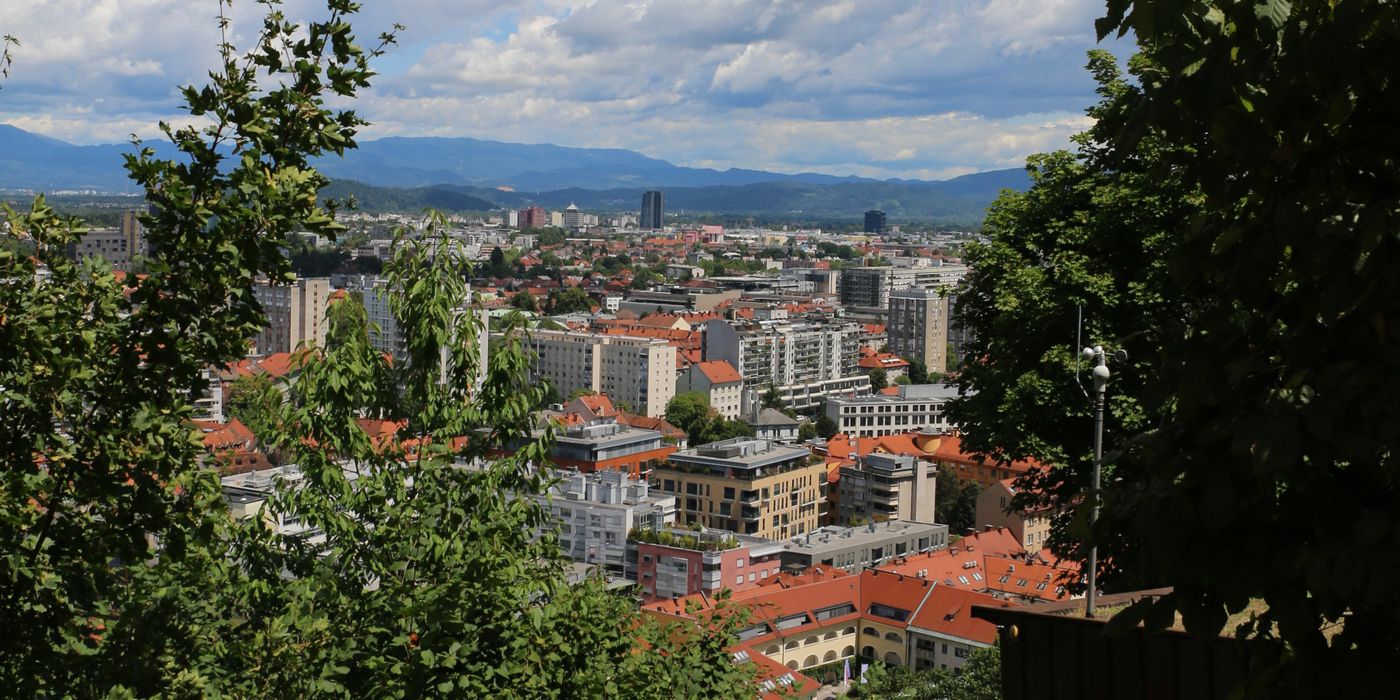
Ljubljana is small and walkable. The whole old town fits in a 20-minute loop. Cross the Triple Bridge (Tromostovje). Walk up to Ljubljana Castle for the view. The funicular costs 6 euros round trip if you don't want to walk the hill. The view from the top is worth either way.
Lunch at Klobasarna. It's a tiny window in the old town that serves Carniolan sausage with mustard, horseradish, and bread. 8 euros for one of the best things you'll eat in the country.
Afternoon walk the Tivoli Park. It's the city's central green space and where locals go. Watch street performers along the river. Stop for coffee at Cacao on the riverbank.
Dinner at Strelec. It's the restaurant inside Ljubljana Castle. The view is spectacular. The tasting menu runs 95 euros which feels like a lot until you remember the equivalent in Vienna is 200. Book ahead.
Day 2: Lake Bled and Lake Bohinj
Drive 45 minutes north from Ljubljana to Lake Bled. Park near the lake itself. There's a parking lot at the Mlino restaurant that's reasonable.
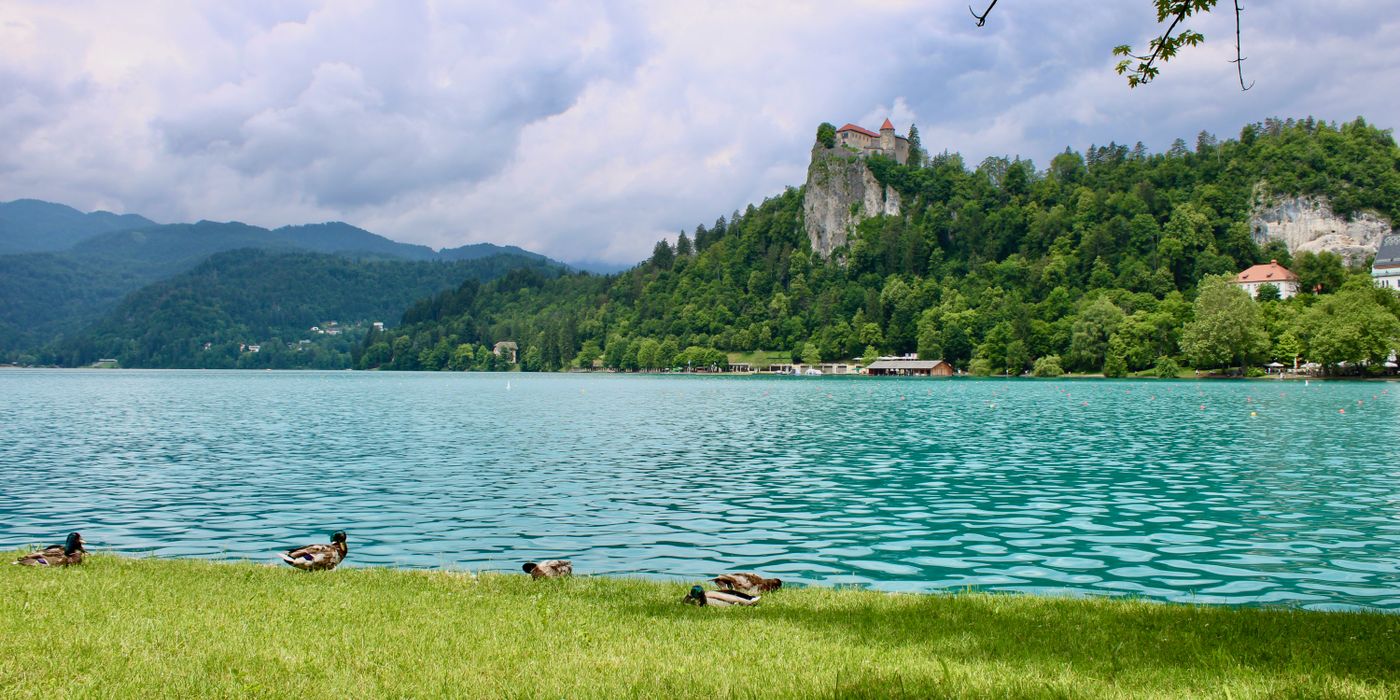
The walk around Lake Bled is 6 kilometers and takes 90 minutes if you stop for photos. Do it counterclockwise starting from the parking lot. The light is better that direction.
Stop at Slascicarna Smon for cream cake (kremna rezina). It's the cake Lake Bled is famous for and worth the small line. 4.50 euros.
Walk up to Bled Castle. Entry is 18 euros. Skip it if you've already done Ljubljana Castle and the time is tight. The view from below the castle is almost as good.
Take the traditional pletna boat to the island. The boat ride is 18 euros round trip. Climb the 99 steps to the church. The bell inside is supposedly lucky if you ring it.
After Bled, drive 30 minutes south to Lake Bohinj. This is the lake Slovenes prefer. Less crowded. More wild. Mountains around it that look like the Dolomites.
If you have time and a swimsuit, swim in Bohinj. The water is clearer than Bled. There's a bus that runs from the lake up to Lake Vrh, which sits 600 meters above and is even quieter. Skip it if you're tired from driving.
Dinner and sleep in Bohinj or back in Bled. Hotel Triglav in Bohinj is a solid mid-range option around 140 euros per night in July.
Day 3: Vintgar Gorge and the Vršič Pass
Morning at Vintgar Gorge. It's a 1.6 kilometer walk on wooden boardwalks above a turquoise river running through a narrow canyon. Open 8 AM to 7 PM. Entry is 12 euros. Go early. The boardwalk gets crowded by 10 AM.
After Vintgar, drive the Vršič Pass. This is the highest mountain pass in Slovenia and one of the most dramatic drives in Europe. 50 switchbacks (numbered, so you can keep track) climb up over 1,600 meters elevation. The road is paved but narrow. Allow 90 minutes for the drive without stops, more like 3 hours with photo breaks.
Stop at the Russian Chapel on the way up. It's a small wooden chapel built in memory of Russian POWs who died building the road in 1916. Quiet. Worth a few minutes.
Stop at the summit. There's a small restaurant. Order a coffee and a piece of strudel. The view is the kind that makes the drive worth it on its own.
Descend into the Soča Valley. The river starts running emerald green here. You'll cross it multiple times on the way down. Pull over and look at it.

Sleep in Bovec or Kobarid. Hotel Sanje ob Soci in Bovec is a beautiful boutique option around 160 euros. Cheaper guesthouses run 70 to 90 euros.
Day 4: The Soča Valley
The Soča Valley is one of the prettiest river valleys in Europe and the part of Slovenia most travelers skip. Don't.
Morning rafting or kayaking on the Soča River. The river runs Grade II to IV depending on the section. A half-day rafting trip runs 50 to 70 euros per person and includes equipment and a guide. Even if you've never rafted, the calm sections are family-friendly and the rapids are manageable.
If water sports aren't your thing, hike to the Soča Source. It's a 1-hour round trip walk that ends at the spring where the river starts. The water comes out of a cave at 5 degrees Celsius.
Lunch in Kobarid. The town itself is small and historic. Try Hisa Polonka. Casual, hearty, around 25 euros per person.
Afternoon at the Kozjak Waterfall. It's a 30-minute walk from the parking lot to a chamber with a waterfall dropping into a small turquoise pool. The light through the opening makes the whole thing look unreal.
Dinner at Hisa Franko in Kobarid if you've planned ahead. It's the restaurant of chef Ana Ros and one of the best restaurants in Europe. Tasting menu runs 220 euros. Book months in advance. If you can't get in, Topli Val in Kobarid is excellent and a quarter of the price.
Day 5: Predjama Castle and Postojna or Drive Back
Two options for the last day depending on your flight time.
The full option. Drive 2 hours south from Bovec to Predjama Castle and the Postojna Caves. The castle is built into the mouth of a cave on a cliff face and is one of the more visually striking structures in Europe. Entry to the castle is 16 euros. The Postojna Caves are 10 minutes away and run on a small train into the karst formations. Entry is 31 euros. Combine the two and budget 4 hours.
The relaxed option. Drive back to Ljubljana via the Vipava Valley. This is Slovenia's main wine region. Stop at one or two wineries for tastings. Lunch at Pri Lojzetu in Vipavski Kriz, which is one of the country's better restaurants. Drive on to Ljubljana and fly home.
What This Trip Costs in Summer 2026
Total for 5 days in Slovenia per person, based on a couple sharing accommodations.
Mid-range hotels for 4 nights: 280 to 380 euros per person.
Car rental for 5 days plus fuel and tolls: 120 to 170 euros per person.
Food (lunch and dinner, mix of mid-range and one splurge): 200 to 280 euros per person.
Activity entries (gorge, castle, boat, museums): 60 to 90 euros per person.
Total range: 660 to 920 euros per person for 5 days, before international flights.
The equivalent itinerary in Austria starting from Salzburg, hitting Hallstatt, Hochkonig, and the Salzkammergut, runs 1,200 to 1,700 euros per person. The food in Slovenia is better at most price points. The crowds are thinner. We don't see this gap holding much longer, so 2026 is the year.
Frequently Asked Questions
How many days do you need for Slovenia?
Five days is enough to see Lake Bled, Lake Bohinj, the Soča Valley, and Ljubljana without rushing. Three days works if you skip the Soča Valley. A week lets you add the coast or the wine country.
Is Slovenia expensive?
No. Slovenia is roughly half the cost of Austria and a third less than Italy for hotels, food, and activities. A mid-range trip runs about 130 to 180 euros per person per day in summer 2026, not including flights.
What's the best time to visit Slovenia?
May, June, and September are ideal. July and August are busiest at Lake Bled and Vintgar Gorge. October is excellent for fewer crowds and fall colors. Winter is for skiing in the Julian Alps.
Do you need a car in Slovenia?
Yes, if you want to see the Soča Valley and the smaller villages. Public transport works for Ljubljana and Lake Bled but doesn't reach the Vršič Pass or the Soča Valley on a reasonable schedule.
What's the best lake in Slovenia: Bled or Bohinj?
Bled is more famous and more photogenic. Bohinj is bigger, quieter, and more wild. Locals prefer Bohinj. Most first-time visitors prefer Bled. They're 30 minutes apart, so do both.
Images: Hero by Karlo. Lake Bled castle by Mateusz Walendzik. Ljubljana cityscape by Antoaneta Anastasova. All via Pexels. Soca River by Albin Berlin via Unsplash. All used under license.