Where to Stay in Copenhagen: A 2026 Neighborhood Guide
Indre By, Vesterbro, or Nørrebro? A straight-talking 2026 guide to where to stay in Copenhagen, with real neighborhood prices.
Most first-time visitors book a hotel next to Tivoli and the central station, then spend the week walking away from it toward the parts of Copenhagen they actually came for. The city is small and the metro is fast, so where you sleep matters less than in London or Paris. It still shapes the trip more than people expect.
Copenhagen has also become a summer winner as northern Europe stays cooler than the baking south. If you are chasing the coolcation idea, this is one of the cities the trend was built for. Here is how the neighborhoods break down in 2026, with real price ranges and honest notes on who each one suits.
A quick map of the city
Copenhagen's center sits on the western side of a harbor, with the island of Amager and the Christianshavn canals to the east. Most of what you want is walkable, and the metro fills the gaps. A single ticket covers two zones and runs about 24 DKK, roughly 3.20 euros. Nightly hotel rates in the center mostly land between 1,200 and 3,500 DKK, which is about 160 to 470 euros, with Nørrebro and parts of Vesterbro cheaper.
Short answer for the impatient. First-timers who want to walk everywhere should stay in Indre By or along the harbor. Food-and-bar people should look at Vesterbro. Budget travelers and anyone who wants a local feel should head to Nørrebro.
Indre By, the old center
Indre By is the postcard Copenhagen. Cobbled lanes, the Strøget shopping street, Rosenborg Castle, and the colored townhouses that end up on every fridge magnet. If it is your first visit and you want to step out of the hotel into the sights, this is the pick.
Expect to pay for it. Mid-range hotels here run 1,600 to 3,200 DKK a night, about 215 to 430 euros, and the four-star places push higher in peak summer. The trade-off is that you barely touch transit. The train from the airport reaches the central station in about 15 minutes, and from there most of Indre By is a short walk.
The honest downside is that the very core can feel like a shopping mall by day and empty by late evening. Sleep a few streets back from Strøget rather than on it.

Nyhavn and the waterfront
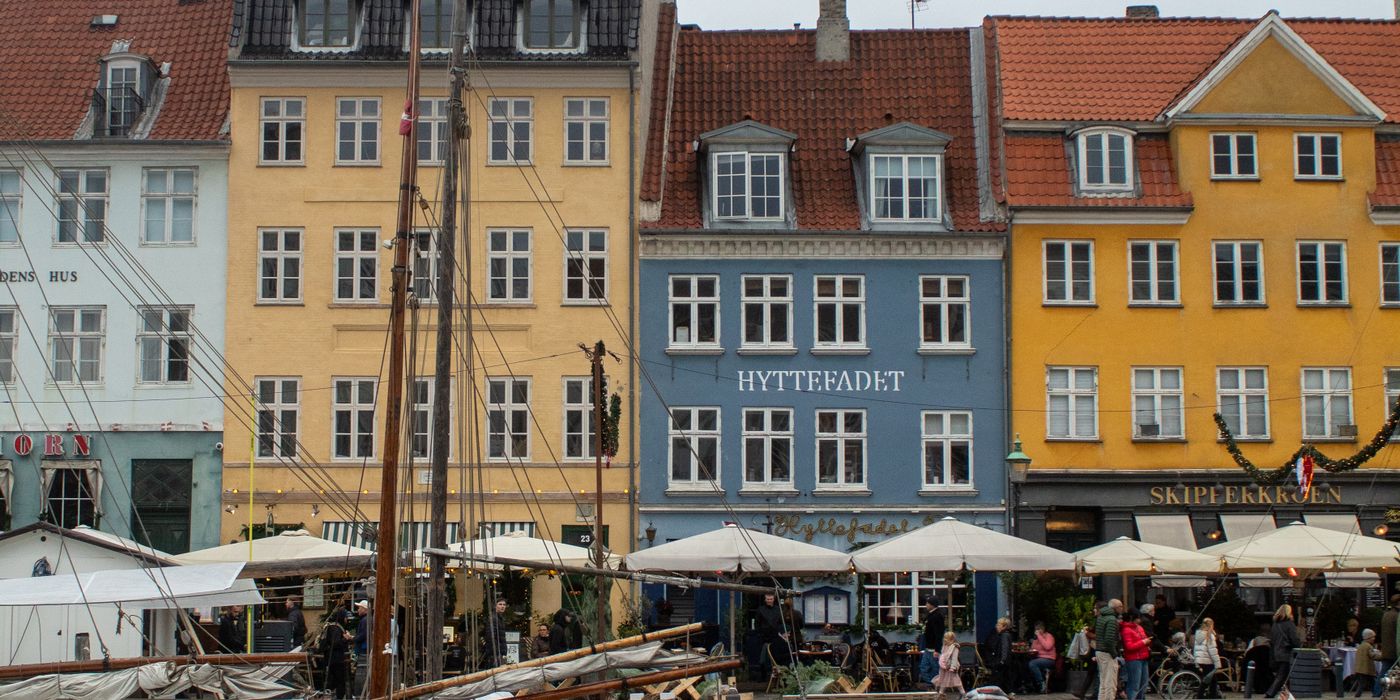
Nyhavn is the row of candy-colored houses along the old canal, and it is the single most photographed spot in the city. Staying right on it is loud and pricey, but the wider harbor area around it is one of the best places to base yourself. You get water on one side, the center on the other, and easy walks to the opera house and the design museum.
Harbor-front and near-harbor hotels tend to run 1,800 to 3,500 DKK, roughly 240 to 470 euros. Book a room that faces the courtyard rather than the canal if you want to sleep, since the bars on Nyhavn run late in summer.
Vesterbro, the food and nightlife pick
Vesterbro used to be the rough end of town and is now the neighborhood everyone under 40 wants to eat in. The old meatpacking district, Kødbyen, is full of restaurants and bars in converted warehouses. It sits right behind the central station, so you are close to the center without paying center prices.
This is where the value shows up. Boutique and mid-range hotels in Vesterbro run about 1,400 to 3,000 DKK, roughly 190 to 400 euros, and there are solid budget options at the lower end. If your ideal trip is long dinners and later drinks rather than early museum openings, stay here.
Skip the couple of blocks immediately around the station's western exit at night. Two streets further into Vesterbro and the character changes completely.

Nørrebro, the local and budget pick
Nørrebro is the most mixed and most affordable central neighborhood, and it is where a lot of Copenhageners actually live. Jægersborggade is a single street packed with tiny restaurants, coffee roasters, and natural wine bars. The area around it is calmer and cheaper than anything in the center.
High-season rates in Nørrebro often sit around 700 to 1,500 DKK, roughly 90 to 200 euros, which is the best value you will find within a short bike ride of the center. You give up a little walk time to the big sights, but Copenhagen is a cycling city and a rented bike closes that gap fast.
This is the pick for a longer stay, for travelers on a budget, and for anyone who would rather eat where locals eat than queue at the tourist spots.
Østerbro and Frederiksberg, the quiet options
Two more areas are worth knowing. Østerbro, north of the center, is leafy, residential, and good for families, with the lakes and Fælledparken nearby. Frederiksberg, to the west, is elegant and green, with the zoo and the gardens, and it feels a step removed from the tourist flow.
Both run cheaper than the center, often 1,000 to 2,200 DKK, about 135 to 295 euros, and both are a short metro or bus ride in. Pick these if you value calm evenings and space over being able to roll out of bed into the sights.
When to go, and what it costs
Summer is peak, and July and August bring the warmest weather and the highest rates. As southern Europe deals with heat, Copenhagen's mid-20s Celsius days have become a genuine draw, which keeps summer hotel prices firm. For better value with decent weather, aim for late May, early June, or September. Winter is cheapest but short on daylight.
Copenhagen is not a cheap city, so the savings math matters. Booking a 2,000 DKK room through Best returns 10 percent as cashback, which over four or five nights covers a nice dinner in Kødbyen. On a city this expensive, that adds up faster than it does elsewhere.
Frequently asked questions
What is the best area to stay in Copenhagen for first-timers?
Indre By or the harbor area near Nyhavn. Both put you within walking distance of the main sights and the airport train reaches the center in about 15 minutes. Expect mid-range rates of 1,600 to 3,200 DKK, roughly 215 to 430 euros.
Where should I stay in Copenhagen on a budget?
Nørrebro is the best value central neighborhood, with high-season rates often around 700 to 1,500 DKK, about 90 to 200 euros. It is a short bike ride from the center and full of good, cheap places to eat.
Do I need a car in Copenhagen?
No. Copenhagen is built for walking and cycling, and the metro and buses cover the rest. A car is a liability in the center, where parking is expensive and most trips are faster by bike.
Is Copenhagen a good summer destination in 2026?
Yes. As southern Europe gets hotter, Copenhagen's cooler summers have made it a popular coolcation choice. The trade-off is that peak-season hotel prices stay high, so booking earlier helps.
Images via Pexels and Pixabay, used under license.