Where to Stay in Kyoto for Autumn Foliage 2026
Kyoto maples peak from about 20 November to 5 December, and the price map matches the foliage map almost exactly. A neighbourhood guide with real rate bands.

Kyoto’s maples peak later than almost everyone expects. Visitors book the first half of November, arrive to green trees, and spend four days looking at photographs of what the city will look like in eleven days. The reliable window is roughly 20 November to 5 December, and in warm years it slides later still.
That fortnight is also the most expensive stretch of the Kyoto year. Mid-range hotels that sit at ¥12,000 to ¥18,000 a night for most of the autumn climb 30% to 40% during foliage season. At late-August 2026 exchange rates, around 160 yen to the dollar, that is a move from roughly $90 to $130 up to $120 to $170.
Where you sleep changes that number more than any other decision, because Kyoto’s price map and its foliage map are almost the same map.
Why Kyoto prices behave differently in autumn
Kyoto is a small city with a large visitor load. The centre is about five kilometres across and the temple sites people actually want are clustered along the eastern hills and out west in Arashiyama. When the maples turn, demand concentrates on the properties within walking distance of those two areas and everything else follows.
Prices across Japanese hotels already sit roughly 25% to 40% above where they were before 2024, driven by labour costs, utilities, and sustained inbound demand. Tokyo and Kyoto have absorbed most of that. The foliage premium stacks on top of an already elevated base.
The useful counterweight is that off-peak windows can run 40% to 50% below the foliage peak. Shifting a trip by ten days is worth more than any other adjustment you can make.
.jpg?width=1400)
Higashiyama
Foliage access. Excellent. Kiyomizu-dera, Kodai-ji, Nanzen-ji and Eikando are all walkable.
Foliage-season rate band. Roughly ¥28,000 to ¥60,000.
The eastern hills are where the postcards come from, and the hotels know it. Staying here buys you the one thing money genuinely cannot replace during foliage season, which is being at Kiyomizu-dera at 6am before the coaches arrive.
By 10am the approach up Kiyomizu-zaka is shoulder to shoulder and stays that way until dusk. A 6.30am walk from a Higashiyama ryokan is a completely different city from a 10.30am arrival by taxi. If the photographs are the point of the trip, this premium is the one worth paying.
Rooms are small and old-fashioned in the traditional properties. That is not a defect. It is the reason to be there.
Gion and Kawaramachi
Foliage access. Very good. Fifteen to twenty-five minutes on foot to the eastern temples.
Foliage-season rate band. Roughly ¥22,000 to ¥45,000.
Central Kyoto either side of the Kamo river. Pontocho and Kiyamachi for dinner, Nishiki market for lunch, and enough bus and subway connections to reach anywhere in the city in half an hour.
This is the choice for people who want a proper evening. Kyoto empties oddly early and a lot of neighbourhoods have nothing open past 9pm. Kawaramachi does not have that problem. You also get the illumination events at Kodai-ji and Shoren-in within walking distance, which run through late November and are the best thing about the season.
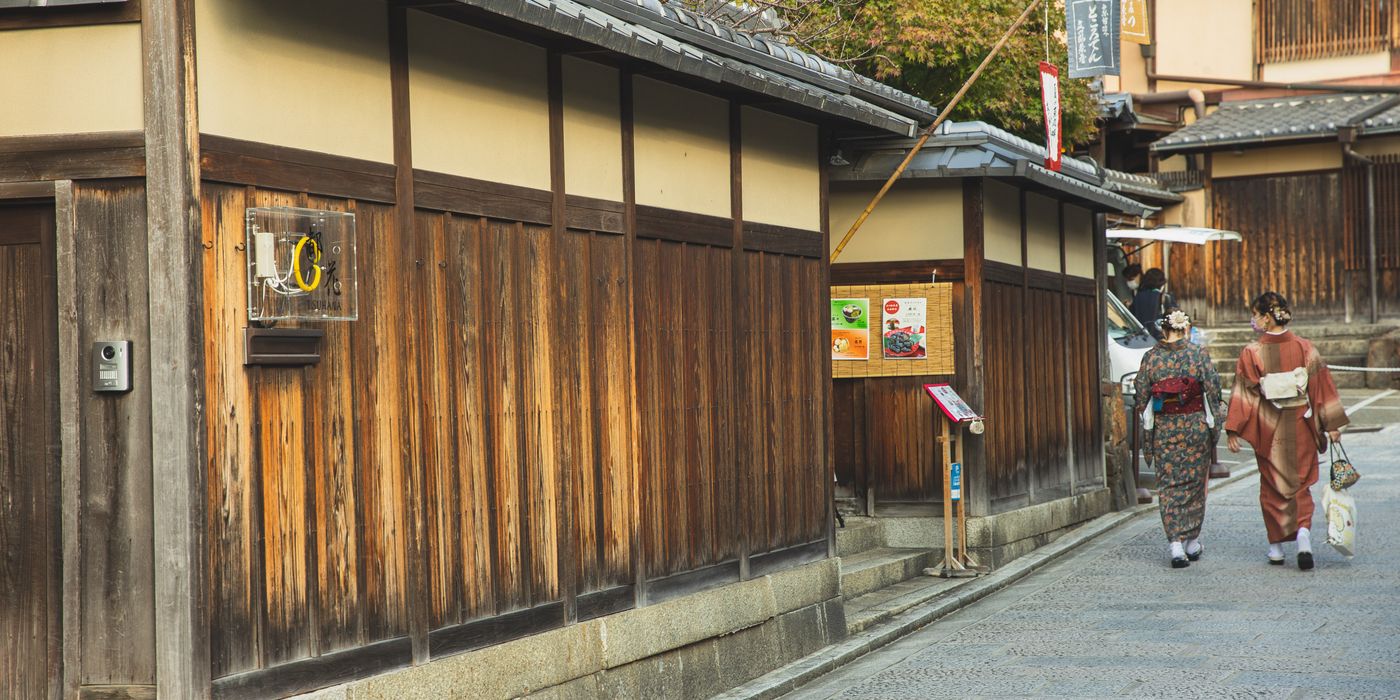
The Kyoto Station area
Foliage access. Moderate. Twenty to thirty-five minutes by bus or subway to the eastern hills.
Foliage-season rate band. Roughly ¥14,000 to ¥26,000.
Architecturally the least appealing part of Kyoto and comfortably the best value during foliage season. Business hotel chains cluster here, they have consistent standards, and their rates rise less steeply than the boutique properties because their core customer is a salaryman who does not care about maples.
The station itself solves a lot of problems. Every bus route starts here, the Shinkansen puts Osaka twenty-eight minutes away, and Nara and Uji are both a short local train. Tofuku-ji, which has the most spectacular maple valley in the city, is one stop south.
Book here if the budget is the constraint and you are willing to spend forty minutes a day on buses.
Arashiyama
Foliage access. Excellent for the western sites, poor for everything else.
Foliage-season rate band. Roughly ¥30,000 to ¥80,000.
Out west, along the Hozu river. Tenryu-ji, the bamboo grove, Jojakko-ji, and the small temples on the northern slope that most day-trippers never reach.
Arashiyama is a day-trip destination for almost every visitor, which means it is overwhelmed from 10am to 4pm and close to empty either side. Staying overnight inverts the experience completely. The riverside ryokan here are among the best in Japan and priced accordingly.
The cost is isolation. Getting back into central Kyoto takes about thirty minutes and the last convenient trains are earlier than you would like. Treat this as a two-night addition rather than a base for the whole trip.
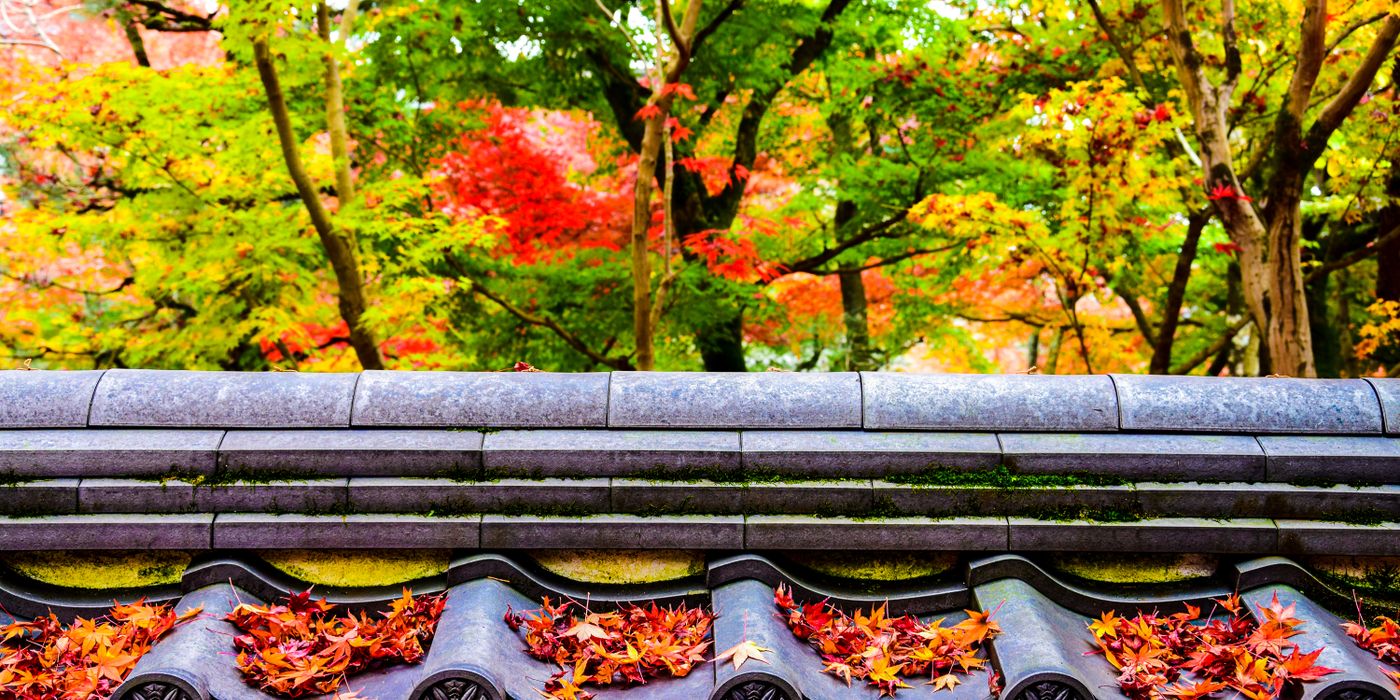
Nishijin and the northern centre
Foliage access. Moderate. Good for Kinkaku-ji and the northern temples.
Foliage-season rate band. Roughly ¥16,000 to ¥30,000.
The old textile district north-west of the Imperial Palace. Quiet, low-rise, and full of restored machiya townhouses rented out as small guesthouses. Almost no tour groups come here.
The northern foliage sites are underrated. Genko-an and Shodenji have the same maples as the eastern hills and a fraction of the visitors, largely because they are awkward to reach by bus. Staying in Nishijin makes them easy.
Fushimi and the south
Foliage access. Limited, but excellent for Fushimi Inari and Tofuku-ji.
Foliage-season rate band. Roughly ¥11,000 to ¥20,000.
Kyoto’s sake brewing district, thirty minutes south of the centre on the Keihan line. The cheapest place in the city to sleep during foliage season by a wide margin, and the only one where the rate barely moves at all in November.
Fushimi Inari before 7am is the single best free thing in Kyoto and staying nearby is the only practical way to do it. The sake breweries around Gekkeikan run tastings for a few hundred yen.
Using Osaka as a base
Osaka mid-range hotels run roughly ¥10,000 to ¥15,000 against Kyoto’s ¥12,000 to ¥18,000 baseline, and crucially Osaka does not take the foliage premium. During the peak fortnight the gap widens to something like ¥15,000 a night.
The Shinkansen covers Osaka to Kyoto in about fifteen minutes, or twenty-eight from Shin-Osaka to Kyoto Station on a local express for far less money. For a week-long trip that is a saving of roughly ¥100,000 for a couple, against an hour of daily travel.
The honest trade-off is the mornings. You cannot be at Kiyomizu-dera at 6.30am from Osaka, and early mornings are the whole game in Kyoto in November.
Timing the booking
Kyoto foliage-season rooms in the good neighbourhoods sell out six to nine months ahead. If you are booking in late August for late November, the eastern hills are already thin and what remains is priced at the top of the band.
The practical move at this point is to look at the first week of December. Colour holds at Tofuku-ji and the southern temples into that week most years, the Japanese domestic season has ended, and rates fall sharply once the calendar turns. It is the best value fortnight in the Kyoto year.
Minimum stay restrictions are common across the peak weekends, so a property showing as unavailable for two nights will often open up for three. Our explainer on minimum length of stay rules covers why that happens.
If you are comparing shoulder dates across several cities, the piece on how shoulder season pricing has shifted this year is worth reading alongside this.
Questions people ask about Kyoto in autumn
When exactly do the Kyoto maples peak? Most reliably between 20 November and 5 December. Early November is usually still green in the city centre, though the higher-elevation sites north of Kyoto turn a week or two earlier.
How much does a Kyoto hotel cost during foliage season? Budget roughly ¥28,000 to ¥60,000 a night in Higashiyama, ¥14,000 to ¥26,000 near Kyoto Station, and ¥11,000 to ¥20,000 in Fushimi. Mid-range Kyoto baseline outside the peak is about ¥12,000 to ¥18,000.
Is Kyoto still cheap for foreign visitors? Cheaper than most European equivalents, but far less cheap than it was. Hotel categories run roughly 25% to 40% above pre-2024 levels. The weak yen offsets a good deal of that for dollar and euro visitors.
Which neighbourhood is best for a first visit in autumn? Gion or Kawaramachi. You get walkable access to the eastern foliage, the illumination events, and somewhere to eat after 9pm, without paying full Higashiyama rates.
Is staying in Osaka a mistake? Not for a first trip focused on daytime sightseeing. It is a mistake if your plan depends on being inside temple grounds at sunrise, which during foliage season it probably should.
Images: Hero by Prajwal via Pexels. Kyoto temple in autumn by Moyan Brenn, CC BY 2.0, via Wikimedia Commons. Kyoto street by Ryutaro Tsukata via Pexels. Temple pagoda and maples by AXP Photography via Pexels.