Where to Stay in Madeira in 2026. A Guide to the Island Everyone Suddenly Wants
Madeira is Tripadvisor's top trending destination for 2026. Funchal, Ponta do Sol, Porto Moniz, or Santana. An honest base guide with real prices.


Tripadvisor named Madeira the world's top trending destination for 2026, and for once the award is chasing the numbers instead of creating them. Direct flights from the US East Coast take under seven hours. Searches for the island have climbed all year. And travelers who used to default to the Algarve or the Canaries keep landing on this small Portuguese island in the Atlantic instead.
Madeira is compact. You can drive end to end in about 90 minutes. But the island is vertical, the microclimates are real, and the road between two towns that look close on a map can be 40 minutes of tunnels and switchbacks. Where you sleep shapes the whole trip.
The short version first. For a first visit, stay in Funchal. A mid-range hotel in central Funchal costs $90 to $140 a night in 2026, and the shoulder months of April, May, October, and November drop those rates another 20 to 30 percent. Everything below explains when to break that rule.
Funchal. Still the right answer for a first visit
Funchal holds most of the island's hotels, restaurants, and bus connections, which makes it the practical base even before you get to its charm. The city climbs from a working harbor up into gardens and banana terraces, and the cable car to Monte gives you the view without the hike.
Two areas matter for booking. The Zona Velha, the old town, is where the painted doors, the fado bars, and the best small restaurants live. Boutique hotels here run $100 to $150 a night in high season. West of the center, the Lido zone is Madeira's classic hotel strip, built along the ocean with saltwater pools carved into the rock. Larger hotels here often come in at $85 to $130 with better pools than the old town can offer.
At the top end, Reid's Palace has been the island's grande dame since 1891. Rooms start around $450 in summer. Afternoon tea on the terrace costs about $40 and is the cheaper way to visit.
Camara de Lobos. The fishing village Churchill painted
Fifteen minutes west of Funchal, Camara de Lobos is a working fishing village wrapped around a small bay of wooden boats. Winston Churchill set up an easel here in 1950 and the town has dined out on it since. Stay here if you want quiet evenings, poncha bars where the pours are local, and Funchal within easy reach by bus or cheap taxi. Guesthouses and small hotels run $60 to $100 a night, some of the best value on the island.
Ponta do Sol. Sun, slow afternoons, and laptops
Ponta do Sol claims the most sunshine hours on Madeira, and the microclimate holds up. The village is a steep cluster of houses above a black pebble beach, with a banana-plantation valley running inland. It also hosts a well-known remote-work community, so the cafe wifi is better than a village this size has any right to offer. The Estalagem da Ponta do Sol, a design hotel on the cliff, runs about $110 to $140 with a pool that looks straight down the coast.
Porto Moniz. Lava pools and the wild north
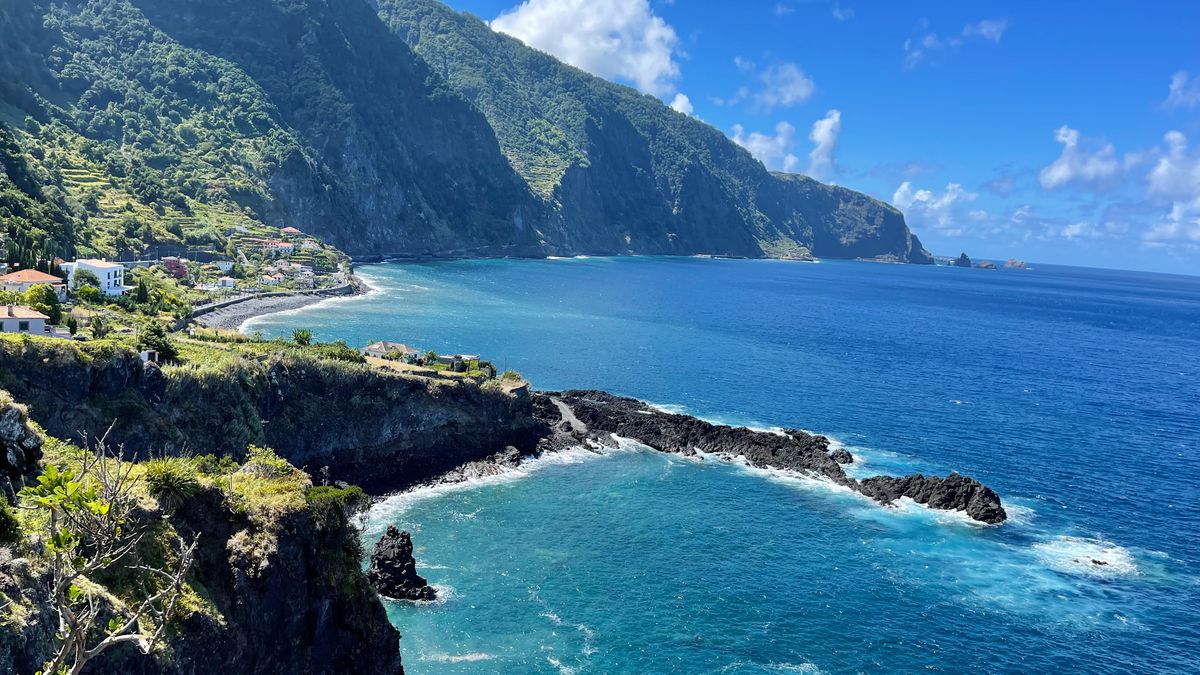
The north coast is greener, wetter, and emptier. Porto Moniz sits at the island's northwest tip, famous for natural swimming pools formed by volcanic rock, where the Atlantic refills the water with every wave. Entry costs about $3. Hotels here are simple and good value at $80 to $120. The catch is distance. Funchal is about 50 minutes away, so base here for two or three nights of hiking and swimming rather than a full week.
Santana and the east. Levada country
Santana is the postcard town of A-frame thatched houses, but its real value is position. The trailheads for some of the island's best levada walks, the irrigation-channel paths that contour through the laurel forest, sit close by. Levada do Caldeirao Verde, the one with the waterfall finish, starts 20 minutes away. Rural hotels and quintas here run $70 to $110. Machico, near the airport, works for a first or last night and has one of the island's few sandy beaches.
When to go, and what rooms actually cost
Madeira never really has an off season. Temperatures sit between 60 and 79 degrees year round, which is why the island markets itself as eternal spring. Prices still move.
August is peak, with Funchal mid-range rooms at $130 to $180. New Year is the other spike, driven by a fireworks show over the harbor that fills hotels months out. The Flower Festival in May pushes rates up for two weeks. The value windows are late April through early June and October through November, when the same rooms drop to $75 to $110 and the levada trails are quiet on weekdays.
Book four to eight weeks out for the shoulder months and further ahead for August and New Year. The patterns we covered in our booking-window guide hold on the island, and a price alert does the watching for you once you have dates.
The budget play and the splurge
On a tight budget, base in Camara de Lobos or Machico and ride the buses. Clean doubles with breakfast run $55 to $75, and the money you save funds every boat trip and rental day you want. Madeira rewards this approach better than most islands because the free stuff, the trails and the viewpoints and the ocean pools, is the main event anyway.
If the trip calls for one big night, the island's quintas are the move. These converted manor houses in the hills, places like Quinta da Casa Branca or Quinta Jardins do Lago in Funchal, run $180 to $280 and come with gardens that have been growing for a century. They cost half of what a comparable property would in the Algarve in August.
Getting there and getting around
Direct flights from New York run seasonally, and one-stop routes through Lisbon add about three hours. Lisbon connections also open up the cheap-fare game, since the Lisbon to Funchal leg is often $40 to $80 on its own. From the airport, a taxi into Funchal costs about $25 to $30 and the aerobus runs $6.
Inside Funchal, walk and use taxis. For the rest of the island, the bus network is real but slow, which is fine for a Porto Moniz overnight and less fine for chaining trailheads. Most visitors rent a car for two or three days in the middle of the trip rather than the whole week, which keeps costs down and spares you from parking in Funchal's old town, which barely exists.
One driving note. The old coastal roads that predate the tunnels are spectacular and mostly empty, and the ER101 stretch on the northwest coast is worth taking on purpose. Give yourself daylight for it.
FAQ
Do you need a car in Madeira?
Not in Funchal, where buses and taxis cover the city and day tours pick up at hotels. For Porto Moniz, Santana, and the trailheads, yes. Rentals run $30 to $45 a day in 2026, and the driving is steep but well maintained.
Is Madeira expensive?
No. It is one of Western Europe's better values. Count on $90 to $140 for a good double in Funchal, $12 to $20 for dinner mains, and $3 or less for espresso and poncha. The flight is usually the biggest line item.
How many days is enough?
Five to seven. Three days covers Funchal and a levada walk. A full week lets you split bases, say four nights in Funchal and three on the north coast, which is the trip we would book.
Which side of the island is sunnier?
The south. Funchal, Camara de Lobos, and Ponta do Sol get the most reliable sun. The north is greener and mistier, better for waterfalls than tans.
Images. Hero by Colin Watts. Funchal view by Sofia Vila Flor, via Unsplash, used under license. Seixal cliffs by Kateryna Shliakhta via Pexels.