Where to stay in Porto, 2026 neighborhood guide
Eight Porto neighborhoods, what each one costs in 2026, and which hill you actually want to be on.

Porto is small enough that almost everywhere is walkable and hilly enough that walkable does not always mean easy. A 900-metre stroll on the map can be 140 vertical metres in practice. Picking the right neighborhood in Porto is mostly a question of which hill you want to be on.
Rates here are still among the best in western Europe. Mid-range three-star hotels in the center run roughly 85 to 130 euros a night in shoulder season, and guesthouses with private rooms start around 55 to 75. Compare that to Lisbon, which now prices 25% to 40% higher for a similar room in a similar location, and Porto starts to look like the smarter Portugal trip.
Where to stay in Porto, in one paragraph
Short answer for first-time visitors. Stay in Baixa, the downtown grid around Avenida dos Aliados, for the best mix of price, transit and walkability. Choose Ribeira if you want the postcard riverfront and do not mind crowds and stairs. Choose Vila Nova de Gaia across the river for better views at lower prices. Choose Cedofeita or Bonfim if you want a neighborhood locals actually live in.

Ribeira, the postcard with a price
Ribeira is the riverfront strip of tilting, painted houses below the cathedral, and it is genuinely beautiful. It is also the most photographed 400 metres in northern Portugal, which means restaurant prices carry a 30% to 50% premium and the crowd density between 11am and 8pm is close to unpleasant.
Stay here if it is your first visit and you want to open the shutters onto the Douro. The Pestana Vintage Porto sits inside a row of restored 16th-century buildings directly on the quay and is the clearest expression of what the neighborhood offers. Expect 160 to 240 euros a night in shoulder season.
Practical warnings. Buildings are old and many have no lift, so ask about stairs before you book with a large suitcase. Noise carries off the water and the quayside bars run late. And the walk back up to Baixa is a real climb, though the Funicular dos Guindais handles it for a few euros.
Baixa and Aliados, the sensible choice
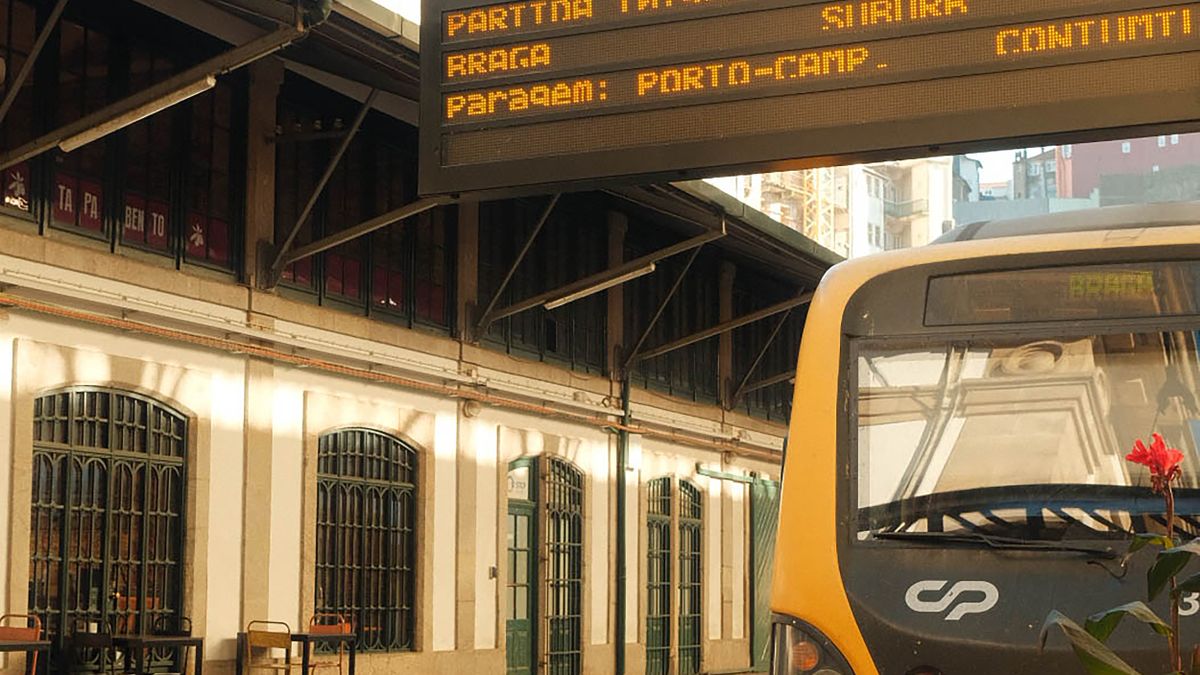
Baixa is the downtown core running up from São Bento station along Avenida dos Aliados. This is where we would tell most people to stay.
You get two metro lines, the main train station, the best restaurant density in the city, and a five-minute walk down to Ribeira whenever you want it. Rates sit around 85 to 130 euros for a solid three-star and 150 to 200 for a good four-star. The InterContinental Porto at Palácio das Cardosas anchors the top end from about 220 euros.
Baixa is Porto's food neighborhood in the broadest sense. Traditional tascas, Cantonese, Nepalese, Brazilian, and a growing set of chef-driven places all sit within a few blocks. If you care about eating well without booking a taxi, this is the answer.
The tradeoff is character. Baixa is a working downtown. Some streets are lovely, some are just streets.
Vila Nova de Gaia, the value play
Gaia is technically a separate city, sitting across the Douro, connected by the Dom Luís I bridge. Walking across takes about 15 minutes on the upper deck, and the metro does it in three.
Here is the practical case for Gaia. Hotels run 20% to 35% cheaper than equivalent properties in Ribeira, and the view is better, because from Gaia you are looking at Porto. From Porto you are looking at Gaia, which is mostly port lodges and warehouses. Mornings on the Gaia side are quiet in a way the Porto side never is.
The port cellars are all here, Taylor's, Graham's, Sandeman, Cálem, and most run tastings from about 20 euros. The Teleférico de Gaia cable car connects the riverside to the upper bridge deck for a few euros and saves your legs.
The downside is the bridge. Crossing it twice a day is charming for three days and then it is a commute.

Cedofeita, where the city stops performing
Cedofeita is northwest of Baixa, built around Rua de Cedofeita and Rua Miguel Bombarda. It is Porto's art and independent retail district, with galleries that coordinate their openings on the same Saturday afternoons, vintage shops, small bars, and a student population from the nearby university faculties.
Accommodation skews toward guesthouses and small design hotels rather than chains, generally 70 to 120 euros. You are 10 to 15 minutes on foot from Aliados, which is close enough to be central and far enough that you are eating next to people who live here.
Pick Cedofeita on a second visit, or on a first visit if the phrase "historic center" makes you tired.
Miragaia and Massarelos, quiet and close
Miragaia sits immediately west of Ribeira along the same riverbank, and it is the neighborhood we recommend most often to people who want the river without the crowd. Same waterfront, same views, a fraction of the foot traffic, and residents going about their day rather than tour groups following a flag.
Rates land around 80 to 130 euros. Massarelos, just further west, adds the Jardins do Palácio de Cristal and the old tram line running along the water toward the Atlantic.
Foz do Douro, for the ocean
Foz is where the Douro reaches the Atlantic, about six kilometres from the center. It is residential, affluent, and built around a seafront promenade with proper seafood restaurants and sunset bars.
Come here if the trip is longer than four days, or if you are travelling with anyone who will want a beach afternoon. The vintage tram line 1 runs from Ribeira along the river to Foz and is one of the genuinely enjoyable pieces of public transit in Europe. Hotel rates are similar to central Porto, roughly 100 to 180 euros, but you are trading walkability to the sights for actual ocean.
Bonfim and Marquês, the budget end
East and north of the center, Bonfim and Marquês are where the rates drop into the 55 to 90 euro range for private rooms and small hotels. Both are residential, both have metro access, and both put you 15 to 25 minutes from the tourist core.
Marquês works well for families and for longer stays, with more apartment inventory and a large market. Bonfim has been changing quickly, with new bars and restaurants opening around Rua de São Victor. Neither is scenic. Both are honest value.
What Porto actually costs in 2026
Direct numbers for planning. A comfortable mid-range trip runs about 130 to 170 euros a day for two people including a three-star hotel, two meals out and transit. Budget travelers can do it on 75 to 95 a day. The city charges a tourist tax of 3 euros per person per night, capped at seven nights, added at checkout rather than at booking.
Best months are May, June, September and October. July and August bring both crowds and rates 25% to 40% above shoulder season. November through February is genuinely cheap, around 60 to 90 euros for hotels that charge 130 in October, and Porto in the rain is atmospheric rather than ruined.
A few opinions
Skip the Livraria Lello queue unless books are the point of your trip. The five euro entry is redeemable against a purchase and the interior is beautiful, but the 40-minute wait to shuffle through a crowded staircase is not the best hour of your day in this city.
Do take the six-bridge boat cruise. It is touristy and it is also the fastest way to understand the shape of the city, and it costs about 15 to 20 euros for 50 minutes.
Eat a francesinha once, at a place that does it properly, and then stop. It is a sandwich covered in melted cheese and beer sauce and it is excellent exactly one time per trip.
Book the Douro valley day trip for a weekday. Weekend crowds at the quintas are noticeably heavier and the train along the river is more pleasant when you can get a window seat.
Common questions about staying in Porto
What is the best area to stay in Porto for a first visit?
Baixa, the downtown area around Avenida dos Aliados. It has the best combination of price, restaurants and transit, and it is a short walk downhill to Ribeira and the river.
How much does a hotel in Porto cost per night?
Mid-range three-star hotels in central Porto run about 85 to 130 euros a night in shoulder season, four-star properties 150 to 200, and guesthouses with private rooms 55 to 75. Peak summer adds 25% to 40%.
Is it cheaper to stay in Vila Nova de Gaia than Porto?
Yes, typically 20% to 35% cheaper for a comparable room, with better views back toward Porto. The tradeoff is crossing the Dom Luís I bridge every time you want to be in the old city.
Is Porto cheaper than Lisbon?
Yes. Comparable central hotel rooms in Porto run roughly 25% to 40% below Lisbon, and restaurant prices are lower across the board.
Do you need a car in Porto?
No, and parking in the old center is difficult and expensive. The metro, trams and walking cover the city. Rent a car only for the Douro valley, and even then the train is more pleasant.
If you are booking a hotel in Porto, Best gives you 10% cashback on the stay. On a five-night trip at 110 euros a night that is 55 euros back, which is roughly two port tastings and a very good dinner.
Images. Hero, Ribeira facades and tram via Pexels. Rabelo boats on the Douro by Jakub Halun, used under CC BY 4.0 via Wikimedia Commons.