Croatia in 2026: Where Flights Are Cheap and Hotels Still Have Deals

Airfare to Split, Croatia dropped 33% year-over-year in 2026. That's not a rounding error. That's the market signaling that it's finally cheaper to fly somewhere that used to be expensive to reach, in a country that was already a good value for hotels and food.
Croatia has been on the overrated-and-overcrowded list for years. Some of that reputation is deserved, specifically for Dubrovnik in July and August. But the country is larger and more varied than its most photographed corner, and the pricing picture has shifted in ways that make 2026 a good time to actually go.
The Airfare Drop Changes the Calculation

Croatia used to suffer from an access problem. Getting there often required a connection through Frankfurt or Vienna or Istanbul, which added time and cost to what is otherwise a relatively short European trip. The opening of new routes in 2025-2026 combined with broader airfare softening across European destinations (down about 14% on average) changed the math.
For US travelers, the practical effect is that Croatia now competes more directly with Spain, Italy, and Greece on total trip cost. At that price level, with hotel rates that remain lower than comparable destinations in Western Europe, Croatia starts looking like good value rather than a splurge.
Split in particular benefits. The city has its own airport, its own old town (the actual Diocletian's Palace, where people still live and shop), and serves as the natural base for exploring the Dalmatian Coast. It's been overlooked relative to Dubrovnik for years and rewards that with lower prices and fewer crowds.
Split: What It's Actually Like
Diocletian's Palace isn't a roped-off historical site. It's a neighborhood. The walls of a fourth-century Roman emperor's retirement home now contain apartments, bars, restaurants, and a morning market. Walking through it for the first time feels like architectural time travel, except with a Croatian grandmother hanging laundry from the window above you.
The old town of Split is compact and walkable. The ferry terminal is a five-minute walk from the palace, making island day trips simple. Hvar, Brac, and Vis all depart from Split's port. The beaches closest to the city are rocky (this is the Adriatic, not the Caribbean), but clean and swimmable and far less crowded than anything near Dubrovnik.
Hotels in Split's old town and nearby Meje neighborhood run $90-160 per night for mid-range properties in 2026. The best value tends to be small boutique hotels and apartments inside the palace walls themselves — the addresses are strange (there are apartments inside a 1,700-year-old structure) but the experience is unique.
Dubrovnik: Going Anyway
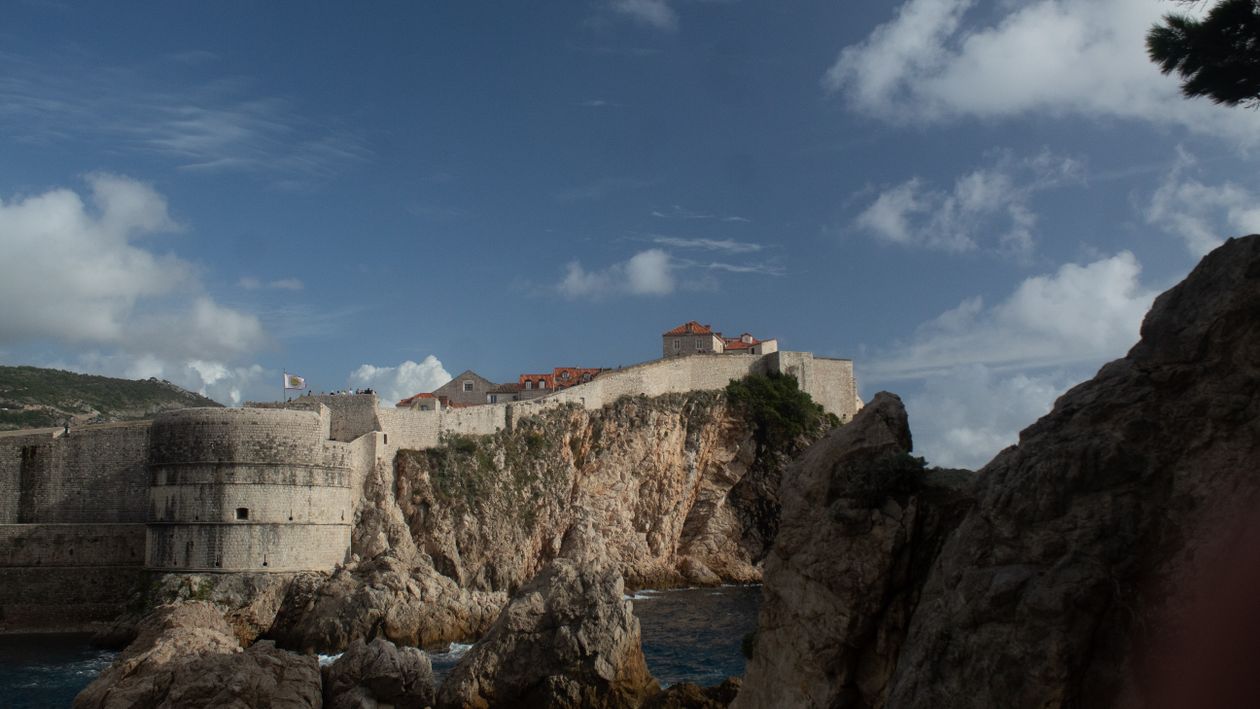
Dubrovnik's crowds are real. In July and August, thousands of cruise ship passengers arrive each morning, fill the main streets from roughly 10 AM to 5 PM, and leave by evening. If you're visiting during peak summer, this is the reality.
The counterintuitive approach: don't try to avoid Dubrovnik. Go early and late. The old city before 9 AM is a different place entirely. Streets are quiet, the light is extraordinary, locals are going about their morning routines. The walls are emptier and cooler in the first two hours after opening.
Hotels in Dubrovnik's old town are expensive. Expect $200-350 per night for anything decent in summer. The smarter approach is to stay in the suburbs — Lapad peninsula specifically — where hotels run $100-180 and the public bus to the old town takes 15 minutes.
The Islands: Hvar vs. Vis vs. Brac
The Dalmatian Islands get grouped together but they're meaningfully different in character and price.
Hvar is the most famous and most expensive. Hvar Town has nightlife, restaurants, and a beautiful harbor. Mid-range hotel prices in summer run $150-250 per night.
Brac is larger, less touristed, and cheaper. Bol, on Brac's southern coast, has one of the Adriatic's most photographed beaches — Zlatni Rat — with hotel options in the $90-130 range for solid mid-range properties.
Vis is the sleeper. Farthest from the mainland, least developed, smallest tourism infrastructure, and increasingly the favorite of travelers who've done Hvar and want something quieter. Ferries run from Split. Hotel and villa options are more limited, but the island character more than compensates.
When to Go
June and September are the consensus best months. Warm enough to swim, not brutally hot, and noticeably thinner crowds than July and August. Hotel prices drop 20-30% off peak in shoulder months.
May is increasingly viable. The water is cold but the weather is good for sightseeing and the old towns are largely empty of tourist crowds. Some island properties haven't opened yet in early May, which limits options but also prices.
October through April, most of coastal Croatia goes quiet. Dubrovnik remains open year-round but many Split and island restaurants and hotels close for the winter season.
What Things Cost
Croatia uses the euro since January 2023. A good dinner at a restaurant that locals actually use in Split: $25-40 for two people including wine. The tourist-facing seafood restaurants on the waterfront run $60-100 for two. A coffee in a Split cafe: $1.50-2.50. Local wine by the glass at a proper wine bar: $5-8.
Book hotels through Best and the 10% cashback applies across the whole stay. On a week in Split at $130/night — $910 total — that's $91 back. On a longer Dalmatian Coast trip combining Split, an island, and a night or two in Dubrovnik, it adds up further.
Frequently Asked Questions
Is Croatia crowded in summer 2026?
Dubrovnik is genuinely crowded in July and August, particularly from 10 AM to 5 PM when cruise ship passengers flood the old town. Split is busy but more manageable. The islands vary significantly — Hvar is packed in peak season, Vis and Korcula much less so. Visit Dubrovnik's old city before 9 AM and plan island hopping to include less-visited options.
How much does a hotel in Split cost in summer 2026?
Mid-range hotels in and around Split's old town run $90-160 per night in peak summer. Boutique apartments inside Diocletian's Palace range from $80 to $200+ depending on size and quality. Shoulder season (June, September) typically runs 20-30% less than July-August peak rates.
Is it worth staying in Dubrovnik's old town or outside?
Outside, for most travelers. Old town hotels command a significant premium ($200-350/night). Lapad peninsula, 15 minutes by bus, has solid hotels at $100-180 and easy access to the old city. Unless the specific experience of sleeping inside the walls is important to you, the suburbs are better value.
What is the best Croatian island to visit in 2026?
It depends on what you want. Hvar for nightlife and a lively harbor scene. Brac for the famous Zlatni Rat beach with more moderate prices. Vis for a quieter, more authentic island experience with fewer tourists. For a first-time visitor, Brac or Hvar accessed by ferry from Split is the most straightforward choice.
Images: Dubrovnik old town and walls by Luciann Photography. Dubrovnik coastal fortress by Olga Kononenko. Both via Pexels, used under license.