Wildfires in Southern Europe and What Your Hotel Booking Actually Covers
962 fires across the EU by July, and almost every hotel stayed open. What a non refundable rate covers, when insurance pays out, and how to book the Mediterranean for the rest of 2026.
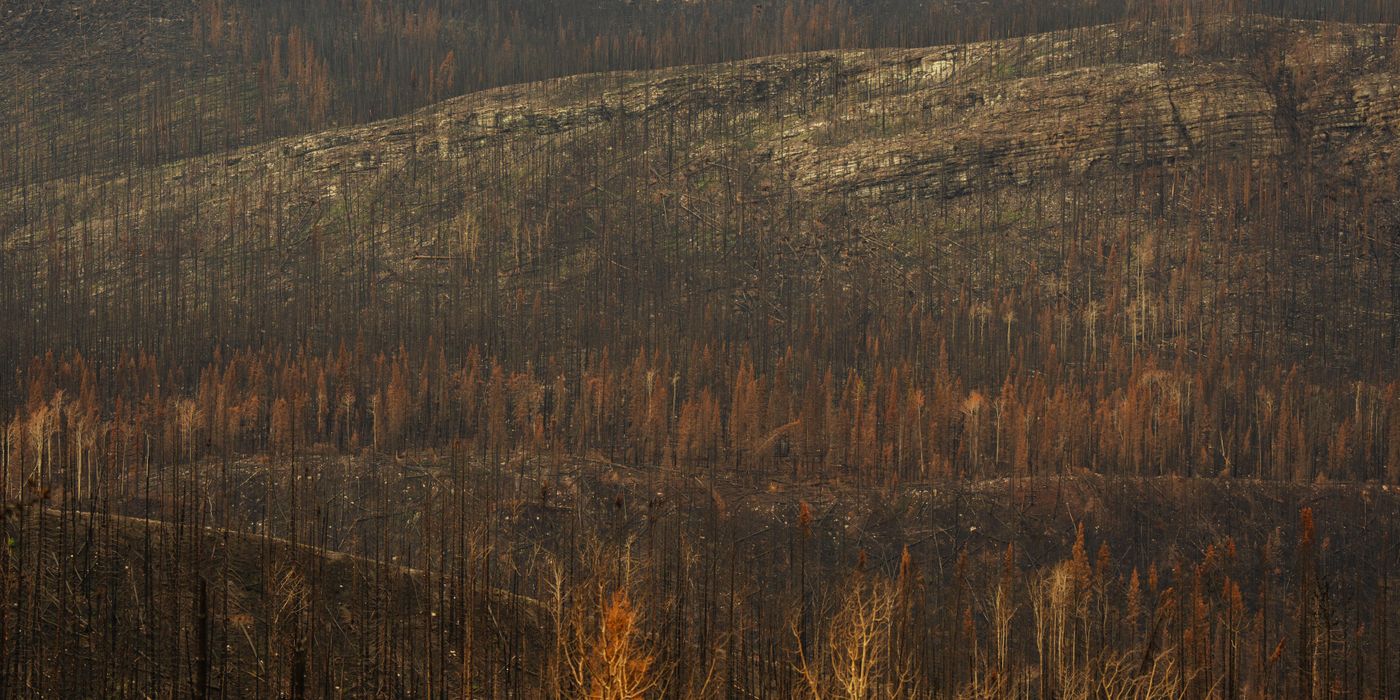
By the first of July, 118,737 hectares had burned across the European Union. The long term average number of fires for that point in the year is 446. This year recorded 962. And still, almost every hotel in Greece, Spain, Portugal and southern France stayed open, kept taking guests, and charged the rate printed on the booking.
That gap between the headlines and the front desk trips people up. We get some version of the same question every August. There is a fire on the news near where we are going. Can we get our money back?
Usually no. The reasons are worth understanding before you book anything else this year.
What actually happened this summer
Fires burned in Greece, Spain, Portugal and the Gironde department of France through July and into August. Evacuations happened on Crete and Paros, in parts of Gironde, and in several Portuguese municipalities. Athens saw smoke over the northern suburbs.
Tourism disruption stayed narrow. Airports kept operating. Ferries kept running. Tour operators reported schedule changes and docking swaps rather than cancellations. EU officials warned the risk could widen, but by mid August the pattern held. Cancellations clustered tightly around the specific towns under evacuation order and almost nowhere else.
That is the part travellers miss. A fire 60 kilometres from your hotel is a serious event for the people living there and a non event for your reservation.
.jpg?width=1400)
What a hotel rate covers when there is a fire nearby
A non refundable hotel rate covers nothing related to wildfires unless the property itself becomes unusable or local authorities order the area evacuated. Proximity to a fire, poor air quality, smoke haze, closed hiking trails and a cancelled day trip are not grounds for a refund under standard terms.
This is not hotels being difficult. It is what the rate is. You bought a discount in exchange for taking on the risk of your plans changing. Fire near the region is a change in your plans, not in the hotel's ability to deliver a room.
Flexible rates are different. A free cancellation booking cancelled before the deadline gets refunded regardless of the reason, fire or otherwise. If you are booking anywhere in the Mediterranean between June and September, that difference is the whole decision. We wrote about the trade off in more detail in our breakdown of refundable versus non refundable hotel rates.
Three things that change the answer
There are conditions under which a refund becomes likely rather than impossible. All three come from outside the hotel.
1. A government travel advisory naming your destination
If your own government advises against travel to the specific region, most travel insurers treat that as a covered event and many hotels will waive penalties rather than fight it. The advisory has to name the area. A general warning about summer heat in Europe does nothing.
2. A fire within a defined radius of the property
Insurance policies often specify a distance. Common language covers a fire within a set number of kilometres of your accommodation during your stay dates. Read the policy wording rather than assuming. The radius is usually smaller than people expect.
3. Your transport gets cancelled
If the flight or ferry that was taking you there is cancelled as a direct result of the fire, that usually unlocks both a transport refund and a much better conversation with the hotel. Document the cancellation notice before you contact anyone.
What to do if you are booked into an affected area
Work in this order. It saves time and produces a better outcome than leading with a refund demand.
Check the official source, not social media. The European Forest Fire Information System publishes near real time fire perimeters. Local civil protection accounts publish evacuation zones. Both are more accurate than a video with no location tag.
Email the property directly and ask what conditions are like. Not for a refund. For information. Hotels in fire prone regions get this question constantly and most answer honestly, because a guest who arrives to a smoke filled valley writes a bad review either way.
Ask about a date change before you ask about a refund. Moving a non refundable booking to October is a much easier yes for a revenue manager than handing money back. Many will do it for free during a disruption even though the terms say they do not have to.
If you cancel, keep the evidence. Screenshots of the advisory, the fire map with dates, the transport cancellation. Insurance claims fail on missing documentation more often than on policy wording.
How to book the rest of 2026
Fire season in Southern Europe now runs reliably from mid June to early September, with the worst weeks usually falling in late July and August. That is a planning input, not a reason to skip the region.
Three adjustments do most of the work.
Move the trip later. Late September and October in Greece, Spain, Portugal and southern Italy give you 24 to 28 degree days, warm sea, thin crowds and rates 25 to 40 percent below August. Fire risk drops sharply once the first autumn rain arrives. Our guide to Mediterranean islands in shoulder season covers where this works best.
Pay for flexibility during peak weeks. The gap between a flexible and a non refundable rate in the Mediterranean in August is usually 10 to 18 percent. For a 900 euro week that is roughly 100 euros to keep your options open. During fire season that is cheap.
Look at the coast rather than the interior. Fires move fastest through dry inland scrub and pine. Coastal towns with a road between them and the hills are lower risk and easier to evacuate from if it comes to that.
One last thing on cost. If you are booking a flexible rate and paying a premium for it, cashback offsets some of that premium. Book a hotel through Best and you get 10 percent back on the stay. On a 900 euro week in Crete that is 90 euros, which covers most of what the flexible rate cost you in the first place.
Questions we get asked
Is it safe to travel to Greece, Spain or Portugal right now? For the overwhelming majority of destinations in all three countries, yes. Fires in 2026 have been geographically concentrated. Check the specific region against official fire maps rather than making a decision at country level.
Does travel insurance cover wildfire cancellations? Sometimes. Most standard policies cover cancellation when a government advisory names your destination, when a fire comes within a specified distance of your accommodation, or when your transport is cancelled. Smoke, heat and closed attractions are almost never covered. Buy the policy before the fire is in the news, because insurers exclude known events.
Will hotels refund a non refundable booking during a fire? They do not have to and often will not. A date change is far more achievable than a refund. Ask for that first.
When is fire season over in Southern Europe? Risk falls sharply from late September, and by mid October it is minimal in most of the Mediterranean. That happens to be the best value travel window of the year in the region.
Should I avoid booking Southern Europe for summer 2027? No. Book it with a flexible rate, or book late September instead. Avoiding an entire region for a risk that affected a small fraction of it costs you far more than it saves.
Images: Hero by Luke Miller via Pexels. Aerial firefighting by Olivier Cleynen via Wikimedia Commons, CC BY-SA 3.0. Greek coastline by Elena Zhuravleva via Pexels.