Where to Stay in Antalya for Late Season Sun
Kaleici, Konyaalti, Lara and Belek are four different holidays under one airport code. What each costs and who it suits.
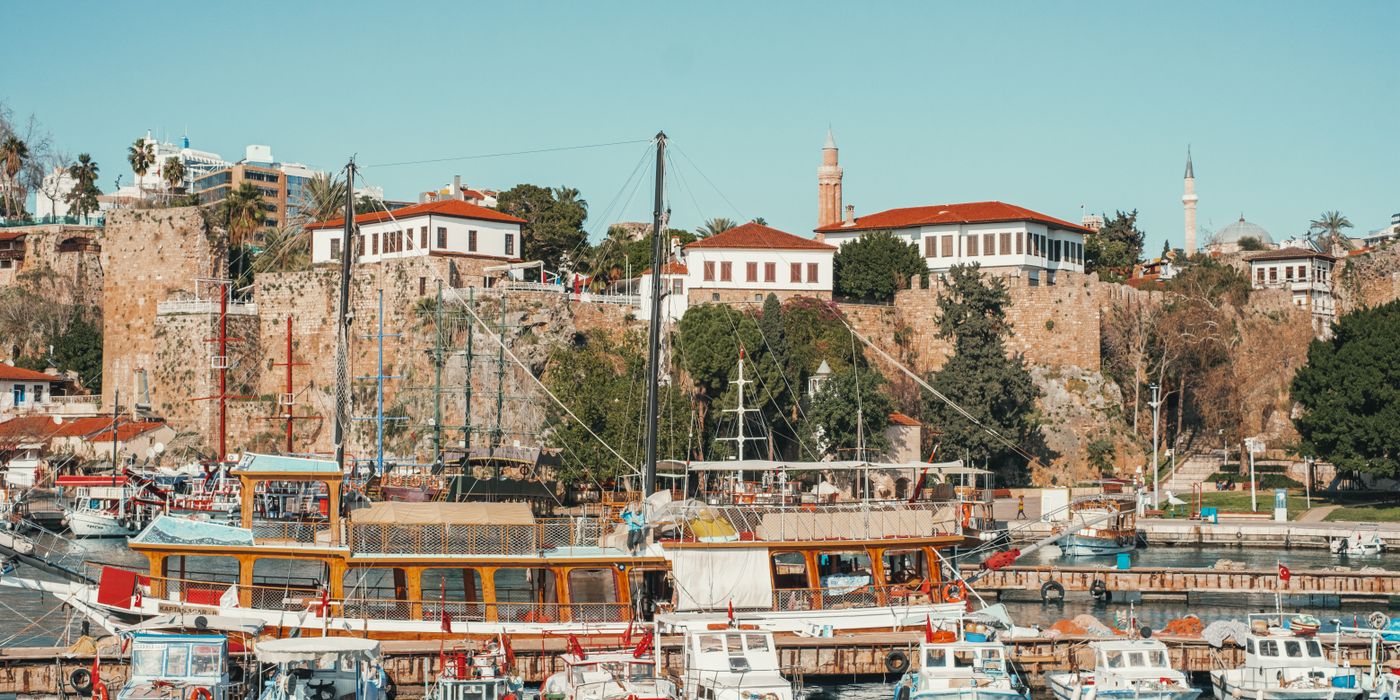
Antalya's sea sits near 25C in the middle of October. Air temperatures hold in the mid-20s into early November. Most of Europe has written off beach weather by then, which is why the Turkish Riviera keeps climbing every ranking of late season sun. Forbes put Antalya at the top of its sunny fall list this August.
The problem is that Antalya is not one place. It is a city of roughly 2.6 million people with a Roman old town, a seven kilometre municipal beach, a wall of mega resorts, and a golf district, all filed under the same airport code. Book the wrong one and you spend your holiday in a taxi.
We looked at what each area actually costs and who it suits. Here is the breakdown.
The short answer on where to stay in Antalya
Stay in Kaleici if you want a walkable old town and restaurants you can reach on foot. Stay in Konyaalti if you want a real beach without resort pricing. Stay in Lara if you want an all inclusive resort with a water park. Stay in Belek if you are here to play golf. Average nightly rates across Antalya run around 66 dollars, with Kaleici marina hotels roughly 10% above that and Lara resorts starting near 92 dollars and climbing past 350.

Kaleici, the old town
Kaleici is the walled Ottoman quarter above the marina. Narrow lanes, restored wooden houses, Hadrian's Gate at the top, a working harbour at the bottom. It is the only part of Antalya where you can leave your room and be somewhere interesting in four minutes.
Rooms here are small. Most properties are converted mansions with eight to twenty rooms, courtyards, and no lift. Hotels near the Kaleici marina average about 74 dollars a night, which is roughly 10% above the city average. That premium buys walkability, and in a city this spread out, walkability is worth paying for.
Who it suits. Couples, first time visitors, anyone travelling without a car, anyone who wants dinner to be a decision rather than a logistics exercise.
Who should skip it. Families with small children. The cobbles are brutal with a pushchair, and the beach is a tram ride away. Light sleepers should also be careful, since the bars along Hesapci Sokak run late in September.
Konyaalti, the local beach
Konyaalti runs west from the cliffs below the city centre. Seven kilometres of pebble beach, a proper promenade, the Antalya Aquarium at one end, and mountains sitting directly behind the water. This is where people who live in Antalya actually swim.
Hotels here are mid rise and mid priced. You get beach access without the resort markup, and you are ten minutes by tram from the old town. The pebbles put some people off. Bring water shoes and the problem disappears.
Who it suits. Anyone who wants beach days and city dinners in the same trip. Families who want a beach without committing to all inclusive.
Lara, the resort strip
Lara sits east of the airport and is the closest thing Turkey has to a purpose built resort corridor. Sand rather than pebbles. Enormous properties with replica architecture, multiple pools, water parks, and all inclusive packages designed to keep you on site for the full week.
Pricing splits hard. Smaller hotels set back from the beach start around 92 dollars a night. Mid range properties run 200 to 350. The landmark resorts go considerably higher in July and August, then fall sharply once the school holidays end. Late September through October is where the value sits.
Who it suits. Families who want the kids occupied. Anyone who wants to unpack once and not think about anything for seven days.
Who should skip it. Anyone who wants to see Turkey. Lara is a well run bubble, and it is genuinely difficult to leave it casually.
Belek, the golf district
Belek is 30 kilometres east, built around a cluster of championship courses. If golf is the point of the trip, this is the only sensible base. If it is not, Belek is an expensive way to be far from everything.
What Antalya costs by month
Rates peak in July and August, when European school holidays and domestic Turkish travel overlap. They start dropping in the second week of September and keep falling through November. October is the sweet spot, with sea temperatures still swimmable and rates well below the summer peak.
December through February is genuinely cheap, but the sea is cold and many resort properties close or run reduced service. The old town works year round because its appeal has nothing to do with swimming.
Getting around without a car
The Antray tram connects Konyaalti, the city centre, and the museum district for a few lira a ride. Kaleici is walkable end to end. The airport has a light rail link to the centre. Lara and Belek both need taxis or hotel shuttles, which is a real cost worth adding to your comparison before you book.
Two things worth doing
Take a dolmus to the Duden Waterfalls at the eastern edge of the city, where the river drops straight into the sea off a cliff. Go in the late afternoon when the light comes off the water.
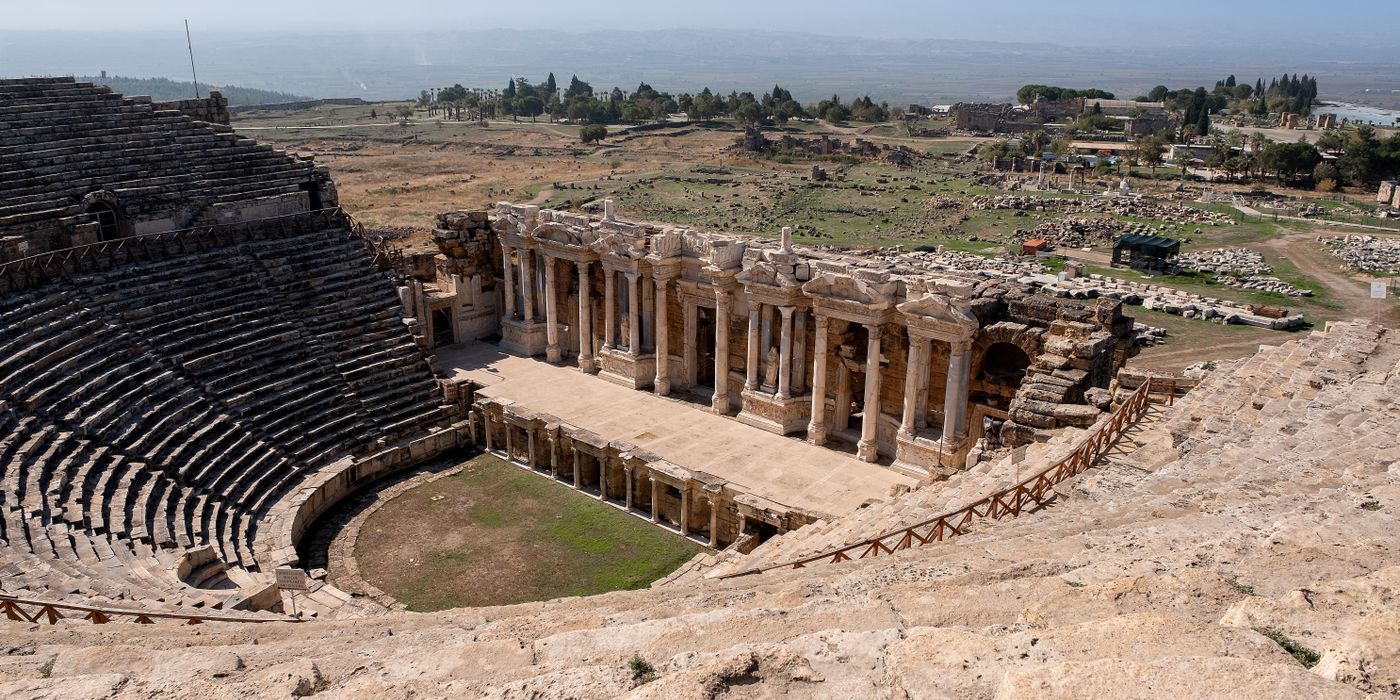
Then give a full day to Termessos, an hour inland and 1,000 metres up. A Pisidian city Alexander the Great decided not to besiege. It is a steep climb through pine forest and there is almost never a crowd, which is not something you can say about most ruins on this coast.
Booking notes
Antalya rates move fast in shoulder season because resort inventory unloads in blocks. Checking prices across a few weeks rather than a few days usually finds a better number. If you book through Best, you get 10% cashback on the stay, which on a seven night resort booking at 200 dollars a night is 140 dollars back. Worth a look before you commit.
Three day trips that justify a hire car
Side, 65km east. A Roman theatre and a temple of Apollo sitting directly on the sea, in a town small enough to walk. Go late in the day when the coaches have left and the columns catch the last of the light.
Olympos and Cirali, 80km southwest. Ruins swallowed by forest, a beach with no development behind it, and the Chimaera flames burning out of the rock on the hillside above. The road in is slow and worth it.
Kas, 190km west. Far enough that it works better as an overnight than a day trip. A proper harbour town rather than a resort, with clear water and a sunken Lycian city you can snorkel over at Kekova.
Petrol is cheap by European standards and the coastal road is in good condition. Where a car stops paying is inside the city, since parking in Kaleici is genuinely difficult and the tram covers everything you need.
How long to stay
Four nights covers the city properly. Two full days for Kaleici, the harbour and the archaeological museum, one for the beach, one for Termessos or the waterfalls. Seven nights makes sense if you are basing yourself in a resort or adding the drive west toward Kas.
If you are combining Antalya with somewhere else, note that resort inventory here behaves very differently to the small island markets we looked at in our piece on Mediterranean islands in shoulder season. Antalya has enough rooms that late booking usually works in your favour, which is not true of the smaller Greek and Italian islands.
A note on rate types
Turkish resort properties lean heavily on non refundable and prepaid rates, particularly for all inclusive packages. The discount for prepaying is often meaningful here, but so is the exposure if plans shift. Our guide to reading a hotel cancellation policy covers the five details worth checking before you commit, and the 8 to 14 day booking window applies well in Antalya outside the peak summer weeks.
Questions people ask about Antalya
Is October too late to swim in Antalya? No. Sea temperatures average around 25C in early October and stay above 22C into early November. It is one of the last swimmable spots in the Mediterranean.
How much does a hotel in Antalya cost per night? The city average is around 66 dollars. Kaleici old town hotels average about 74 dollars. Lara resorts start near 92 dollars and mid range properties run 200 to 350 depending on season and board basis.
Is Kaleici or Lara better for a first trip? Kaleici, in most cases. You see more of the city, you can walk to dinner, and you are not dependent on a shuttle. Lara makes sense if the point of the trip is a resort holiday rather than Antalya itself.
Do I need a car in Antalya? Not if you stay in Kaleici or Konyaalti. The tram covers the useful corridor. A car helps if you want to reach Termessos, Olympos, or the smaller coves west of the city.
When do Antalya hotel prices drop? The second week of September, once European school holidays end. Prices continue falling through October and November.
Images. Hero by Furkan Tumer via Pexels. Konyaalti Beach by Esginmurat via Wikimedia Commons, CC BY-SA 4.0. Coastline by Gizem Celebi via Pexels. Old town street by Anna Zaykina via Pexels.