Where to Stay in Crete in 2026: Chania, Rethymno or Heraklion
Crete is 160 miles long, which ruins more trips than anything else. A base-by-base guide with real autumn 2026 room rates.
Crete is 160 miles long. That single fact ruins more trips to this island than anything else, because people book a hotel in Heraklion, look at a map, and assume Balos beach is a morning drive. It's four hours each way plus a boat.
Pick the wrong base on Crete and you spend your holiday in a rental car. Pick the right one and you barely need it. This is a guide to picking the right one, with what rooms actually cost in autumn 2026 and where the money goes further than people expect.
The three bases, and who each one is for
Almost everyone stays in one of three towns along the north coast. They are roughly 50 miles apart, connected by a good national road and a frequent, cheap intercity bus.
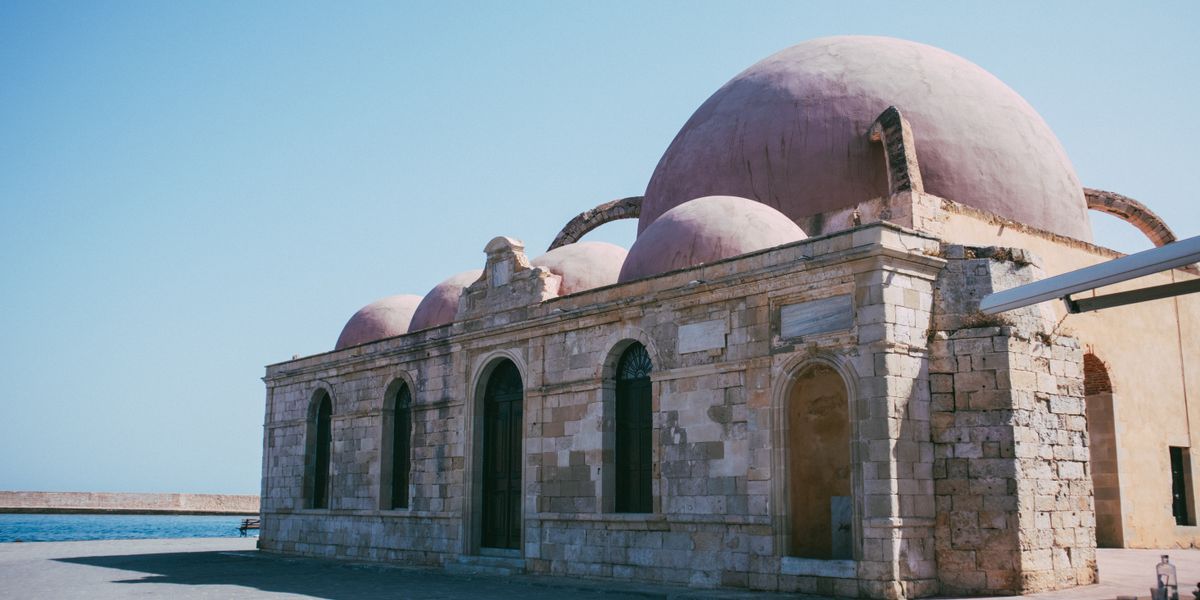
Chania sits in the west and is the prettiest of the three. A Venetian harbour, a lighthouse that shows up on every postcard of Greece, and a warren of Ottoman-era lanes behind it. It's also the closest base to the two beaches people actually come to Crete for, Balos and Elafonissi. Choose Chania if this is your first trip and you want the version of Crete you had in your head.
Rethymno is the middle option in every sense. It sits almost exactly halfway between Chania and Heraklion, 50 miles from each. It has its own Venetian-Ottoman old town, a 16th-century fortress above the harbour, and something the other two don't have, which is a long sandy beach that starts at the edge of the town centre. Choose Rethymno if you want to day-trip in both directions, or if you want to walk from your room to the sea without a car.
Heraklion is the working capital and the island's main airport. It is not a charming town. It is, however, the only sensible base for Knossos and the Archaeological Museum, which together hold most of what survives of Minoan civilisation. Choose Heraklion if you're here for the archaeology, or if you've found a flight into HER that's much cheaper than the Chania alternative.

What rooms cost, honestly
Crete is one of the better-value Greek islands and it stays that way because supply is enormous. There are more hotel beds on Crete than on Santorini, Mykonos, Paros and Naxos combined, which keeps a floor under how far rates can climb.
Rough guide for a mid-range double, based on autumn 2026 rates. In Rethymno old town, expect €70 to €130 a night in June and €120 to €200 in August. September and early October land close to the June number. Chania old town runs 15 to 25 percent above Rethymno for equivalent quality, almost entirely because of the harbour view. Heraklion is the cheapest of the three by a clear margin, often €55 to €90 for something perfectly decent in the centre.
Shoulder season on Crete is unusually generous compared with the rest of the Mediterranean. May, June, September and October all give you sea temperatures of 22 to 26°C, and rates fall 30 to 50 percent against the August peak. October is the underrated one. The sea is still warm from summer, the tavernas are still open, and you'll have Preveli and Agiofarango close to yourself.
Where to actually sleep in each town
In Chania, the old town splits into two useful zones. The harbour front itself is stunning and loud, with bars running late in summer. One street back, in the Splantzia and Topanas quarters, you get the same stone buildings, the same five-minute walk to dinner, and rooms that cost 20 to 30 percent less. If you're driving, note that most of the old town is pedestrianised and hotel parking is usually a paid lot several minutes away. Ask before booking.
In Rethymno, stay inside the old town walls rather than along the beach strip east of the centre. The strip is 1970s package-holiday architecture and it's a 25-minute walk from anywhere interesting. The old town gives you the fortress, the Rimondi fountain, the covered lanes, and a beach at the eastern end of it.
In Heraklion, the area around Korai and Handakos streets is where the town is at its best, full of small bars and places to eat that aren't aimed at anyone off a cruise ship. Avoid rooms directly on the main ring road unless you like traffic noise.

The beaches, and what the drive really is
This is where trips go wrong, so here are honest numbers from each base.
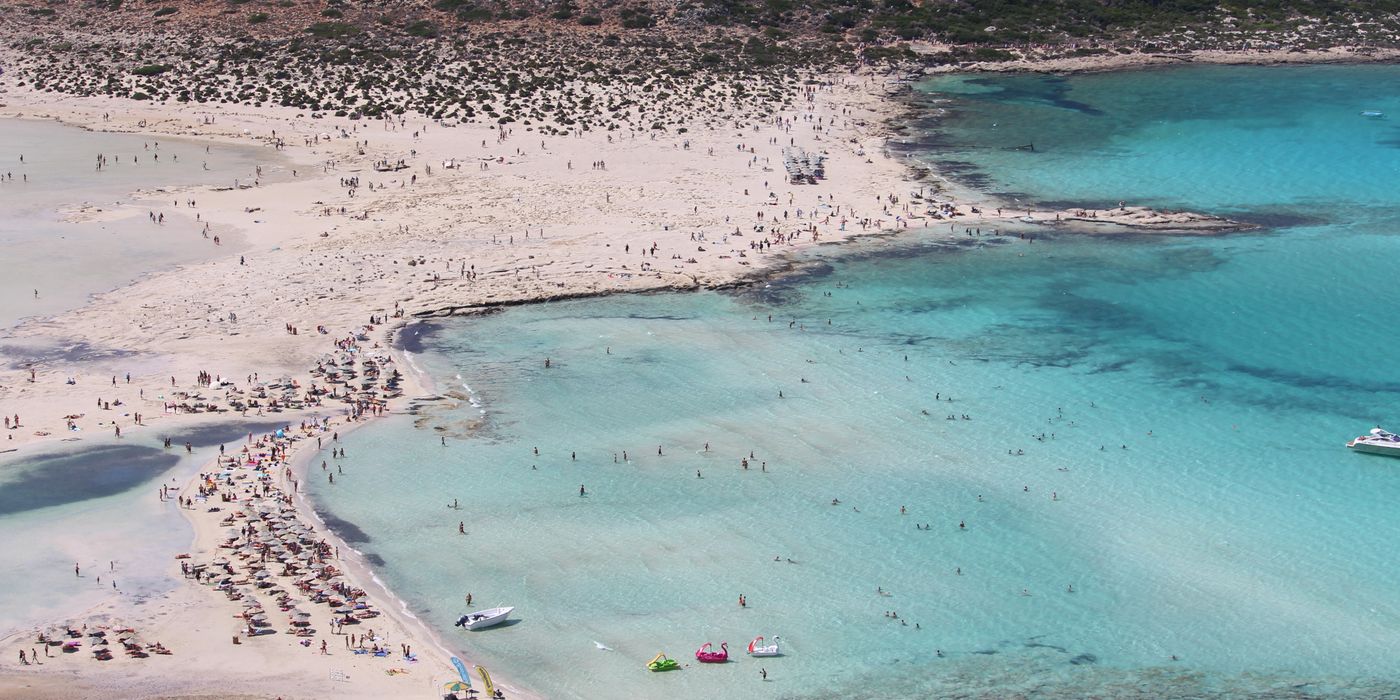
Balos. The turquoise lagoon on every Crete image search. From Chania it's about 90 minutes of driving plus a rough 8km unsealed track and a 20-minute walk down, or a boat from Kissamos. From Rethymno add an hour each way. From Heraklion, don't.
Elafonissi. Pink sand, shallow water, genuinely good for small children. About 2 hours from Chania on a winding mountain road. Go early, because the car park fills by 11am in season.
Preveli. A palm-lined river gorge meeting a beach, about 45 minutes south of Rethymno. Far less visited than the western pair and the drive is much easier. This is the strongest argument for basing yourself in Rethymno.
Vai. Europe's largest natural palm forest, right at the eastern end of the island. Three hours from Heraklion. Worth it only if you're staying somewhere in the east like Sitia or Agios Nikolaos.
Eating, briefly
Cretan food is its own thing rather than generic Greek. Look for dakos, which is barley rusk with grated tomato and mizithra cheese, and for staka, a butter-and-flour sauce usually served with eggs. Raki, the local spirit, arrives free at the end of a meal in almost every proper taverna. If it doesn't, you're in a tourist restaurant.
The reliable heuristic on Crete is distance from the water. Two streets back from any harbour, prices drop by a third and the food improves. In Chania, walk up into Splantzia. In Rethymno, head towards the fortress. In Heraklion, go to the central market area.
Getting around without renting a car for the whole trip
The KTEL bus network along the north coast is frequent, air-conditioned and cheap. Chania to Rethymno runs roughly hourly and costs around €7. Rethymno to Heraklion is similar. If your plan is town-hopping and town beaches, you don't need a car at all.
What you can't reach by bus is the south coast, the gorges and the remote beaches. The efficient move is to base yourself somewhere walkable, use buses for the towns, and rent a car for two or three specific days rather than the full week. On a ten-day trip that difference is usually €200 to €300, plus you stop paying for parking you don't use.
When to go in 2026
September is the sweet spot and it is no longer a secret, so book earlier than you would for other shoulder months. October is quieter, still swimmable, and the cheapest month with everything still open. By early November many south-coast places shut for winter.
Avoid the first two weeks of August. Greek domestic holidays peak around 15 August and rates on Crete follow, with old-town rooms in Chania routinely doubling. If August is the only window you have, base yourself in Heraklion and accept the drives.
Common questions
Is Chania or Rethymno better for a first visit? Chania if you want the classic Venetian harbour and you're prioritising Balos and Elafonissi. Rethymno if you want a walkable town beach and shorter drives in both directions. Rethymno is also consistently cheaper for the same standard of room.
How many days do you need in Crete? Seven days covers one base properly with two or three day trips. Ten days lets you split between west and east without spending a full day in the car. Under five days, stay in one town and don't try to cross the island.
What does a week in Crete cost in 2026? For two people in shoulder season, roughly €700 to €900 for seven nights in a mid-range old-town hotel, plus €30 to €45 a day for food if you eat at tavernas rather than beach clubs. Car hire runs €35 to €55 a day in September.
Do you need a car in Crete? Not for the north-coast towns, which are well connected by bus. Yes for the south coast, the gorges and the famous beaches. Renting for selected days rather than the whole trip usually saves €200 or more.
The one-line version
Rethymno for balance, Chania for beauty and beaches, Heraklion for archaeology and the lowest rates. Book inside the old town walls, stay two streets back from the water, and rent the car only for the days you need it.
If you're pricing rooms for a Crete trip, Best shows you the lowest available rate on a property rather than the one that pays the most commission. On a week in Chania in September, that gap is usually worth a couple of dinners. We've also written about Greek islands worth visiting beyond Santorini and how Mediterranean island pricing shifts in shoulder season.
Images: Balos lagoon via Pexels. Chania Venetian harbour by Lapplaender and Rethymno lighthouse by Dietmar Rabich, both via Wikimedia Commons under CC BY-SA. Harbour mosque via Pexels.